
Bechamel Sauce
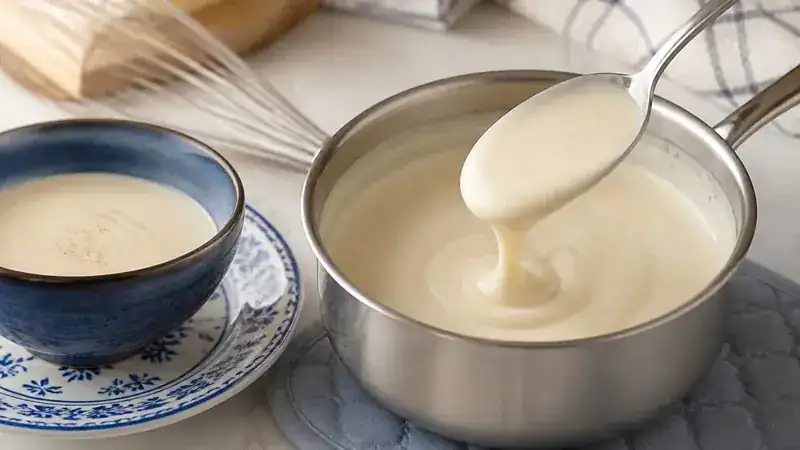
Bechamel sauce is made by cooking equal parts butter and flour into a roux, then slowly whisking in warm milk until the sauce is thick and smooth. Cook over medium-low heat for 8 to 10 minutes, stirring constantly, until the flour taste is gone and the sauce coats a spoon.
Béchamel looks like nothing is happening until suddenly you have the foundation for casseroles, gratins, lasagna, cheese sauce, and several other reasons to own a whisk. The formula here is wonderfully plain: three tablespoons butter, three tablespoons flour, and two cups warm whole milk. Cook the butter and flour together for a minute or two so the raw flour taste disappears, but keep the roux pale. This is not the moment to chase the dark, nutty color you would want for gumbo; béchamel has different plans.
Warm the milk first, then add it gradually while whisking after each addition. Dumping cold milk into a hot roux all at once is basically asking flour to form a neighborhood watch. Slow addition lets the starch disperse evenly, and 8 to 10 minutes over medium-low heat turns the mixture into a smooth sauce that coats the back of a spoon. Kosher salt, white pepper, and a pinch of nutmeg finish it. If a few lumps survive, take the pan off the heat and whisk hard; a fine-mesh strainer is the quiet emergency exit. Nobody at dinner receives a laboratory report. They just get a silky sauce.
Ingredients
- 3 tablespoons unsalted butter
- 3 tablespoons all-purpose flour
- 2 cups whole milk, warmed
- 1/2 teaspoon kosher salt
- 1/4 teaspoon white pepper
- Pinch of freshly grated nutmeg
Instructions
- 1Warm the milk: Pour 2 cups of whole milk into a small saucepan over low heat or microwave in a measuring cup for 90 seconds. The milk should be warm to the touch but not boiling. This step is not optional. Cold milk dropped into a hot roux is how lumps happen.
- 2Make the roux: Melt 3 tablespoons of butter in a medium, heavy-bottomed saucepan over medium heat. Once the butter is fully melted and beginning to foam, add the flour all at once.
- 3Cook the roux: Whisk the butter and flour together constantly for 1 to 2 minutes. The mixture should look pale yellow and smell faintly nutty. This step cooks out the raw flour taste. Do not skip it and do not let it brown.
- 4Add milk slowly: Reduce heat to medium-low. Add the warm milk in a slow, steady stream — about 1/4 cup at a time — whisking constantly and vigorously after each addition. Do not pour all the milk in at once.
- 5Whisk and cook: Once all the milk is incorporated, continue whisking and cooking over medium-low heat for 8 to 10 minutes, until the sauce thickens enough to coat the back of a spoon and a finger drawn through that coat leaves a clean line.
- 6Season: Remove from heat. Add 1/2 teaspoon kosher salt, 1/4 teaspoon white pepper, and a pinch of freshly grated nutmeg. Taste and adjust seasoning. Use immediately or see storage notes.
Nutrition Information
Estimated per serving: 1 of 4 servings.
Estimated from the ingredients and quantities in this recipe using standard food-composition values. Brand choices, trimming, cooking loss, optional ingredients, and actual portion size can change the numbers. How we calculate nutrition estimates.
Pro Tips
- Warm your milk before it hits the roux. This is the single step that separates smooth bechamel from lumpy regret. I cannot stress this enough and I have said it to people at their own stoves.
- If you do get lumps, don't panic. Take the pan off the heat and whisk hard for thirty seconds. If lumps persist, strain the sauce through a fine mesh sieve. The sauce will be fine. No one has to know.
- A heavy-bottomed saucepan matters more than you'd think. Thin pans create hot spots that cook the bottom faster than the rest, and then you have scorched bechamel, which is its own kind of tragedy.
- White pepper is traditional and keeps the sauce from having black flecks. If you only have black pepper, use it — the flavor is slightly different but the sauce will still be good, just visually honest about what it is.
Substitutions
Storage Instructions
Store cooled bechamel in an airtight container in the refrigerator for up to 4 days. Press a piece of plastic wrap directly onto the surface of the sauce before sealing to prevent a skin from forming. Reheat gently over low heat, whisking in a splash of warm milk to restore the consistency.
Make Ahead
Bechamel can be made up to 3 days ahead and refrigerated. Reheat slowly over low heat, whisking constantly and adding warm milk a tablespoon at a time until it loosens back to your desired consistency. Do not reheat over high heat or it will scorch and break.
Freezing
You can freeze béchamel, but the emulsion may look slightly grainy after thawing. Thaw it in the refrigerator and reheat gently while whisking; a splash of milk usually brings the sauce back together.