

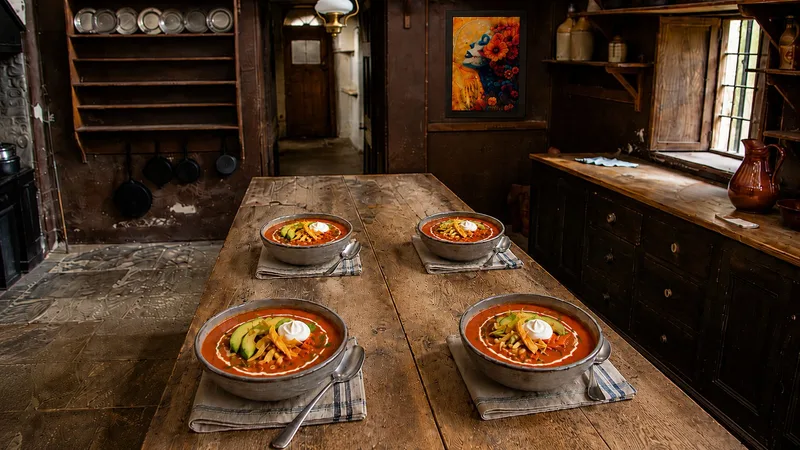
Tomato Soup
Tomato soup has one job: taste deeply like tomatoes. That sounds obvious until you meet a bowl of thin red liquid whose entire personality depends on the grilled cheese sitting next to it like an emotional-support sandwich. This version starts by softening onion and garlic in olive oil and butter, then cooking the tomato paste until it darkens. That extra browning concentrates the tomato flavor before the whole peeled tomatoes, broth, thyme, oregano, smoked paprika, and bay leaf ever enter the pot.
Once everything has simmered together, blending turns it smooth and a finish of cream rounds off the acidity without muting the tomato. The whole process takes about 45 minutes, but the important part is not racing through the base: browned tomato paste and properly softened aromatics are what make the finished soup taste cooked rather than merely heated. Serve it with grilled cheese if you want—obviously—but now the sandwich gets to be a partner instead of a rescue vehicle.
Ingredients
- 2 tablespoons olive oil
- 1 tablespoon unsalted butter
- 1 medium yellow onion, roughly chopped
- 5 cloves garlic, smashed
- 1 teaspoon kosher salt, plus more to taste
- 1/2 teaspoon black pepper
- 1/2 teaspoon sugar (optional, balances acidity)
- 1 teaspoon dried oregano
- 1/2 teaspoon smoked paprika
- 2 tablespoons tomato paste
- 2 cans (28 oz each) whole peeled San Marzano tomatoes, with their juices
- 2 cups low-sodium chicken or vegetable broth
- 1 teaspoon fresh thyme leaves (or 1/2 teaspoon dried)
- 1 bay leaf
- 1/3 cup heavy cream (or half-and-half)
- Fresh basil leaves, for serving
Instructions
- 1Heat olive oil and butter in a large heavy-bottomed pot or Dutch oven over medium heat. Once the butter is melted and foamy, add the chopped onion and a pinch of salt. Cook, stirring occasionally, for 7 to 8 minutes until the onion is soft and translucent. Do not rush this step — the onion needs to actually soften, not just get acquainted with the heat.
- 2Add the smashed garlic cloves and cook for another 2 minutes, stirring frequently, until fragrant and just starting to turn golden at the edges.
- 3Add the tomato paste and stir it into the onion and garlic. Cook for 2 minutes, pressing it against the bottom of the pot. It will darken slightly and smell almost nutty. This step builds depth — don't skip it.
- 4Add the salt, black pepper, sugar (if using), oregano, and smoked paprika. Stir to combine.
- 5Pour in both cans of whole peeled tomatoes with all their juices. Use a wooden spoon or your hands to crush the tomatoes as you add them — either method works, one is messier and more satisfying.
- 6Add the chicken or vegetable broth, thyme, and bay leaf. Stir everything together and bring the soup to a boil over medium-high heat.
- 7Once boiling, reduce the heat to low and simmer uncovered for 20 minutes, stirring occasionally, until the tomatoes have fully broken down and the flavors have come together.
- 8Remove the bay leaf. Use an immersion blender to blend the soup directly in the pot until completely smooth. Alternatively, let the soup cool for 10 minutes, then blend in batches in a countertop blender — fill it no more than halfway, hold the lid down firmly with a folded towel, and blend on low before increasing speed. Hot soup expands. I cannot stress this enough.
- 9Return the blended soup to the pot over low heat. Stir in the heavy cream. Taste and adjust salt and pepper. If the soup tastes sharp or acidic, add a pinch more sugar and let it cook for another 2 minutes.
- 10Serve hot, topped with fresh basil leaves and a drizzle of olive oil or cream if you feel like it deserves a finishing touch, which it does.
Nutrition Information
Estimated per serving: 1 of 4 servings.
Estimated from the ingredients and quantities in this recipe using standard food-composition values. Brand choices, trimming, cooking loss, optional ingredients, and actual portion size can change the numbers. How we calculate nutrition estimates.
Pro Tips
- San Marzano tomatoes make a real difference here. They're less acidic and more fleshy than standard canned tomatoes, and they behave better in soup — not because they're fancy, but because they're actually bred for cooking. If your grocery store doesn't carry them, look for any canned whole peeled tomatoes with low added citric acid.
- If your soup tastes flat after blending, it almost always needs salt, not more tomatoes. Add it in small amounts, stir, taste, wait thirty seconds, then decide. The flavor keeps developing.
- The immersion blender is your friend, but let the soup come off a full boil before you stick it in there. A blender full of aggressive, volcano-temperature soup has made enemies of many home cooks, and I was one of them before I learned my lesson on a Tuesday in 2019 that I prefer not to revisit.
Substitutions
Storage Instructions
Store cooled tomato soup in an airtight container in the refrigerator for up to 5 days. Reheat gently on the stovetop over medium-low heat, stirring occasionally — do not boil after the cream has been added, as it can separate. Freeze (before adding cream) in freezer-safe containers for up to 3 months. Thaw overnight in the refrigerator, reheat, then stir in the cream fresh.
Make Ahead
The soup can be made up through the blending step and refrigerated for up to 3 days or frozen for up to 3 months without the cream. When ready to serve, reheat on the stovetop and stir in the cream at the end. This improves the flavor — the base gets better as it sits.
Frequently Asked Questions
Can I make this ahead of time?
Tomato Soup can be cooked a day ahead. Cool it promptly, refrigerate it covered, then reheat gently until hot; hold back fresh herbs, crunchy toppings, dairy swirls, or other finishing garnishes until serving.
How do I store the leftovers?
Store the leftovers in an airtight container in the refrigerator for up to 5 days. Reheat gently on the stovetop over medium-low heat, stirring occasionally — do not boil after the cream has been added, as it can separate. Freeze (before adding cream) in freezer-safe containers for up to 3 months. Thaw overnight in the refrigerator, reheat, then stir in the cream fresh.
Can I freeze it?
Yes. See the storage section on this page for exact freezing and thawing directions — most versions of Tomato Soup freeze well for up to 2–3 months when cooled fully first and portioned into airtight containers.
Can I adjust it for what I have on hand?
Yes. Tested adjustments on this recipe include heavy cream → full-fat coconut milk; heavy cream → half-and-half or whole milk; and canned whole tomatoes → 2 lbs fresh Roma or plum tomatoes, halved and roasted at 400°F for 30 minutes.
What's the most common mistake to avoid?
San Marzano tomatoes make a real difference here. They're less acidic and more fleshy than standard canned tomatoes, and they behave better in soup — not because they're fancy, but because they're actually bred for cooking. If your grocery store doesn't carry them, look for any canned whole peeled tomatoes with low added citric acid.
Make It a Meal
Pair this recipe with a side, bread, and something sweet from the FAFO Kitchen.


More Like This



You Might Also Like


Finish With Dessert

Try this next
Cranberry Orange Cookies
View recipe →