

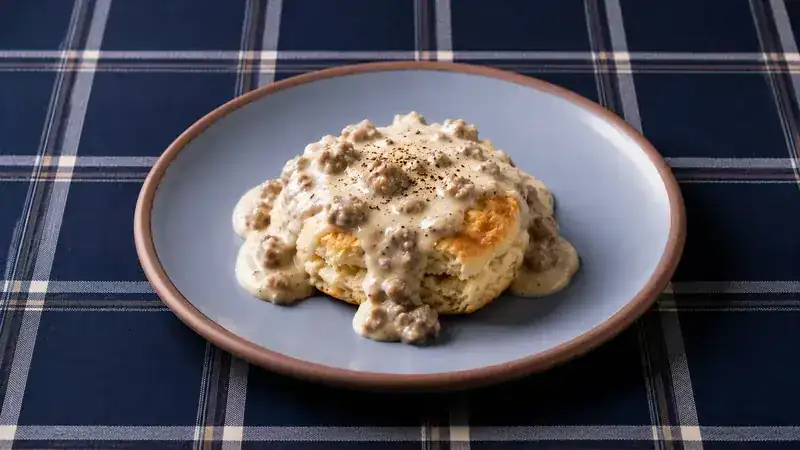
Biscuits and Gravy
To make biscuits and gravy, prepare a simple buttermilk biscuit dough, bake at 450°F for 12–14 minutes, then whisk together browned breakfast sausage, flour, and whole milk into a thick, seasoned gravy. Ladle the hot gravy over split biscuits and serve immediately.
Biscuits and gravy is what happens when breakfast stops pretending it has somewhere else to be. The biscuits are built from flour, baking powder, baking soda, cold butter, and cold buttermilk, then baked hot at 450°F so those bits of butter can create steam and help push the dough into flaky layers. Keep the dough shaggy, fold it once like a letter, and cut straight down without twisting the cutter. Twisting seals the edges, which is an astonishing amount of power to give one casual wrist movement before coffee.
While the biscuits bake, breakfast sausage browns in a skillet and keeps its drippings. Flour cooks right into that fat to make the roux for the gravy, then warm milk goes in gradually until everything thickens around the sausage. Black pepper is not decoration here; a full teaspoon gives the creamy gravy the bite it needs, with garlic powder and optional red pepper flakes underneath. Pull the gravy from the heat slightly looser than you want because it continues thickening as it sits.
Then split a hot biscuit and put a completely unreasonable spoonful of gravy over it. The contrast is the whole point: crisp golden top, tender layered middle, creamy peppered gravy, browned sausage. It is not light breakfast, portable breakfast, or breakfast designed to improve your split time. It is the breakfast you eat when the morning has agreed to leave you alone for a while.
Ingredients
- FOR THE BISCUITS:
- 2 cups all-purpose flour, plus more for dusting
- 1 tablespoon baking powder
- 1/2 teaspoon baking soda
- 1 teaspoon kosher salt
- 1 teaspoon granulated sugar
- 6 tablespoons unsalted butter, very cold, cubed
- 3/4 cup cold buttermilk, plus 1 tablespoon for brushing
- FOR THE SAUSAGE GRAVY:
- 1 pound bulk pork breakfast sausage (mild or spicy)
- 1/3 cup all-purpose flour
- 2 1/2 to 3 cups whole milk, warmed slightly
- 1/2 teaspoon kosher salt, plus more to taste
- 1 teaspoon freshly cracked black pepper, plus more to taste
- 1/4 teaspoon garlic powder
- Pinch of crushed red pepper flakes (optional)
Instructions
- 1Preheat your oven to 450°F. Line a baking sheet with parchment paper.
- 2Make the biscuit dough: Whisk together the flour, baking powder, baking soda, salt, and sugar in a large bowl.
- 3Add the cold cubed butter to the flour mixture. Using your fingertips or a pastry cutter, work the butter into the flour until the mixture resembles coarse crumbs with some pea-sized pieces of butter still visible. Do not overwork it — those butter chunks are what create flaky layers.
- 4Pour in the cold buttermilk and stir with a fork just until the dough comes together. It will look shaggy and a little rough. That is correct.
- 5Turn the dough out onto a lightly floured surface. Pat it gently into a 3/4-inch-thick rectangle — do not use a rolling pin if you can help it. Fold the dough in thirds like a letter, then pat it out again to 3/4 inch thickness. This creates the layers.
- 6Cut biscuits using a 2.5-inch round cutter, pressing straight down without twisting (twisting seals the edges and prevents rising). Re-pat scraps once to cut additional biscuits. You should get about 8–10 biscuits.
- 7Place biscuits on the prepared baking sheet so they are just barely touching — this helps them rise upward rather than spread. Brush tops with the reserved buttermilk.
- 8Bake at 450°F for 12–14 minutes, until the tops are deep golden brown. Do not pull them too early. Pale biscuits are sad biscuits.
- 9While the biscuits bake, make the gravy: In a large skillet over medium-high heat, cook the sausage, breaking it into small crumbles with a wooden spoon, until browned all the way through, about 7–8 minutes.
- 10Do not drain the fat. Reduce heat to medium. Sprinkle the flour directly over the sausage and drippings. Stir constantly for 1–2 minutes until the flour is fully absorbed and smells slightly nutty. This is your roux and it matters.
- 11Add the warm milk slowly — start with 2 1/2 cups, pouring in a thin stream while stirring constantly to prevent lumps. Keep stirring as the mixture heats and thickens, about 4–6 minutes.
- 12Season with salt, black pepper, garlic powder, and red pepper flakes if using. Taste and adjust. If the gravy gets too thick, add more milk a splash at a time and stir. If it seems thin, keep cooking — it will continue to thicken as it sits.
- 13Split the hot biscuits and ladle the gravy generously over the top. Finish with an extra crack of black pepper. Serve immediately.
Nutrition Information
Estimated per serving: 1 of 6 servings.
Estimated from the ingredients and quantities in this recipe using standard food-composition values. Brand choices, trimming, cooking loss, optional ingredients, and actual portion size can change the numbers. How we calculate nutrition estimates.
Pro Tips
- Cold butter is not negotiable. If your butter softens while you're working, put the whole bowl in the freezer for 5 minutes before continuing. Warm butter makes dense biscuits, and dense biscuits make mornings worse.
- Let the sausage really brown before adding the flour. Pale gray sausage produces a gravy that tastes like it gave up. Color equals flavor — let the pan get hot and give it time.
- The gravy will thicken as it sits, so pull it off the heat slightly thinner than you want it. If you're serving it more than five minutes after cooking, keep it on the lowest possible heat and add a splash of milk to loosen it back up.
Substitutions
Storage Instructions
Leftover biscuits store well in an airtight container at room temperature for up to 2 days, or frozen for up to 3 months. Gravy stores separately in the refrigerator for up to 4 days in a sealed container. Reheat gravy on the stovetop over low heat, adding a splash of milk and stirring until smooth. Do not store biscuits already covered in gravy — they turn to mush and it is a tragedy.
Make Ahead
Biscuit dough can be cut and frozen unbaked on a parchment-lined sheet, then transferred to a freezer bag for up to 3 months. Bake straight from frozen at 450°F, adding 3–4 minutes to the bake time. Gravy can be made the day before and refrigerated; it thickens considerably when cold but loosens beautifully with added milk over low heat.
Make It a Meal
Pair this recipe with a side, bread, and something sweet from the FAFO Kitchen.


More Like This



You Might Also Like


Finish With Dessert
Try this next
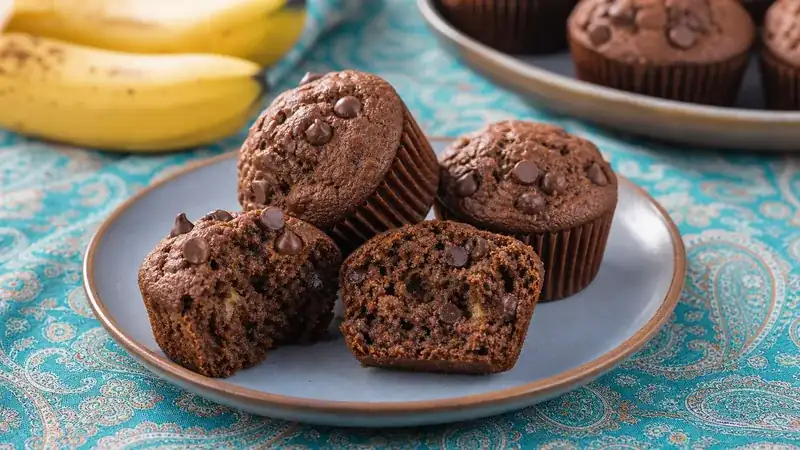
Chocolate Banana Muffins
View recipe →