

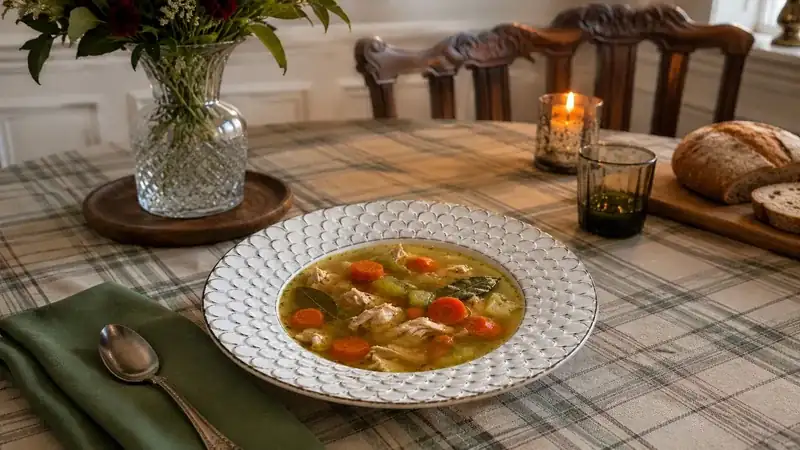
Chicken Soup From Scratch
To make chicken soup, simmer a whole chicken or bone-in pieces with aromatics (onion, celery, carrots, garlic, herbs) in water or broth for about 1.5 hours, then shred the meat, strain the broth, add cooked noodles or rice, and season to taste. The key to deep flavor is patience with the simmer and not skipping the skimming step in the first 20 minutes.
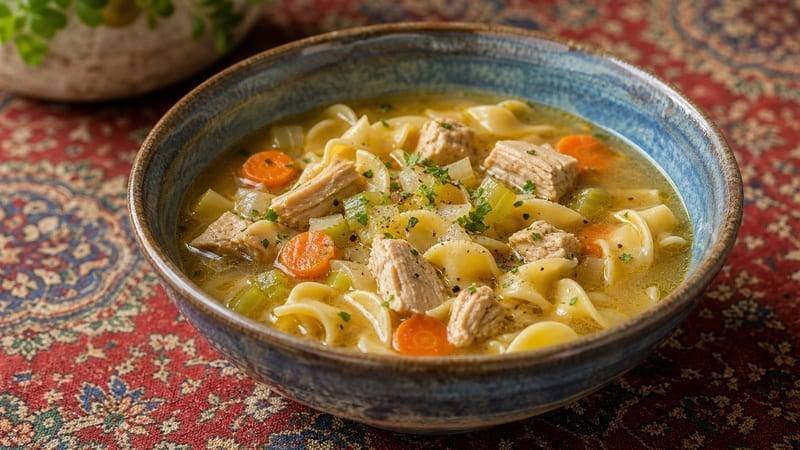
Chicken soup from scratch takes longer than opening a carton because the broth is the recipe, not merely the liquid the ingredients happen to be standing in. A whole chicken starts in cold water with onion, carrots, celery, garlic, bay leaves, peppercorns, thyme, and parsley stems, then comes up slowly to a barely-there simmer. Starting cold gives the bones and connective tissue time to release flavor and gelatin; keeping the simmer gentle helps the broth stay clean instead of cloudy and the chicken tender instead of bullied.
The first 15 or 20 minutes involve skimming foam from the surface, which feels strangely ceremonial for something you will later eat in sweatpants. Once the chicken is cooked, the broth gets strained, fresh diced vegetables are sautéed separately, and the shredded meat returns with egg noodles. That second round of vegetables is why they still taste like vegetables instead of ingredients that donated their entire personality to the stock.If leftovers are the plan, cook the noodles separately and add them bowl by bowl. Leave them in the pot overnight and they continue drinking broth until the soup becomes a noodle-based real-estate dispute. Finished with black pepper and fresh parsley, this is clear, savory, deeply chickeny soup with enough body to explain why scratch broth is worth the extra time.
Ingredients
- 1 whole chicken (3.5 to 4 lbs), or 3 lbs bone-in, skin-on chicken pieces
- 12 cups cold water
- 2 medium yellow onions, one halved, one diced
- 4 medium carrots, 2 left whole, 2 sliced into coins
- 4 stalks celery, 2 left whole with leaves, 2 sliced
- 6 garlic cloves, 4 smashed, 2 minced
- 2 bay leaves
- 1 teaspoon whole black peppercorns
- 6 sprigs fresh thyme (or 1 teaspoon dried)
- 1 small bunch fresh parsley, stems and leaves separated
- 2 teaspoons kosher salt, plus more to taste
- 2 tablespoons olive oil
- 8 oz wide egg noodles (or pasta of choice)
- 1 teaspoon black pepper, freshly ground
- Fresh parsley leaves, chopped, for serving
Instructions
- 1Place the whole chicken or chicken pieces into a large stockpot (at least 8 quarts). Add 12 cups of cold water — starting with cold water draws more gelatin and flavor from the bones than starting with hot.
- 2Bring to a boil over medium-high heat. As the water heats, foam and gray scum will rise to the surface. Skim this off with a spoon or ladle for the first 15 to 20 minutes. This step matters — it keeps your broth clear and clean-tasting. Don't skip it.
- 3Once skimmed, add the halved onion, 2 whole carrots, 2 whole celery stalks, smashed garlic cloves, bay leaves, peppercorns, thyme sprigs, parsley stems, and 2 teaspoons kosher salt.
- 4Reduce heat to low. The surface should barely simmer — you want small, lazy bubbles, not a rolling boil. A hard boil makes the broth cloudy and the chicken tough. Simmer uncovered for 1 hour to 1 hour 15 minutes, until the chicken is fully cooked and the meat pulls away from the bone.
- 5Remove the chicken from the pot and set it on a cutting board to cool for 15 minutes. While it cools, strain the broth through a fine-mesh strainer into a large bowl or second pot. Discard the solids — they've given everything they had.
- 6Wipe out the stockpot. Heat 2 tablespoons olive oil over medium heat. Add the diced onion, sliced carrots, sliced celery, and minced garlic. Cook, stirring occasionally, for 6 to 8 minutes until the vegetables are softened and the onion is translucent.
- 7Pour the strained broth back into the pot. Bring to a gentle simmer over medium heat.
- 8While the broth heats, shred the cooled chicken by hand, discarding the skin and bones. You should have about 3 to 4 cups of shredded meat.
- 9Add the shredded chicken to the simmering broth. Add the egg noodles and cook according to package directions, usually 7 to 9 minutes, until just tender. Cook poultry until the thickest piece reaches 165°F on an instant-read thermometer.
- 10Taste the soup and adjust salt and black pepper. Add a handful of chopped fresh parsley. Serve hot.
Nutrition Information
Estimated per serving: 1 of 6 servings.
Estimated from the ingredients and quantities in this recipe using standard food-composition values. Brand choices, trimming, cooking loss, optional ingredients, and actual portion size can change the numbers. How we calculate nutrition estimates.
Pro Tips
- Cold water in the pot at the start is not a quirk — it's technique. Starting cold gives the proteins and collagen time to slowly release into the broth, which is why your soup will have body instead of tasting like hot dishwater.
- If you have time, refrigerate the strained broth before building the soup. The fat will solidify on top and you can lift it off in one clean piece. This is satisfying in a way I cannot explain.
- Cook noodles separately if you plan to have leftovers. Noodles left in the soup overnight absorb all the broth and turn into something that is technically still food but spiritually a different problem.
Substitutions
Storage Instructions
Refrigerate cooled soup (without noodles if possible) in an airtight container for up to 4 days. Freeze broth and shredded chicken (separately from noodles) for up to 3 months. Thaw overnight in the refrigerator and reheat gently on the stovetop over medium-low heat.
Make Ahead
The broth and shredded chicken can be made 2 to 3 days ahead and stored separately in the refrigerator. When ready to serve, combine and bring to a simmer, cook fresh noodles in the broth, and finish with parsley. This approach gives you even better flavor because the broth has had time to settle.
Frequently Asked Questions
Can I make this ahead of time?
Chicken Soup From Scratch can be cooked a day ahead. Cool it promptly, refrigerate it covered, then reheat gently until hot; hold back fresh herbs, crunchy toppings, dairy swirls, or other finishing garnishes until serving.
How do I store the leftovers?
Refrigerate cooled soup (without noodles if possible) in an airtight container for up to 4 days. Freeze broth and shredded chicken (separately from noodles) for up to 3 months. Thaw overnight in the refrigerator and reheat gently on the stovetop over medium-low heat.
Can I freeze it?
Yes. See the storage section on this page for exact freezing and thawing directions — most versions of Chicken Soup freeze well for up to 2–3 months when cooled fully first and portioned into airtight containers.
What substitutions work in Chicken Soup From Scratch?
Tested swaps for this recipe: whole chicken: 3 lbs bone-in, skin-on chicken thighs. Thighs give a richer, fattier broth and shred beautifully. Reduce simmer time to 45-55 minutes. egg noodles: cooked white or brown rice. Add cooked rice directly to bowls at serving to keep leftovers cleaner.
What's the most common mistake to avoid?
Cold water in the pot at the start is not a quirk — it's technique. Starting cold gives the proteins and collagen time to slowly release into the broth, which is why your soup will have body instead of tasting like hot dishwater.
Make It a Meal
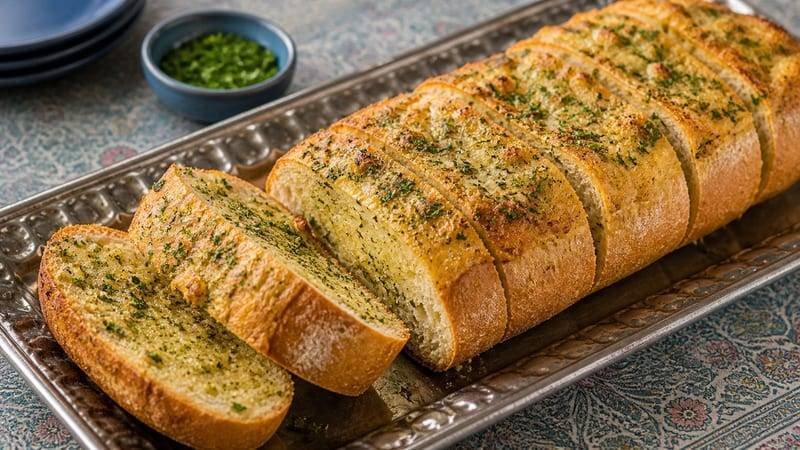
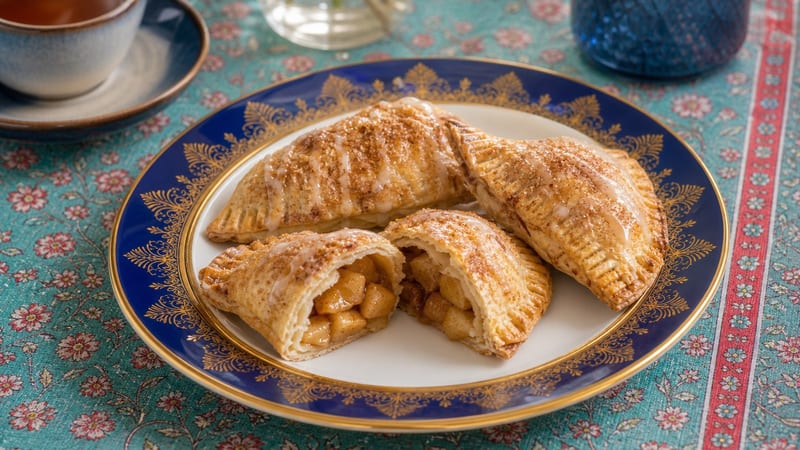
Pair this recipe with a side, bread, and something sweet from the FAFO Kitchen.

More Like This

You Might Also Like

Finish With Dessert
Try this next
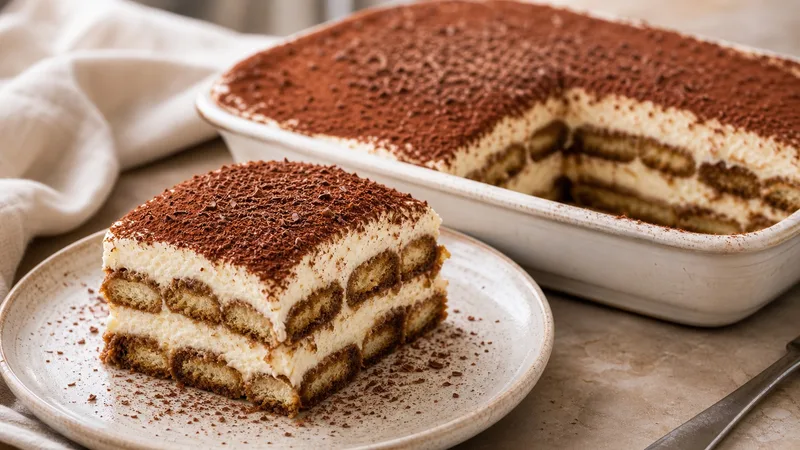
Tiramisu Recipe That Actually Holds Together
View recipe →