
Chicken Tikka Masala
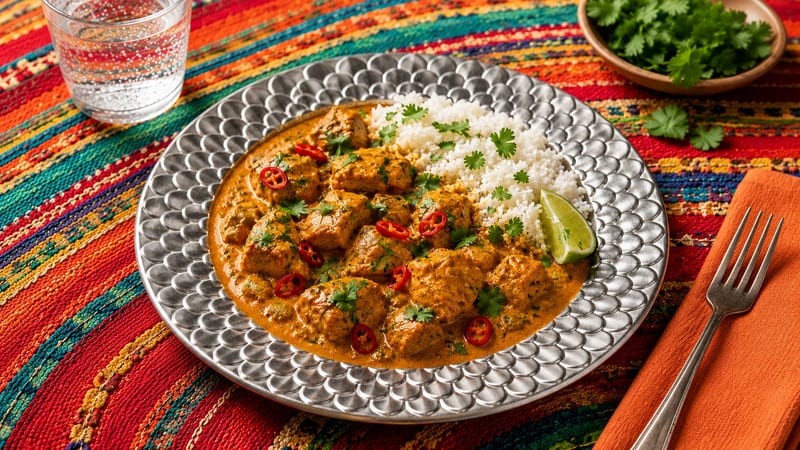
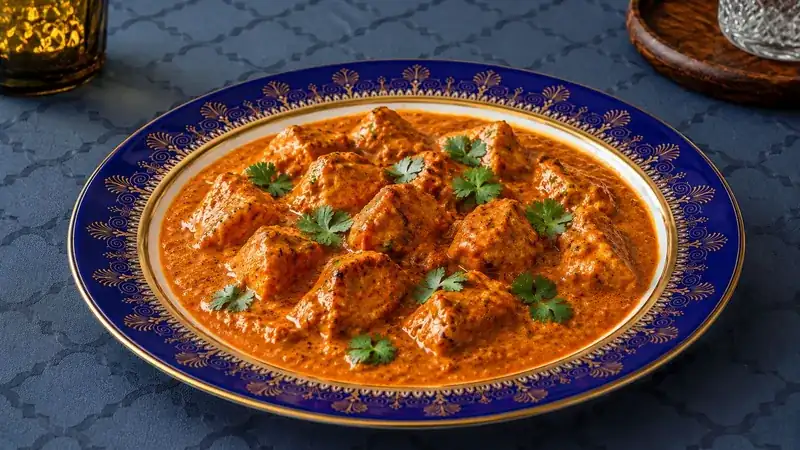
Chicken tikka masala is made by marinating chicken in yogurt and spices, charring it under the broiler, then simmering it in a rich tomato-cream sauce seasoned with garam masala, cumin, and coriander. The full process takes about 1 hour 45 minutes including marinating time, and the result is a deeply spiced, restaurant-quality dish you can make in your own kitchen.
Chicken tikka masala gets called a tomato-cream curry so often that the most important part can disappear from the description: the chicken is supposed to taste like something before it ever meets the sauce. Here, chicken thighs sit in yogurt, lemon, cumin, paprika, garam masala, turmeric, salt, and cayenne, then go under a hot broiler until the edges blister and char. That dark spotting is not cosmetic. It gives the finished dish the smoky, roasted flavor that separates tikka masala from chicken simply simmered in a pleasant orange bath.
The sauce gets its own slow build. Onion cooks until deeply golden, garlic and ginger go in next, then the spices bloom in the fat before tomato paste is allowed to darken. Whole tomatoes simmer until the sauce thickens and the oil starts showing at the edges; heavy cream comes later, after the tomato and spice base has already done the heavy lifting.
Blend it smooth if you want the restaurant-style finish, then let the broiled chicken spend a few minutes in the sauce before serving with basmati rice or naan. It takes longer than opening a jar, obviously. So does building a porch correctly. Certain shortcuts announce themselves forever.
Ingredients
- For the chicken marinade:
- 2 lbs boneless, skinless chicken thighs, cut into 2-inch pieces
- 1 cup whole-milk plain yogurt
- 2 tablespoons fresh lemon juice
- 1 tablespoon neutral oil (such as avocado or vegetable oil)
- 1½ teaspoons ground cumin
- 1½ teaspoons paprika (smoked or sweet)
- 1 teaspoon garam masala
- 1 teaspoon ground turmeric
- 1 teaspoon fine salt
- ½ teaspoon cayenne pepper
- For the masala sauce:
- 3 tablespoons unsalted butter
- 1 tablespoon neutral oil
- 1 large yellow onion, finely diced
- 6 cloves garlic, minced
- 1 tablespoon fresh ginger, grated (about a 1-inch piece)
- 2 teaspoons garam masala
- 2 teaspoons ground cumin
- 2 teaspoons ground coriander
- 1 teaspoon smoked paprika
- ½ teaspoon ground turmeric
- ½ teaspoon cayenne pepper (adjust to taste)
- 1 teaspoon fine salt, plus more to taste
- 1 can (6 oz) tomato paste
- 1 can (28 oz) whole peeled tomatoes, crushed by hand
- 1 cup heavy cream
- 1 teaspoon sugar (optional, to balance acidity)
- For serving:
- Fresh cilantro, roughly chopped
- Basmati rice or warm naan
Instructions
- 1Marinate the chicken: In a large bowl, whisk together the yogurt, lemon juice, oil, cumin, paprika, garam masala, turmeric, salt, and cayenne. Add the chicken pieces and toss to coat thoroughly. Cover and refrigerate for at least 30 minutes, or up to 8 hours. Longer is better.
- 2Broil the chicken: Set your oven rack about 6 inches from the broiler and preheat broiler to high. Line a rimmed baking sheet with foil and place a wire rack on top. Lay the marinated chicken pieces in a single layer on the rack. Broil for 10-12 minutes, flipping once halfway through, until the chicken is cooked through (internal temperature of 165°F) and charred in spots. The char matters — don't skip this step. Set chicken aside.
- 3Start the sauce: In a large heavy-bottomed pot or Dutch oven, melt the butter with the oil over medium heat. Add the diced onion and cook, stirring occasionally, for 10-12 minutes until deeply golden and beginning to brown at the edges. Do not rush this.
- 4Bloom the aromatics: Add the minced garlic and grated ginger to the onion and cook for 2 minutes, stirring constantly, until fragrant. Add all the dry spices — garam masala, cumin, coriander, smoked paprika, turmeric, cayenne, and salt — and stir for 90 seconds over medium heat until the spices are fragrant and coating everything in the pot. They should smell toasted, not raw.
- 5Build the sauce: Add the tomato paste and stir it into the spice mixture. Cook for 2 minutes, letting it darken slightly. Add the crushed whole tomatoes with their juices and stir to combine. Bring to a simmer, then reduce heat to medium-low and cook uncovered for 15 minutes, stirring occasionally, until the sauce has thickened and the oil begins to separate at the edges.
- 6Blend the sauce (optional but recommended): For a smooth restaurant-style sauce, use an immersion blender directly in the pot and blend until smooth, about 30 seconds. Alternatively, carefully transfer to a blender in batches. Return the sauce to the pot over medium-low heat.
- 7Finish the sauce: Stir in the heavy cream. Add sugar if the sauce tastes sharp or acidic. Taste and adjust salt. Simmer gently for 5 minutes.
- 8Add the chicken: Nestle the broiled chicken pieces into the sauce. Simmer together for 5 minutes so the chicken absorbs the sauce and everything finishes cooking through together.
- 9Serve: Ladle over basmati rice or with warm naan. Finish with fresh cilantro.
Nutrition Information
Estimated per serving: 1 of 4 servings.
Estimated from the ingredients and quantities in this recipe using standard food-composition values. Brand choices, trimming, cooking loss, optional ingredients, and actual portion size can change the numbers. How we calculate nutrition estimates.
Pro Tips
- Chicken thighs are not negotiable for this recipe. Breasts go dry under the broiler and dry chicken in tikka masala is a sad thing that doesn't have to happen to anyone.
- The char on the broiled chicken is the whole point of tikka masala — it's what separates this from a plain tomato cream curry. Those blackened edges bring smokiness that the sauce cannot replicate. I skipped it my first time thinking it was optional. It is not optional.
- If your sauce tastes flat, it is almost certainly the spices. They need more time in the dry pan and more time with the tomato paste than you think. If your sauce tastes sour, add the sugar. If it tastes thin, simmer it longer without the lid.
- Make the full batch even if you're cooking for two. This sauce is measurably better the next day, like it needed a night to think about what it was becoming.
Substitutions
Storage Instructions
Store leftovers in an airtight container in the refrigerator for up to 4 days. Reheat gently on the stovetop over medium-low heat, adding a splash of water or cream if the sauce has thickened. Chicken tikka masala freezes well — freeze in airtight containers for up to 3 months. Thaw overnight in the refrigerator before reheating.
Make Ahead
The marinade and raw chicken can be prepped up to 8 hours ahead. The sauce can be made entirely in advance and refrigerated for up to 3 days — just reheat it, add the broiled chicken, and simmer together before serving. This is actually the ideal approach. The sauce deepens overnight.
Frequently Asked Questions
Can I make Chicken Tikka Masala ahead of time?
Prep the measured ingredients and any chopping for Chicken Tikka Masala ahead, then refrigerate the perishable components separately. Do the final cooking or crisping step close to serving so the finished texture does not suffer.
How do I store leftover Chicken Tikka Masala?
Store the leftovers in an airtight container in the refrigerator for up to 4 days. Reheat gently on the stovetop over medium-low heat, adding a splash of water or cream if the sauce has thickened. Chicken tikka masala freezes well — freeze in airtight containers for up to 3 months. Thaw overnight in the refrigerator before reheating.
Can I freeze Chicken Tikka Masala after cooking?
Yes. See the storage section on this page for exact freezing and thawing directions — most versions of Chicken Tikka Masala freeze well for up to 2–3 months when cooled fully first and portioned into airtight containers.
Can I substitute ingredients in Chicken Tikka Masala?
Yes. Tested adjustments on this recipe include heavy cream → full-fat coconut cream; whole-milk plain yogurt → full-fat coconut yogurt; and chicken thighs → extra-firm tofu or paneer.
What's the most common mistake when making Chicken Tikka Masala?
Chicken thighs are not negotiable for this recipe. Breasts go dry under the broiler and dry chicken in tikka masala is a sad thing that doesn't have to happen to anyone.
Make It a Meal
Pair this recipe with a side, bread, and something sweet from the FAFO Kitchen.