
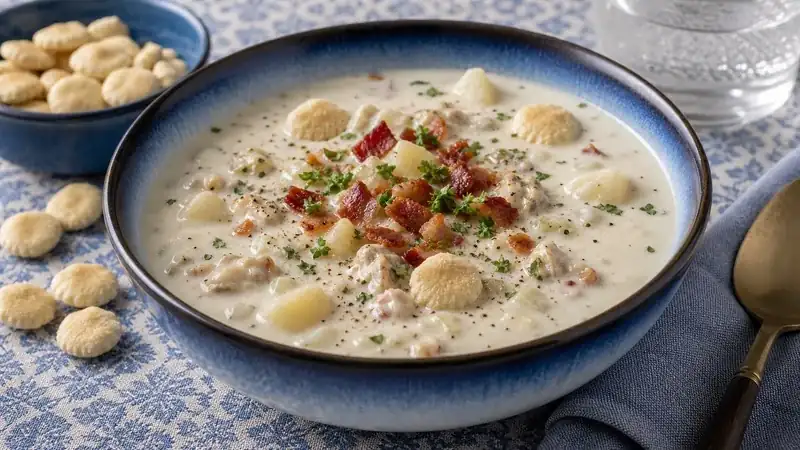
Thick and Creamy Clam Chowder
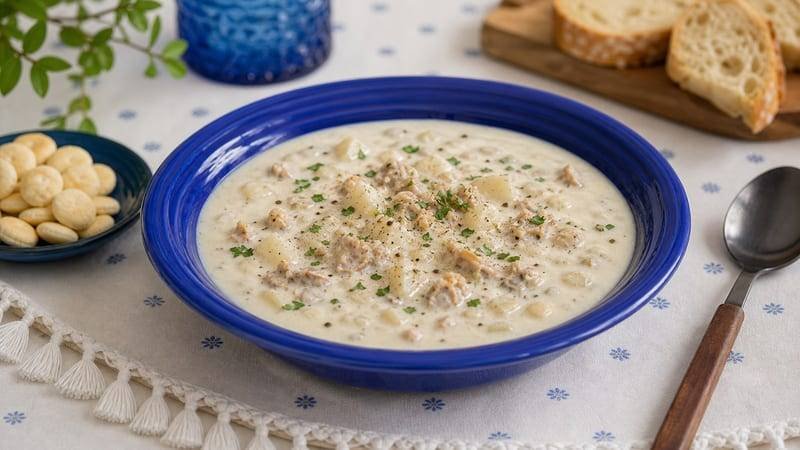
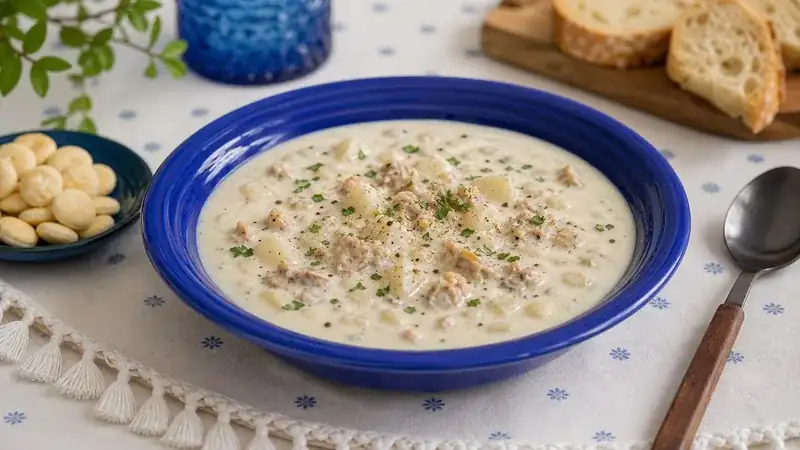
Jump to RecipeIf your preferred clam chowder can hold an oyster cracker on the surface for a suspiciously long time, this is the one. It is intentionally thick and creamy, built on bacon fat, butter, flour, clam juice, chicken broth, Yukon Gold potatoes, and heavy cream. The Yukon Golds hold their shape better than a starchier potato, so the bowl stays creamy without the potatoes dissolving into the broth like they have given up.
There is still a line between thick and gluey. Cook the flour with the onion and celery for two minutes, then whisk in the liquids gradually so the base stays smooth. Simmer the potatoes gently, not violently, and add the chopped clams and cream only for the final five minutes. Boiling at that stage is how cream breaks and clams become the texture of office rubber bands.
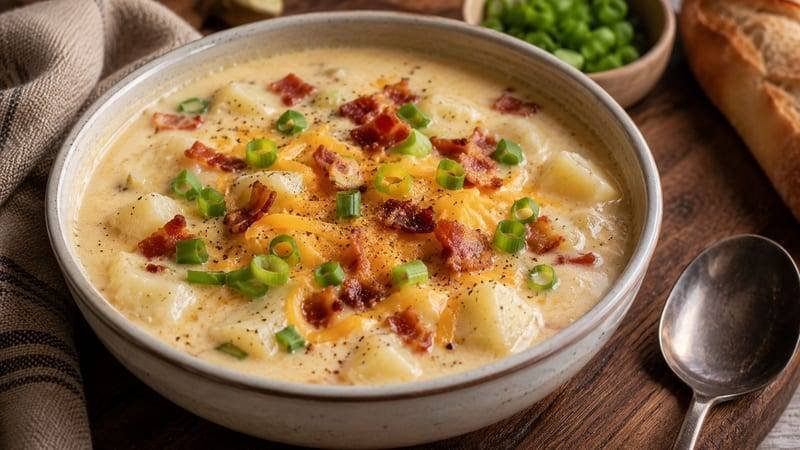
Bacon goes back over the top with parsley and oyster crackers, giving the chowder smoke, crunch, and something to push against all that cream. This is not the restrained bowl. It is the cold-weather, second-ladle, maybe-I-didn't-need-bread-but-here-we-are bowl.
Ingredients
- 4 strips thick-cut bacon, cut into ½-inch pieces
- 3 tablespoons unsalted butter
- 1 large yellow onion, diced (about 1½ cups)
- 3 stalks celery, diced
- 3 cloves garlic, minced
- ¼ cup all-purpose flour
- 2 cups clam juice (bottled or reserved from canned clams)
- 1½ cups chicken broth
- 1½ pounds Yukon Gold potatoes, peeled and cut into ½-inch cubes
- 1 teaspoon fresh thyme leaves (or ½ teaspoon dried)
- 1 bay leaf
- 2 cans (6.5 oz each) chopped clams, drained (juice reserved)
- 1½ cups heavy cream
- ½ teaspoon kosher salt, plus more to taste
- ¼ teaspoon black pepper
- Pinch of cayenne pepper
- Fresh parsley and oyster crackers for serving
Instructions
- 1Cook the bacon in a large heavy-bottomed pot or Dutch oven over medium heat until crispy and the fat has rendered, about 6 to 8 minutes. Remove the bacon with a slotted spoon and set aside on a paper towel-lined plate. Leave the bacon fat in the pot.
- 2Add the butter to the bacon fat in the pot and melt over medium heat. Add the diced onion and celery and cook, stirring occasionally, until softened and translucent, about 5 to 6 minutes. Add the garlic and cook for 1 minute more.
- 3Sprinkle the flour over the vegetables and stir constantly for 2 minutes to cook out the raw flour taste. The mixture will look thick and pasty — that is correct and intentional.
- 4Pour in the clam juice and chicken broth gradually, whisking as you go to prevent lumps. Bring the mixture to a simmer over medium-high heat, whisking until smooth and slightly thickened.
- 5Add the cubed potatoes, thyme, and bay leaf. Reduce heat to medium-low and simmer uncovered, stirring occasionally, until the potatoes are just fork-tender, about 12 to 15 minutes. Do not let this boil hard or the potatoes will fall apart.
- 6Stir in the drained chopped clams and the heavy cream. Simmer gently over low heat for 5 minutes — do not boil once the cream is in, or the chowder may break and the clams will toughen. Cook poultry until the thickest piece reaches 165°F on an instant-read thermometer.
- 7Remove the bay leaf. Season with salt, black pepper, and a pinch of cayenne. Taste and adjust seasoning.
- 8Ladle into bowls and top with the reserved crispy bacon, fresh parsley, and oyster crackers.
Nutrition Information
Estimated per serving: 1 of 6 servings.
Estimated from the ingredients and quantities in this recipe using standard food-composition values. Brand choices, trimming, cooking loss, optional ingredients, and actual portion size can change the numbers. How we calculate nutrition estimates.
Pro Tips
- Drain the canned clams but save the juice — measure it and use it as part of your clam juice total. Free flavor that costs you nothing except the act of not pouring it down the drain.
- Yukon Golds hold their shape better than russets. Russets will eventually dissolve into the broth, which thickens the chowder naturally but changes the texture entirely. Either approach works; just know which one you're choosing.
- If your chowder gets too thick as it sits — and it will, because resting chowder is a law of nature — thin it with a splash of warm cream or clam juice when you reheat. Never thin it with water. The pot will know, and so will you.
Substitutions
Storage Instructions
Store cooled chowder in an airtight container in the refrigerator for up to 3 days. Reheat gently over low heat, stirring frequently — do not boil. Clam chowder does not freeze well; the cream separates and the potatoes become grainy. Make only what you'll eat within three days.
Make Ahead
The chowder base (through the potato-simmering step, before adding clams and cream) can be made up to 24 hours ahead and refrigerated. When ready to serve, reheat the base over medium heat, then add the clams and cream and proceed with the final 5-minute simmer.
Frequently Asked Questions
Can I make this ahead of time?
Yes. The chowder base (through the potato-simmering step, before adding clams and cream) can be made up to 24 hours ahead and refrigerated. When ready to serve, reheat the base over medium heat, then add the clams and cream and proceed with the final 5-minute simmer.
How do I store the leftovers?
Store the leftovers in an airtight container in the refrigerator for up to 3 days. Reheat gently over low heat, stirring frequently — do not boil. Clam chowder does not freeze well; the cream separates and the potatoes become grainy. Make only what you'll eat within three days.
Can I freeze it?
Yes. See the storage section on this page for exact freezing and thawing directions — most versions of Clam Chowder Recipe freeze well for up to 2–3 months when cooled fully first and portioned into airtight containers.
Can I adjust it for what I have on hand?
Yes. Tested adjustments on this recipe include heavy cream → half-and-half; bacon → pancetta or salt pork; and canned clams → fresh littleneck or cherrystone clams, steamed and chopped.
What's the most common mistake to avoid?
Drain the canned clams but save the juice — measure it and use it as part of your clam juice total. Free flavor that costs you nothing except the act of not pouring it down the drain.
Make It a Meal
Pair this recipe with a side, bread, and something sweet from the FAFO Kitchen.