

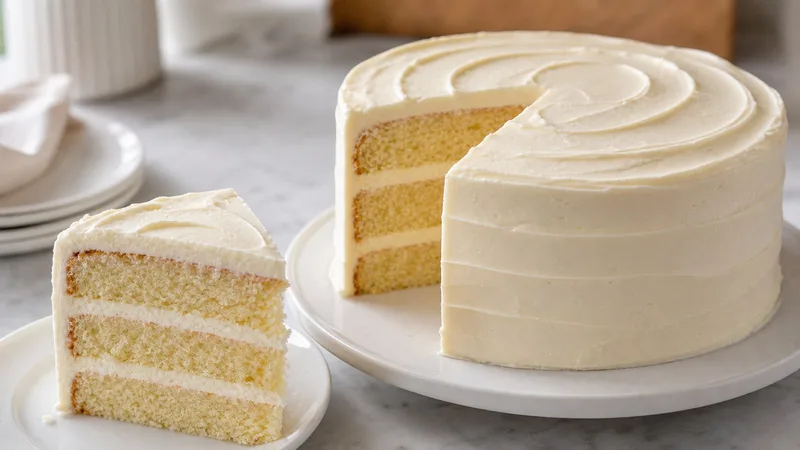
Classic Vanilla Layer Cake
Most baking recipes succeed when ingredients are measured precisely by weight, brought to room temperature before mixing, and baked in a properly preheated oven. This classic vanilla layer cake uses a creaming method with pantry staples and bakes at 350°F for 28–32 minutes.
Vanilla cake is where baking has nowhere to hide. Chocolate can cover a little dryness, fruit can distract from a dense crumb, and enough frosting has helped many cakes avoid difficult questions. A plain vanilla layer cake has butter, sugar, eggs, milk, flour, baking powder, salt, and vanilla standing in the middle of the room under fluorescent lighting.
That is why the technique matters. Beat room-temperature butter and sugar for a full four minutes until genuinely light and fluffy; those tiny air pockets help the cake rise and keep the crumb tender. Add the eggs one at a time, then alternate the dry ingredients with room-temperature milk and stop mixing once everything is combined. Overmixing after the flour goes in develops gluten, and vanilla cake will report that mistake immediately.
Two 9-inch layers bake at 350°F, cool completely, and get stacked with vanilla buttercream made from softened butter, sifted powdered sugar, cream, vanilla, and salt. There is nothing flashy about it, which is the point. When a vanilla cake is moist, soft, buttery, and actually tastes like vanilla, nobody at the table asks where the sprinkles are.
Ingredients
- 2 1/4 cups (270g) all-purpose flour, spooned and leveled
- 2 1/4 tsp baking powder
- 1/2 tsp fine salt
- 3/4 cup (170g) unsalted butter, room temperature
- 1 3/4 cups (350g) granulated sugar
- 3 large eggs, room temperature
- 2 tsp pure vanilla extract
- 1 cup (240ml) whole milk, room temperature
- For the Buttercream:
- 1 cup (227g) unsalted butter, room temperature
- 3 1/2 cups (420g) powdered sugar, sifted
- 3 tbsp heavy cream or whole milk
- 2 tsp pure vanilla extract
- 1/4 tsp fine salt
Instructions
- 1Preheat your oven to 350°F (175°C). Grease two 9-inch round cake pans, line the bottoms with parchment circles, then grease the parchment. Flour the sides lightly and tap out the excess.
- 2In a medium bowl, whisk together the flour, baking powder, and salt. Set aside.
- 3In the bowl of a stand mixer or with a hand mixer, beat the room-temperature butter on medium speed for 2 minutes until smooth and slightly paler. Add the sugar and beat on medium-high for 4 full minutes, scraping the bowl once, until the mixture is very light and fluffy. Do not rush this step.
- 4Add the eggs one at a time, beating for 30 seconds after each addition. Add the vanilla extract and mix to combine.
- 5With the mixer on low, add the flour mixture in three additions, alternating with the milk in two additions (flour, milk, flour, milk, flour). Begin and end with flour. Mix only until just combined after each addition — do not overmix.
- 6Divide the batter evenly between the two prepared pans. Smooth the tops with an offset spatula. Bake for 28–32 minutes, until a wooden toothpick inserted into the center comes out clean and the tops spring back when lightly pressed.
- 7Cool cakes in pans on wire racks for 15 minutes. Run a thin knife around the edges, then invert onto the racks. Peel off the parchment and cool completely, at least 1 hour, before frosting.
- 8Make the buttercream: Beat the room-temperature butter on medium-high for 3 minutes until very pale and fluffy. Reduce speed to low and add the sifted powdered sugar one cup at a time, mixing until incorporated. Add the cream, vanilla, and salt. Increase speed to medium-high and beat for 3 more minutes until light and spreadable. If too stiff, add cream one teaspoon at a time.
- 9Place one cake layer on a serving plate or cake board. Spread about 3/4 cup of buttercream evenly across the top. Place the second layer on top, pressing gently. Apply a thin crumb coat of frosting over the entire cake, refrigerate for 20 minutes, then apply the final layer of frosting and smooth as desired.
Nutrition Information
Estimated per serving: 1 of 12 servings.
Estimated from the ingredients and quantities in this recipe using standard food-composition values. Brand choices, trimming, cooking loss, optional ingredients, and actual portion size can change the numbers. How we calculate nutrition estimates.
Pro Tips
- Bring your butter, eggs, and milk to room temperature at least an hour before baking. Cold butter will not cream properly — it will just huddle in the bowl being stubborn, and your cake will pay for it.
- Measure flour by spooning it into the measuring cup and leveling with a straight edge, or use a kitchen scale. Scooping directly from the bag packs the flour and can add up to 20% more than the recipe intends, which is how you get a cake that resembles compressed chalk.
- If your cake layers dome in the center, let them cool completely and then level them with a long serrated knife before frosting. A flat layer stacks like architecture. An unleveled layer stacks like regret.
Substitutions
Storage Instructions
Store frosted cake covered at room temperature for up to 2 days, or refrigerated for up to 5 days. Bring refrigerated cake to room temperature for 45 minutes before serving. Unfrosted cake layers can be wrapped tightly in plastic wrap and stored at room temperature for 2 days or frozen for up to 2 months.
Make Ahead
Bake and cool cake layers up to 2 days ahead. Wrap each layer tightly in plastic wrap and store at room temperature. Buttercream can be made up to 1 week ahead and refrigerated in an airtight container. Re-beat refrigerated buttercream for 3–4 minutes before using to restore its texture.
Frequently Asked Questions
Can I make Classic Vanilla Layer Cake ahead of time?
Yes. Bake the vanilla cake layers ahead and cool them completely before wrapping. Make the buttercream separately, then assemble and frost only after the layers are fully cool.
How do I store leftover Classic Vanilla Layer Cake?
Store frosted cake covered at room temperature for up to 2 days, or refrigerated for up to 5 days. Bring refrigerated cake to room temperature for 45 minutes before serving. Unfrosted cake layers can be wrapped tightly in plastic wrap and stored at room temperature for 2 days or frozen for up to 2 months.
Can I freeze Classic Vanilla Layer Cake after cooking?
Yes. Freeze the cooled cake layers tightly wrapped before frosting for the cleanest texture. Thaw them while still wrapped, then make or refresh the buttercream and assemble the cake.
Can I substitute ingredients in Classic Vanilla Layer Cake?
Yes. Tested adjustments on this recipe include whole milk → full-fat oat milk or soy milk; all-purpose flour → 1-to-1 gluten-free baking flour blend; and unsalted butter (buttercream) → high-fat vegan butter such as Miyoko's.
What's the most common mistake when making Classic Vanilla Layer Cake?
Bring your butter, eggs, and milk to room temperature at least an hour before baking. Cold butter will not cream properly — it will just huddle in the bowl being stubborn, and your cake will pay for it.
More Like This
You Might Also Like


Finish With Dessert

Try this next
Red Velvet Cake Recipe That Actually Earns the Drama
View recipe →