

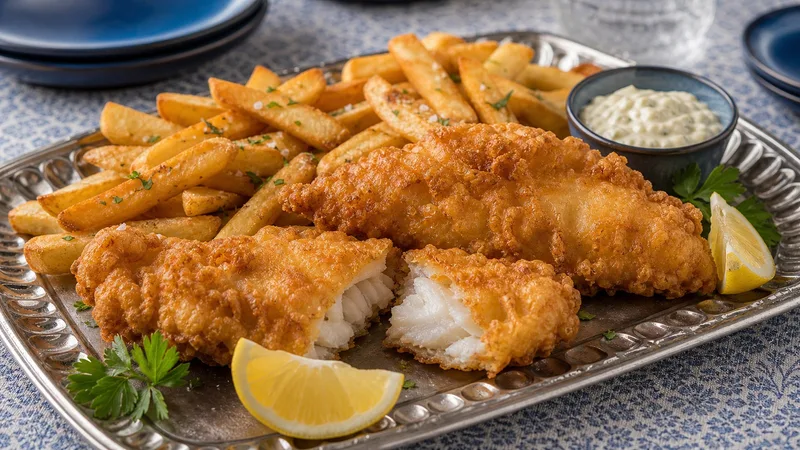
Fish and Chips
To make fish and chips, dip cod fillets in a cold beer batter and fry at 375°F until golden and crispy, about 4-5 minutes per batch. Fry thick-cut potatoes twice — once at 325°F to cook through, then at 375°F to crisp — and season immediately with salt.
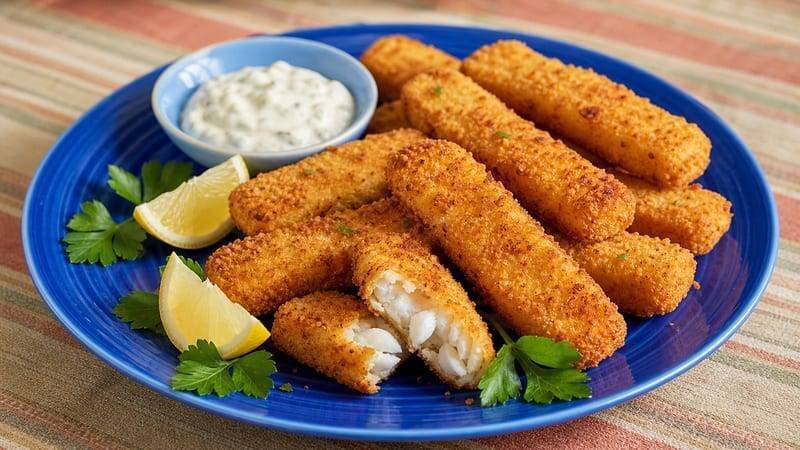
Fish and chips has a very small window between magnificent and damp newspaper. The goal is cod or haddock inside a light, crisp shell, with fries that stay fluffy in the middle and browned on the outside long enough to reach the table. This recipe gets there with cold lager, flour, baking powder, egg, and properly heated frying oil. The cold batter hitting hot oil creates rapid steam and a brittle crust before the fish has time to overcook. If the oil is too cool, the coating absorbs fat. If it is too hot, the outside gets ambitious before the center is ready.
The potatoes need their own attention because “chips” are not just whatever fries happen to be nearby. Russets have enough starch to develop a crisp exterior while keeping a soft interior, and cutting them to an even half-inch thickness keeps the cooking predictable. Once the fish is fried, serve it immediately with malt vinegar, tartar sauce, and lemon. This is not a dish that improves while somebody finishes setting the table, finds the good napkins, and asks where everyone wants to sit. Fried food has the patience of a toddler in a checkout line. Have everything ready, control the oil temperature, and eat it while the crust still crackles.
Ingredients
- 1 ½ lbs cod fillets (or haddock), cut into 4-6 oz portions
- 2 lbs russet potatoes, peeled and cut into ½-inch thick strips
- 1 ½ cups all-purpose flour, divided
- 1 teaspoon baking powder
- 1 teaspoon fine sea salt, plus more for seasoning
- ½ teaspoon black pepper
- ½ teaspoon garlic powder
- 1 cup cold lager beer (or cold sparkling water)
- 1 large egg
- Vegetable oil or peanut oil, for frying (about 2 quarts)
- Malt vinegar and tartar sauce, for serving
- Lemon wedges, for serving
Instructions
- 1Peel and cut potatoes into ½-inch thick strips. Rinse under cold water until the water runs clear, then pat completely dry with paper towels. Dry potatoes are not optional — wet potatoes in hot oil will introduce you to a situation you were not prepared for.
- 2Pour oil into a large heavy-bottomed pot or Dutch oven to a depth of 3-4 inches. Heat to 325°F over medium-high heat, using a deep-fry thermometer to monitor temperature.
- 3Working in batches, fry the potatoes at 325°F for 5-6 minutes until just cooked through but not yet golden. They should be soft and pale. Remove with a slotted spoon and drain on a wire rack or paper towels. Let rest for at least 10 minutes. (This is the first fry — do not rush to the second.)
- 4While the chips rest, make the batter. In a large bowl, whisk together 1 cup flour, baking powder, salt, pepper, and garlic powder. Add the cold beer and egg and whisk until just combined — a few small lumps are fine. Do not overmix. Place the batter bowl in the refrigerator until ready to use; cold batter is the whole game.
- 5Put the remaining ½ cup flour in a shallow dish. Pat the fish fillets completely dry with paper towels and season lightly with salt and pepper. Dredge each fillet in the plain flour, shaking off the excess.
- 6Raise the oil temperature to 375°F. Working in batches of 2 fillets at a time, pull the batter from the refrigerator, dip each floured fillet into the beer batter, let the excess drip off, then lower carefully into the hot oil. Fry for 4-5 minutes, turning once halfway through, until deep golden brown and cooked through. Internal temperature should reach 145°F. Remove and drain on a wire rack. Do not pile fillets on top of each other or they will steam and lose their crunch.
- 7While the fish rests, return the oil to 375°F. Fry the par-cooked chips in batches for 3-4 minutes until deeply golden and crispy. Remove immediately, drain on the wire rack, and season generously with salt right away — salt sticks when the chips are hot and doesn't stick nearly as well when they've cooled, which is a metaphor for something but mostly it's just a cooking tip. Cook seafood until opaque and cooked through; fish should flake easily or reach 145°F.
- 8Serve immediately with malt vinegar, tartar sauce, and lemon wedges.
Nutrition Information
Estimated per serving: 1 of 4 servings.
Estimated from the ingredients and quantities in this recipe using standard food-composition values. Brand choices, trimming, cooking loss, optional ingredients, and actual portion size can change the numbers. How we calculate nutrition estimates.
Pro Tips
- Cold batter is mandatory, not suggested. The temperature contrast between cold batter and hot oil is what creates the rapid steam that makes the coating puff and crisp. Warm batter produces a dense, greasy coating that slides off and makes you feel personally attacked.
- Dry your fish and your potatoes like you mean it. Surface moisture is the enemy of crunch. Paper towels, press firmly, be thorough. This step takes thirty seconds and saves the whole dish.
- Fry in small batches. Adding too much cold food drops the oil temperature, and once the oil temperature drops, you're not frying anymore — you're just slowly soaking things in warm fat. Neither of you deserves that.
Substitutions
Storage Instructions
Fish and chips are best eaten immediately. If you must store leftovers, keep fish and chips separately in airtight containers in the refrigerator for up to 2 days. Reheat on a wire rack on a baking sheet in a 400°F oven for 10-12 minutes — this restores most of the crunch. Do not microwave them. I'm not telling you what to do, but I am telling you what to do.
Make Ahead
The chips can be first-fried (325°F par-cook stage) up to 4 hours ahead and held at room temperature. Complete the second fry just before serving. The batter can be made up to 1 hour ahead and kept refrigerated — cold batter holds well. Do not batter the fish ahead of time.
Freezing
You can freeze cooked fish and chips, but both lose some crispness after thawing. Cool the fish and potatoes completely, freeze them separately, thaw in the refrigerator, and reheat with dry heat in a hot oven or air fryer rather than the microwave.
Frequently Asked Questions
Can I make Fish and Chips ahead of time?
Yes. The chips can be first-fried (325°F par-cook stage) up to 4 hours ahead and held at room temperature. Complete the second fry just before serving. The batter can be made up to 1 hour ahead and kept refrigerated — cold batter holds well. Do not batter the fish ahead of time.
How do I store leftover Fish and Chips?
Fish and chips are best eaten immediately. If you must store leftovers, keep fish and chips separately in airtight containers in the refrigerator for up to 2 days. Reheat on a wire rack on a baking sheet in a 400°F oven for 10-12 minutes — this restores most of the crunch. Do not microwave them. I'm not telling you what to do, but I am telling you what to do.
Can I freeze Fish and Chips after cooking?
You can freeze cooked fish and chips, but both lose some crispness after thawing. Cool the fish and potatoes completely, freeze them separately, thaw in the refrigerator, and reheat with dry heat in a hot oven or air fryer rather than the microwave.
What substitutions work in Fish and Chips?
Tested swaps for this recipe: cod: haddock. The more traditional British choice — slightly firmer with a mildly sweeter flavor, works identically in this batter. cod: pollock or tilapia. Budget-friendly alternatives that work well; tilapia has a milder flavor and slightly thinner fillets, so reduce fry time by about 1 minute.
What's the most common mistake when making Fish and Chips?
Cold batter is mandatory, not suggested. The temperature contrast between cold batter and hot oil is what creates the rapid steam that makes the coating puff and crisp. Warm batter produces a dense, greasy coating that slides off and makes you feel personally attacked.
Make It a Meal
Pair this recipe with a side, bread, and something sweet from the FAFO Kitchen.
More Like This

You Might Also Like
Finish With Dessert
Try this next
Chocolate Banana Muffins
View recipe →