

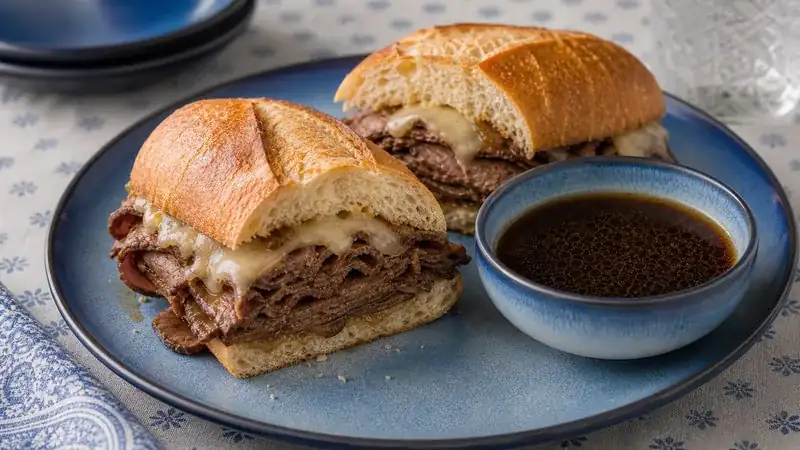
French Dip Sandwich
A french dip sandwich is made by roasting or slow-cooking beef, then serving it thinly sliced on a hoagie roll with a side of au jus made from the pan drippings and beef broth. The sandwich is dipped into the warm broth before each bite.
The au jus in a French dip is not a side project. It is half the reason the sandwich exists. A pile of good roast beef on a toasted roll is already respectable, but once the bread hits a bowl of deeply beefy cooking liquid, the whole operation changes. The trick is making a jus worth dipping into instead of serving broth that tastes like the roast briefly waved at it from across the room.
This version starts with a three- to three-and-a-half-pound chuck or bottom round roast, seasoned with salt, pepper, garlic, onion powder, and thyme, then browned before a long braise. Onion, smashed garlic, red wine, beef broth, Worcestershire, soy sauce, Dijon, thyme, and bay leaf build layers around the meat while it cooks. That combination gives the finished liquid salt, umami, acidity, and actual beef flavor, while the slow cook makes the roast tender enough to slice or pull into a sandwich without putting up a fight.
Butter and toast the rolls so they can survive contact with the jus, add provolone if you want the classic melty layer, and serve the dipping liquid hot alongside. There is a point where “just a little dip” becomes holding the sandwich underwater like it owes you money. That is between you and your napkin supply. The important thing is that the bread has enough structure and the jus has enough flavor to make the dunk worth doing.
Ingredients
- 3 to 3.5 lbs beef chuck roast or bottom round roast
- 2 teaspoons kosher salt
- 1 teaspoon black pepper
- 1 teaspoon garlic powder
- 1 teaspoon onion powder
- 1/2 teaspoon dried thyme
- 2 tablespoons neutral oil (vegetable or canola)
- 1 medium yellow onion, thinly sliced
- 4 cloves garlic, smashed
- 1/4 cup dry red wine (or additional beef broth)
- 3 cups good-quality beef broth, low sodium
- 1 tablespoon Worcestershire sauce
- 1 tablespoon soy sauce
- 1 teaspoon Dijon mustard
- 2 sprigs fresh thyme (or 1/4 teaspoon dried)
- 1 bay leaf
- 6 hoagie rolls or French rolls
- 6 slices provolone cheese (optional but correct)
- Softened butter for toasting rolls
Instructions
- 1Pat the beef completely dry with paper towels. A wet roast will steam instead of sear, and you will lose the fond — that brown crust on the bottom of the pan that is the backbone of your au jus. Mix the salt, pepper, garlic powder, onion powder, and dried thyme and rub the mixture all over the roast. Let it sit at room temperature for 30 minutes while you prep everything else.
- 2Preheat your oven to 325°F (163°C). Heat a large Dutch oven or heavy oven-safe pot over medium-high heat. Add the oil and let it shimmer. Sear the roast on all sides until deeply browned, about 3 to 4 minutes per side. Do not rush this. The sear is doing flavoring work that the broth cannot do alone. Remove the beef and set it aside.
- 3Reduce the heat to medium. Add the sliced onion to the same pot and cook, stirring occasionally, until softened and starting to turn golden, about 5 minutes. Add the smashed garlic and cook 1 more minute.
- 4Pour in the red wine (or 1/4 cup extra beef broth) and scrape up every browned bit from the bottom of the pot with a wooden spoon. This is the deglaze, and those bits are not burnt — they are concentrated beef flavor. Let the wine reduce by half, about 2 minutes.
- 5Add the beef broth, Worcestershire sauce, soy sauce, Dijon mustard, thyme sprigs, and bay leaf. Stir to combine. Nestle the seared roast back into the pot. The liquid should come about halfway up the sides of the meat. If it doesn't, add more broth.
- 6Cover the pot with a tight-fitting lid and transfer to the 325°F oven. Braise for 3 to 3.5 hours, turning the roast once halfway through, until the beef is fork-tender and pulls apart easily. A bottom round roast may be closer to 3 hours; chuck roast may take the full 3.5.
- 7Remove the beef from the pot and set it on a cutting board to rest for 15 minutes. Meanwhile, strain the braising liquid through a fine mesh strainer into a saucepan, pressing on the solids to extract all the liquid. Discard the solids. Skim the fat from the surface of the strained broth, or use a fat separator. Taste the au jus and adjust seasoning — but add salt carefully and in small amounts, tasting as you go. Keep it warm over low heat.
- 8Slice the beef thinly against the grain, or use two forks to pull it into generous chunks. Both are correct. Both are delicious.
- 9Split and butter the hoagie rolls and toast them under the broiler, cut side up, for 1 to 2 minutes until golden. Watch them — they go from perfect to regrettable very fast.
- 10If using provolone, lay a slice on the bottom half of each toasted roll and return briefly to the broiler for 30 to 45 seconds until just melted. Pile the sliced beef onto the rolls. Ladle the hot au jus into small bowls or ramekins for each person. Serve immediately.
Nutrition Information
Estimated per serving: 1 of 6 servings.
Estimated from the ingredients and quantities in this recipe using standard food-composition values. Brand choices, trimming, cooking loss, optional ingredients, and actual portion size can change the numbers. How we calculate nutrition estimates.
Pro Tips
- Low-sodium beef broth is not negotiable here. The braising liquid reduces and concentrates as it cooks, and if you start with regular-sodium broth you will end up with au jus that tastes like it has a personal vendetta against your blood pressure. Start low, season at the end.
- Let the beef rest before slicing. If you cut into it straight from the pot, the juices run out onto the cutting board and you get dry sandwich meat instead of the tender, juicy beef you spent three hours making. Fifteen minutes is enough.
- If your au jus tastes flat, add a small splash more Worcestershire or soy sauce rather than salt — they add depth and complexity, not just saltiness. A pinch of black pepper and one more minute on the heat can also bring it into focus.
- The roll matters more than people acknowledge. A soft, pillowy roll will collapse after one dip. You want a roll with a genuine crust — a bakery hoagie, a French roll, something that has a point of view about its own structural integrity.
Substitutions
Storage Instructions
Store sliced beef and au jus separately in airtight containers in the refrigerator for up to 4 days. The fat in the au jus will solidify on top when cold — skim it off before reheating. Reheat the beef gently in a bit of the au jus in a covered pan over low heat to keep it from drying out. Do not store assembled sandwiches. Toast fresh rolls when you're ready to serve.
Make Ahead
This recipe is genuinely better the next day. The beef can be braised up to 2 days ahead, stored with its braising liquid. The fat skimming is also easier once the liquid has been refrigerated, since the fat solidifies into a layer you can lift right off. Reheat the beef in the strained broth over low heat, covered, until warmed through.
Freezing
Yes, but freeze the beef and au jus separately from the rolls. Cool the sliced beef in some of the jus, freeze airtight, thaw in the refrigerator, and reheat gently in the liquid; assemble the toasted sandwiches fresh.
Frequently Asked Questions
Can I make this ahead of time?
Yes. This recipe is genuinely better the next day. The beef can be braised up to 2 days ahead, stored with its braising liquid. The fat skimming is also easier once the liquid has been refrigerated, since the fat solidifies into a layer you can lift right off. Reheat the beef in the strained broth over low heat, covered, until warmed through.
How do I store the leftovers?
Store sliced beef and au jus separately in airtight containers in the refrigerator for up to 4 days. The fat in the au jus will solidify on top when cold — skim it off before reheating. Reheat the beef gently in a bit of the au jus in a covered pan over low heat to keep it from drying out. Do not store assembled sandwiches. Toast fresh rolls when you're ready to serve.
Can I freeze French Dip Sandwich?
Yes, but freeze the beef and au jus separately from the rolls. Cool the sliced beef in some of the jus, freeze airtight, thaw in the refrigerator, and reheat gently in the liquid; assemble the toasted sandwiches fresh.
Can I adjust it for what I have on hand?
Yes. Tested adjustments on this recipe include beef chuck roast → bottom round roast or rump roast; dry red wine → additional beef broth plus 1 teaspoon red wine vinegar; and provolone cheese → Swiss cheese or white American cheese.
What's the most common mistake to avoid?
Low-sodium beef broth is not negotiable here. The braising liquid reduces and concentrates as it cooks, and if you start with regular-sodium broth you will end up with au jus that tastes like it has a personal vendetta against your blood pressure. Start low, season at the end.
Make It a Meal
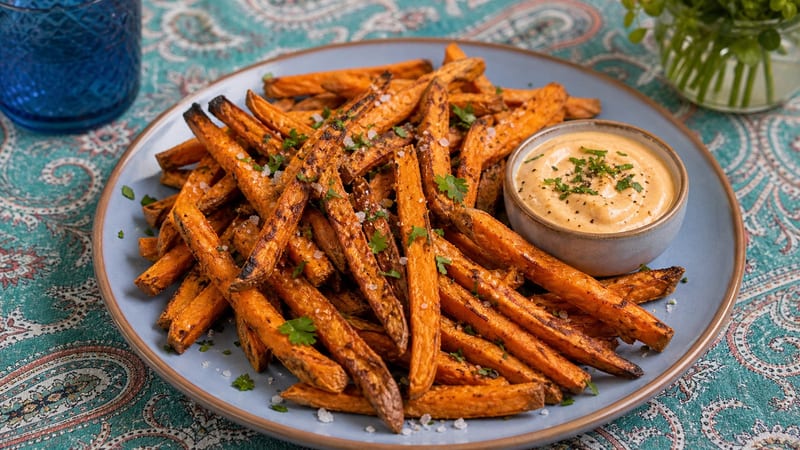
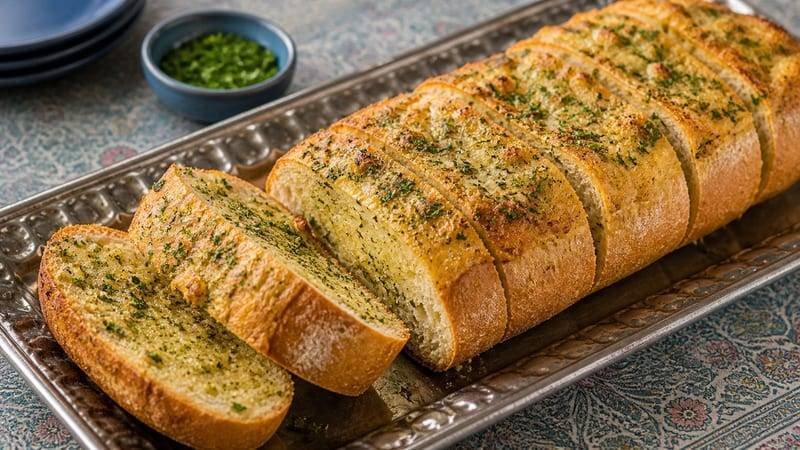
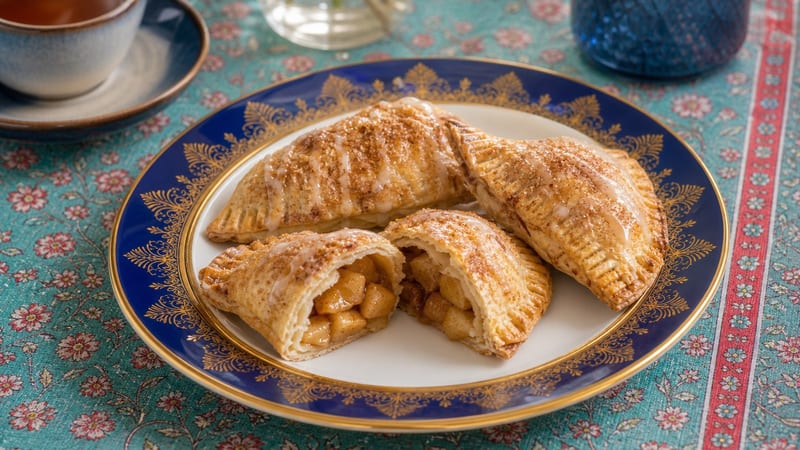
Pair this recipe with a side, bread, and something sweet from the FAFO Kitchen.
More Like This
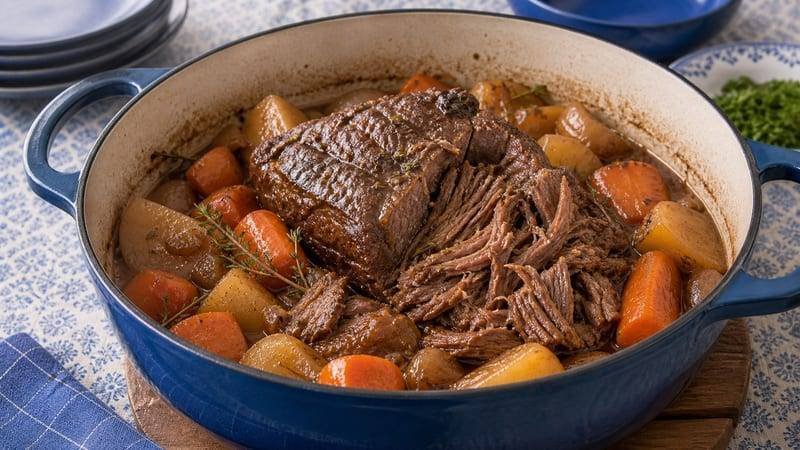 Pot RoastBoth feature Chuck Roast
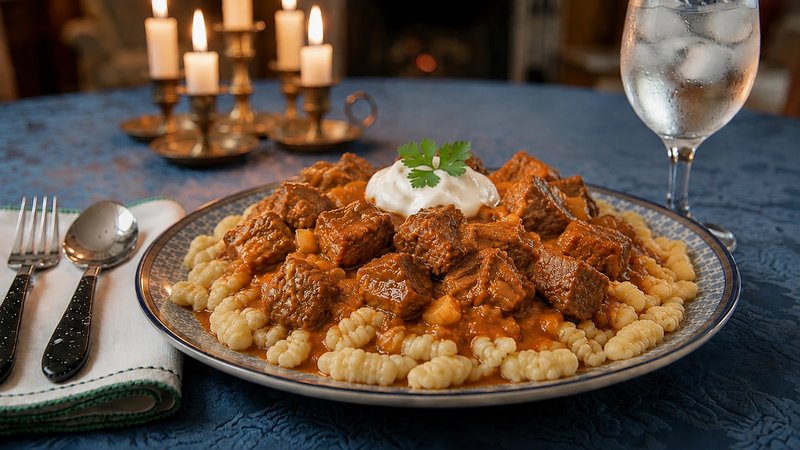 Hungarian Goulash with Homemade SpaetzleBoth feature Chuck Roast
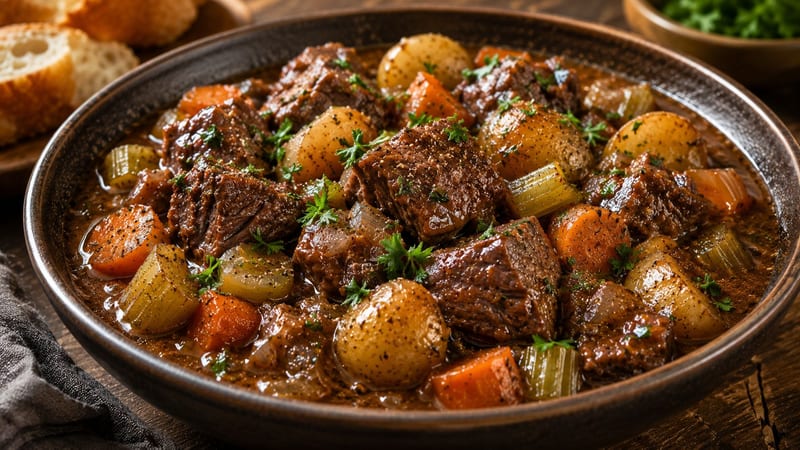 Slow Cooker Pot RoastBoth feature Chuck Roast
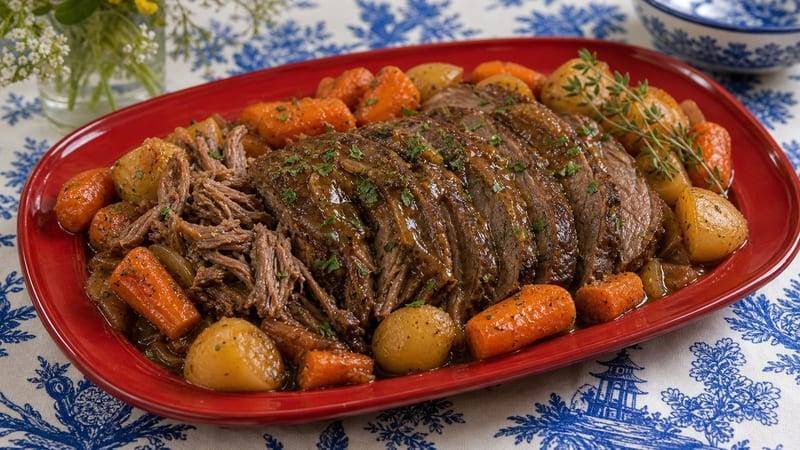 Instant Pot Pot Roast with CarrotsBoth feature Chuck Roast
You Might Also Like



Finish With Dessert

Try this next
Chocolate Chip Cookies
View recipe →