

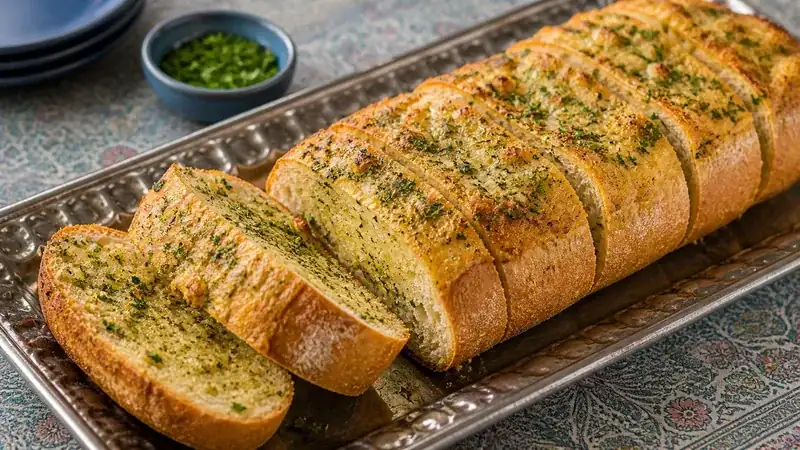
Garlic Bread
To make garlic bread, mix softened butter with minced fresh garlic, parsley, and salt, spread it onto sliced Italian or French bread, and bake at 375°F for 10 minutes before broiling for 2-3 minutes until golden. You can make it with or without cheese — both versions take under 20 minutes total.
Garlic bread should create a small amount of concern about whether you used too much garlic. If nobody at the table can identify what flavor it is, the bread has failed its only interview question. This version uses four cloves of fresh garlic worked into softened butter with parsley, kosher salt, and black pepper, then spreads that mixture across a full Italian or French loaf so the butter can soak into the cut surface while the edges toast.
Softened butter matters because it lets the garlic distribute evenly instead of sitting in raw little piles waiting to ambush one bite. Fresh parsley keeps the richness bright, and the bread needs enough oven time to become crisp at the edges while staying tender where the butter has melted in. Add mozzarella or Parmesan if you want cheesy garlic bread, but the base version does not need cheese to manufacture flavor. This is ready in under 20 minutes and goes with pasta, soup, meatballs, salads, or the ancient meal known as “I tore off another piece while cooking and now I’m not hungry.” Use real garlic, spread it all the way to the edges, and serve it hot enough that the butter still shines.
Ingredients
- 1 loaf Italian or French bread (about 12-14 inches long)
- 6 tablespoons unsalted butter, softened to room temperature
- 4 cloves fresh garlic, minced (about 1 1/2 teaspoons)
- 2 tablespoons fresh flat-leaf parsley, finely chopped
- 1/4 teaspoon kosher salt
- 1/8 teaspoon black pepper
- Optional: 1/2 cup shredded mozzarella or Parmesan for cheesy garlic bread
Instructions
- 1Preheat your oven to 375°F. Set your oven rack to the middle position. If you plan to broil at the end — and you should — make sure your broiler element is working before you need it. Finding this out at step five is not ideal.
- 2In a small bowl, combine the softened butter, minced fresh garlic, chopped parsley, salt, and black pepper. Mix until fully combined and the garlic is evenly distributed throughout the butter. The butter should be soft enough to spread without tearing the bread — if it's still stiff, microwave it in 5-second intervals until it cooperates.
- 3Slice the bread loaf lengthwise down the center so you have two long halves. Place both halves cut-side up on a large baking sheet lined with foil.
- 4Spread the garlic butter evenly across both cut surfaces, going all the way to the edges. Do not be shy with the edges. The edges are actually the best part and they deserve equal treatment.
- 5If making cheesy garlic bread, sprinkle shredded mozzarella or Parmesan evenly over the buttered bread before baking.
- 6Bake at 375°F for 10 minutes, until the butter is fully melted into the bread and the surface looks glossy and pale gold.
- 7Switch your oven to broil on high. Broil the bread for 2-3 minutes, watching it the entire time. You want the top golden with some darker edges — not burned, but committed. The difference between perfect and ruined is about 45 seconds, so this is not the moment to check your phone.
- 8Remove from the oven and let it cool for 2 minutes so the inside of the butter layer sets slightly and you don't burn the roof of your mouth immediately upon contact. Slice into 2-inch pieces and serve warm.
Nutrition Information
Estimated per serving: 1 of 6 servings.
Estimated from the ingredients and quantities in this recipe using standard food-composition values. Brand choices, trimming, cooking loss, optional ingredients, and actual portion size can change the numbers. How we calculate nutrition estimates.
Pro Tips
- Soften the butter on the counter for 30-45 minutes before you start. Cold butter tears bread and also makes the garlic distribute unevenly, which means some bites have all the garlic and some bites have none. This is a chaos pattern.
- Mince the garlic as finely as you can — or press it through a garlic press. Large chunks of raw garlic can burn under the broiler before the bread is done, and burnt garlic tastes sharp and unhappy in a way that doesn't improve anything.
- Lining your baking sheet with foil is non-negotiable if you want to keep your pan. Garlic butter runs, drips, and caramelizes onto metal in a way that requires effort and resentment to clean.
Substitutions
Storage Instructions
Store leftover garlic bread wrapped in foil at room temperature for up to 2 days, or in the refrigerator for up to 4 days. Reheat in a 350°F oven for 8-10 minutes (still wrapped in foil to keep it from drying out), then open the foil for the last 2 minutes to re-crisp the top. Microwaving works in an emergency but produces a softer, less interesting result.
Make Ahead
You can assemble the garlic butter and spread it onto the sliced bread up to 24 hours ahead. Wrap the prepared loaf tightly in plastic wrap and refrigerate. When ready to cook, let it sit at room temperature for 15 minutes while the oven preheats, then bake and broil as directed.
Freezing
Yes. Cool Garlic Bread completely before wrapping it tightly for the freezer. Freeze individual portions when practical; thaw while still wrapped so condensation forms on the wrapping rather than directly on the crumb.
More Like This
You Might Also Like

Finish With Dessert
Try this next
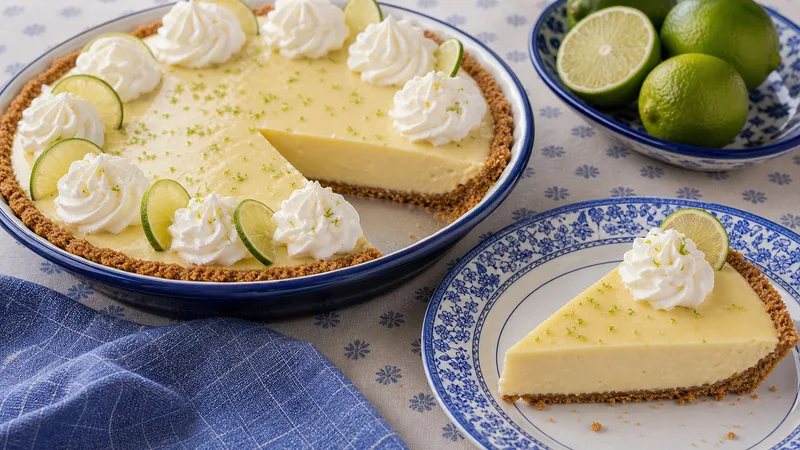
Key Lime Pie Recipe That Actually Tastes Like Key Limes
View recipe →