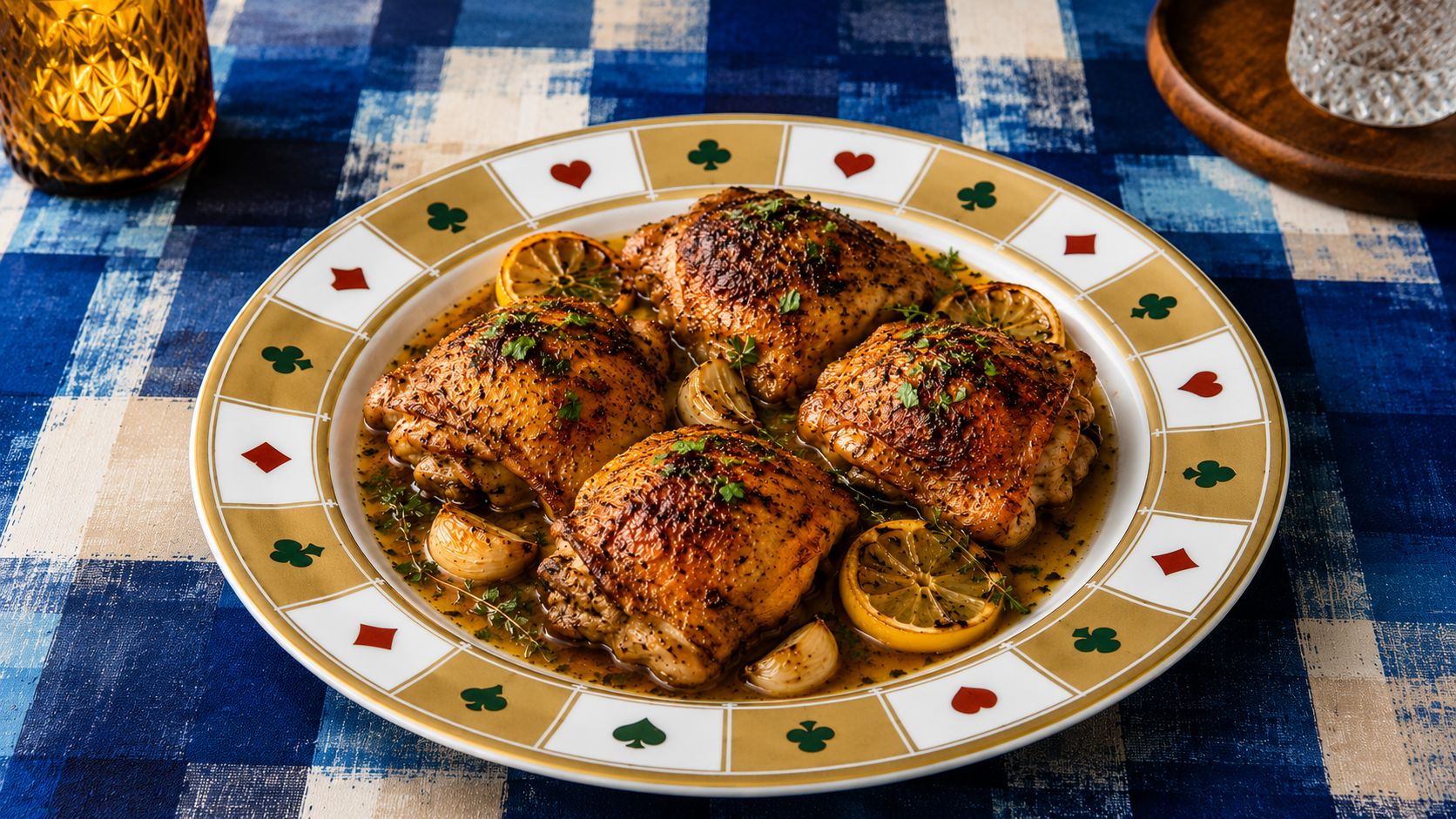
Gluten Free Recipes: One-Pan Lemon Herb Chicken
Most gluten free recipes succeed by swapping wheat flour for certified gluten free alternatives like rice flour, almond flour, or a 1:1 gluten free blend, and ensuring all sauces, broths, and seasonings are labeled gluten free. This one-pan lemon herb chicken uses no flour at all —? the crispy skin and bright pan sauce are naturally gluten free from start to finish.
A close friend of mine was diagnosed with celiac disease in her early thirties, which changed the way she ate and also, somewhat unexpectedly, the way I cooked when she came over. I started paying attention to what I was already making that happened to be gluten-free rather than what I would need to modify or substitute, and I discovered that most of what I made on weeknights was either already fine or one small swap away from it.
This lemon herb chicken was already in my rotation before I knew she couldn't eat gluten. It's chicken thighs, lemon, garlic, herbs, olive oil, and a hot pan. Nothing in it needed to change. What surprised me was how often the dish I chose for a "gluten-free dinner" ended up being the dish everyone at the table was most enthusiastic about — not because it was a special-diet version of something, but because it was just good food that happened to not have wheat in it.
The key to the dish is the sear. The chicken needs to go skin-side down into a hot, oiled pan and stay there without being moved until it releases cleanly and the skin is deep golden. The lemon goes in after the flip — squeezed over the chicken and deglazing the fond from the bottom of the pan into a quick pan sauce that's sharper and more savory than it looks like it should be from two minutes of cooking.
My friend always asks for this one when she comes over. The gluten-free designation is technically correct and completely beside the point.
Ingredients
- 4 bone-in, skin-on chicken thighs (about 2.5 lbs total)
- 3 tablespoons olive oil, divided
- 1 teaspoon kosher salt
- 1/2 teaspoon black pepper
- 1 teaspoon garlic powder
- 1 teaspoon smoked paprika
- 1/2 teaspoon dried oregano
- 1/2 teaspoon dried thyme
- 6 cloves garlic, smashed and peeled
- 1 lemon, sliced into rounds
- 1/2 cup low-sodium chicken broth (certified gluten free)
- 2 tablespoons fresh parsley, roughly chopped (for finishing)
- 1 tablespoon fresh thyme leaves (for finishing, optional)
Instructions
- 1Preheat your oven to 425°F. While it heats, pat the chicken thighs completely dry with paper towels —? and I mean completely dry, like you are trying to win something. Moisture is the enemy of crispy skin.
- 2In a small bowl, combine the salt, pepper, garlic powder, smoked paprika, dried oregano, and dried thyme. Rub 1 tablespoon of olive oil over the chicken thighs, then press the spice mixture evenly onto all sides, including under the skin if you can manage it without the skin staging a protest.
- 3Heat the remaining 2 tablespoons of olive oil in a 12-inch oven-safe skillet (cast iron preferred) over medium-high heat until the oil shimmers and looks like it means business —? about 2 minutes.
- 4Place the chicken thighs skin-side down in the hot skillet. Do not move them. Do not check on them. Do not poke them with a spatula out of anxiety. Cook undisturbed for 5 to 6 minutes until the skin releases easily and is deep golden brown.
- 5Flip the thighs skin-side up. Scatter the smashed garlic cloves and lemon slices around the chicken in the pan. Pour the chicken broth around (not over) the chicken.
- 6Transfer the skillet to the preheated oven. Roast for 25 to 28 minutes, until the internal temperature reads 165°F on an instant-read thermometer inserted into the thickest part of the thigh without touching the bone.
- 7Remove from the oven and let the chicken rest in the pan for 5 minutes. The garlic will have softened into the pan juices and the lemon will look burnished and slightly collapsed, which is exactly right.
- 8Spoon the pan juices over the chicken, scatter fresh parsley and thyme leaves on top, and serve directly from the skillet. Squeeze any roasted lemon rounds over the top at the table.
Pro Tips
- Dry the chicken skin like your dinner depends on it —? because it does. Any surface moisture will steam instead of sear, and steamed chicken skin has the texture and dignity of wet cardboard.
- Use certified gluten free chicken broth. Most plain broths are naturally gluten free, but some brands add yeast extract or flavorings that contain gluten. Read the label the first time so you don't have to read it panicking at the stove.
- Cast iron is strongly preferred here. It holds heat evenly, goes straight from stovetop to oven without complaint, and makes you look like you know what you're doing even on nights when you absolutely do not.
Substitutions
Storage Instructions
Store leftover chicken in an airtight container in the refrigerator for up to 4 days. Store pan juices separately and spoon over chicken when reheating. Reheat in a 350°F oven for 12-15 minutes or in a covered skillet over medium-low heat with a splash of broth. Microwaving is technically possible and I will not stop you, but the skin will suffer and it will know.
Make Ahead
Season the chicken up to 24 hours ahead and refrigerate uncovered on a rack —? this actually improves the skin. The spice rub sets into the surface and the skin dries out further in the fridge, which means an even better sear. Pull from the fridge 20 minutes before cooking so the chicken isn't ice-cold when it hits the pan.
Frequently Asked Questions
How do I know if a recipe is truly gluten free versus just wheat-free?
Wheat-free and gluten free are not the same thing. Gluten is found in wheat, barley, rye, and sometimes oats (due to cross-contamination). A recipe can be wheat-free but still contain barley malt in a sauce or regular soy sauce. Always check that all packaged components —? broths, spice blends, sauces —? are specifically labeled certified gluten free, not just 'wheat-free.'
Can I use a regular skillet if I don't have cast iron?
Yes. Any oven-safe skillet works —? stainless steel is your next best option. Avoid non-stick skillets in an oven above 400°F; the coating can degrade at high heat. If your skillet has a plastic handle that isn't oven-safe, transfer everything to a baking dish after the stovetop sear step, then finish in the oven.
Why did my chicken skin come out soggy instead of crispy?
Three likely culprits: the skin wasn't dry enough before it hit the pan, the pan wasn't hot enough when you added the chicken, or you moved the chicken too soon and broke the sear. Pat very dry, let the oil shimmer before adding the chicken, and resist the urge to check until a full 5 minutes have passed. The skin will release cleanly when it's ready.
Can I make this ahead of time for a dinner party?
You can season the chicken up to 24 hours ahead and refrigerate uncovered on a rack —? this actively improves results. The fully cooked dish reheats well in a 350°F oven covered loosely with foil for 15 minutes. For a dinner party, I'd cook it fresh if possible; the skin loses its crispness on the second day, which is survivable but not the same experience.
How do I store leftovers and how long do they last?
Refrigerate in an airtight container for up to 4 days. Keep the pan juices in a separate small container and use them for reheating —? add a splash to a covered skillet over medium-low heat for the best results. The chicken also works cold, shredded over a salad, which is genuinely good and requires zero reheating effort.
Is this recipe safe for people with celiac disease?
The recipe itself contains no gluten-containing ingredients. However, if you are cooking for someone with celiac disease, cross-contamination matters too. Use clean cookware, certified gluten free broth and spice blends, and if your kitchen regularly processes wheat, give your cutting board and skillet a thorough wash before starting. A diagnosis of celiac is not a moment to wing it with the label-reading.
What should I serve alongside this to keep the whole meal gluten free?
Roasted vegetables on a sheet pan at the same oven temperature work perfectly —? put them in 10 minutes before the chicken goes in and they'll finish around the same time. Mashed potatoes, steamed rice, cauliflower rice, or a simple green salad all pair well and are naturally gluten free. The pan juices act as a light sauce, so you don't need anything heavy on the side.
Can I double this recipe for a larger group?
Yes, with one adjustment: don't crowd the skillet. Crowded chicken steams instead of sears. Use two separate skillets for the stovetop step, or sear in batches and transfer everything to a large rimmed sheet pan for the oven portion. Doubling the recipe adds no time to the oven —? just make sure no pieces are overlapping.