
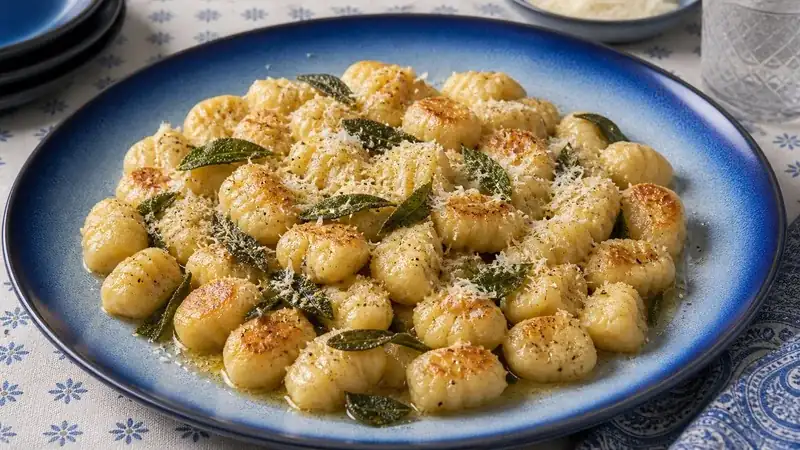
Gnocchi
To make gnocchi, bake or boil russet potatoes until tender, rice them while hot, then mix with flour, egg, and salt until a soft dough forms. Roll into ropes, cut into small pieces, and boil in salted water until they float — about 2 to 3 minutes.
Good gnocchi should feel almost suspiciously light for something made mostly from potatoes and flour. Bad gnocchi can be used to anchor a small boat. The difference is moisture and restraint. Baking russet potatoes instead of boiling them lets steam escape, and ricing them while they are still hot creates a dry, fluffy base that needs less flour to become workable dough. This is where people get nervous and start adding flour like they are trying to make the dough feel emotionally secure. Don’t. The more flour you add and the more aggressively you knead, the denser the gnocchi become. Egg, salt, a little nutmeg, and just enough flour should come together with gentle folding and pressing. The dough stays soft and slightly tacky; that is not a failure, that is the point.
Once rolled and cut, the gnocchi tell you when they are nearly done by floating to the surface of boiling salted water. Give them about 30 seconds after they rise, then move them straight into sauce or a little butter. Fork ridges are optional, but they do give sauce somewhere useful to hide. The whole recipe is basically an exercise in touching the potatoes less than your instincts tell you to.
Ingredients
- 2 pounds russet potatoes (about 3 large)
- 1 large egg, lightly beaten
- 1 teaspoon kosher salt, plus more for the boiling water
- 1/4 teaspoon freshly grated nutmeg
- 1 to 1 1/4 cups all-purpose flour, plus more for dusting
Instructions
- 1Preheat your oven to 400°F. Pierce each potato several times with a fork, place directly on the oven rack, and bake for 50 to 60 minutes until completely tender all the way through. Do not wrap them in foil — you want the steam to escape, not pool.
- 2While the potatoes are still hot, cut them in half and scoop the flesh into a potato ricer. Rice them onto a clean, lightly floured surface. If you do not have a ricer, use the largest holes on a box grater. Do not use a food processor or a masher — overworked potato becomes gluey and the gnocchi will be dense.
- 3Spread the riced potato out loosely and let it steam for 2 to 3 minutes. You want it dry. This step is not optional.
- 4Make a well in the center of the potato. Add the beaten egg, salt, and nutmeg. Pour 1 cup of the flour around the edges of the mound.
- 5Using a bench scraper or your hands, gently bring the dough together. Work it only until it just comes together into a soft, slightly sticky dough — about 30 to 40 seconds of gentle folding and pressing. If the dough is sticking badly to your hands, add flour one tablespoon at a time, up to 1/4 cup more. Stop the moment it holds together. More flour means tougher gnocchi.
- 6Divide the dough into 6 equal pieces. On a lightly floured surface, roll each piece into a rope about 3/4-inch thick. Use your fingertips and a light touch — if you press hard you will smash the air out of them.
- 7Cut each rope into 3/4-inch pieces with a bench scraper or sharp knife. For the classic ridged look, roll each piece gently down the back of a fork. This is optional but it does help sauce cling.
- 8Bring a large pot of heavily salted water to a rolling boil. Working in batches of about 20 at a time, drop the gnocchi in. They will sink, then float. Cook for 30 seconds after they float, then remove with a slotted spoon. Total boiling time per gnocchi is 2 to 3 minutes.
- 9Transfer immediately to your sauce or to a baking dish with a little butter or olive oil to keep them from sticking together. Serve right away.
Nutrition Information
Estimated per serving: 1 of 4 servings.
Estimated from the ingredients and quantities in this recipe using standard food-composition values. Brand choices, trimming, cooking loss, optional ingredients, and actual portion size can change the numbers. How we calculate nutrition estimates.
Pro Tips
- Baking the potatoes instead of boiling them is the single most important thing in this recipe. Boiled potatoes carry too much moisture, which forces you to add more flour, which makes your gnocchi feel like you rolled them out of a stress ball.
- Measure flour by spooning it into the cup and leveling — do not scoop directly from the bag. A packed cup of flour can be 20 to 30% heavier and will ruin your dough before you even know what happened.
- Test one gnocchi before cooking the whole batch. Drop a single piece in the boiling water. If it falls apart, gently knead a little more flour into the dough. If it holds together and floats, you are cleared for takeoff.
Substitutions
Storage Instructions
Cooked gnocchi should be tossed in a little olive oil and refrigerated in an airtight container for up to 2 days. Reheat gently in a pan with sauce or butter — do not microwave if you can help it, they get rubbery. Uncooked raw gnocchi can be frozen on a parchment-lined baking sheet until solid, then transferred to a freezer bag and stored for up to 2 months. Cook from frozen — do not thaw — and add about 1 minute to the boiling time.
Make Ahead
You can make the raw gnocchi up to 4 hours ahead. Arrange them in a single layer on a parchment-lined, lightly floured baking sheet, cover loosely with plastic wrap, and refrigerate until ready to cook. Do not stack them before cooking or they will stick together in a way that will test your patience.
Frequently Asked Questions
Can I make this ahead of time?
Yes. Make and shape the gnocchi ahead, dust them lightly with flour, and keep them in a single layer until cooking. Boil them close to serving so they stay tender instead of becoming waterlogged.
How do I store the leftovers?
Cooked gnocchi should be tossed in a little olive oil and refrigerated in an airtight container for up to 2 days. Reheat gently in a pan with sauce or butter — do not microwave if you can help it, they get rubbery. Uncooked raw gnocchi can be frozen on a parchment-lined baking sheet until solid, then transferred to a freezer bag and stored for up to 2 months. Cook from frozen — do not thaw — and add about 1 minute to the boiling time.
Can I freeze it?
Yes. See the storage section on this page for exact freezing and thawing directions — most versions of Gnocchi Recipe freeze well for up to 2–3 months when cooled fully first and portioned into airtight containers.
What substitutions work in Gnocchi?
Tested swaps for this recipe: russet potatoes: Yukon Gold potatoes. Yukon Golds work but have more moisture — be especially careful to dry them well and expect to need slightly more flour. all-purpose flour: 00 flour. Italian 00 flour produces a slightly more delicate, silkier gnocchi and is worth finding if you can.
What's the most common mistake to avoid?
Baking the potatoes instead of boiling them is the single most important thing in this recipe. Boiled potatoes carry too much moisture, which forces you to add more flour, which makes your gnocchi feel like you rolled them out of a stress ball.
Make It a Meal
Pair this recipe with a side, bread, and something sweet from the FAFO Kitchen.