
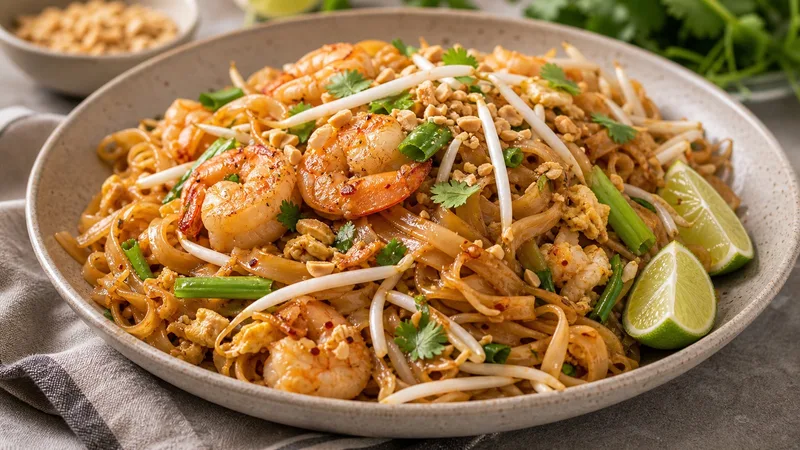
Pad Thai
To make pad thai, soak rice noodles until pliable, stir-fry protein and aromatics in a hot wok, add noodles and a sauce of tamarind paste, fish sauce, and sugar, then finish with egg, bean sprouts, and green onions. The whole dish comes together in under 30 minutes once your ingredients are prepped.
Good Pad Thai is a balancing act disguised as a noodle stir-fry. Tamarind brings the sourness, fish sauce brings the salty depth, sugar rounds the edges, and oyster sauce adds body. None of those ingredients is supposed to win. If one does, you have sweet noodles, fish-sauce noodles, or something that tastes like lime-flavored punishment. The sauce should hit sour, salty, and slightly sweet before it ever touches the wok.
The noodles are where most home versions go sideways. Medium rice noodles get soaked in room-temperature water until pliable but still firm, because they finish cooking in the pan while absorbing sauce. Boiling them first makes the final stir-fry soft and sticky. Shrimp or thinly sliced chicken gets seared separately, then shallots and garlic hit a very hot wok before the drained noodles and sauce go in. Eggs are scrambled right beside the noodles and folded through while they’re still slightly wet, which keeps them tender instead of turning them into little yellow pencil erasers.
Finish with green onions and some of the bean sprouts in the wok, then save the rest of the sprouts, crushed peanuts, lime, and chili for the plate. Pad Thai moves fast once the heat is on, so have everything ready before you start. This is not a recipe that rewards suddenly remembering your peanuts are still in the pantry.
Ingredients
- 6 oz (170g) flat rice noodles, medium width (about 3mm)
- 8 oz (225g) large shrimp, peeled and deveined, OR boneless chicken breast thinly sliced
- 2 tablespoons neutral oil, divided (vegetable or canola)
- 3 cloves garlic, minced
- 2 shallots, thinly sliced
- 2 large eggs
- 1 cup (90g) bean sprouts
- 3 green onions, cut into 1-inch pieces
- 3 tablespoons tamarind paste (not concentrate — see notes)
- 2 tablespoons fish sauce
- 1 tablespoon oyster sauce
- 1 tablespoon granulated sugar
- 1 teaspoon sriracha or chili sauce (optional)
- 2 tablespoons crushed roasted peanuts, for serving
- 1 lime, cut into wedges, for serving
- Dried chili flakes and extra fish sauce, for the table
Instructions
- 1Soak the rice noodles in room temperature water for 20–30 minutes until pliable but still firm — they should bend without snapping. Do not use boiling water or they will overcook in the wok. Drain and set aside.
- 2Make the sauce: In a small bowl, whisk together the tamarind paste, fish sauce, oyster sauce, sugar, and sriracha if using. Taste it — it should be sour, salty, and slightly sweet. Adjust sugar or fish sauce one teaspoon at a time until it tastes balanced. Set aside.
- 3Heat a wok or large skillet over high heat until it just begins to smoke. Add 1 tablespoon of oil. Add the shrimp or chicken in a single layer and cook without moving for 1–2 minutes until seared, then flip and cook another minute until just cooked through. Remove protein from the wok and set aside.
- 4Add the remaining tablespoon of oil to the wok. Add the shallots and garlic and stir-fry for 30–45 seconds until fragrant and just golden. Do not let them burn.
- 5Add the drained noodles and pour the sauce over them. Toss with tongs to coat, pressing the noodles against the hot wok to help them absorb the sauce, about 2 minutes. If they stick, add 1–2 tablespoons of water and keep moving them.
- 6Push the noodles to one side of the wok. Crack the eggs into the empty space and scramble gently until just set but still slightly wet, about 30 seconds, then fold them into the noodles before they fully cook through.
- 7Return the cooked protein to the wok. Add the green onion pieces and half the bean sprouts. Toss everything together for 30 seconds over high heat.
- 8Plate immediately. Top with crushed peanuts, remaining fresh bean sprouts, and lime wedges on the side. Serve with dried chili flakes and extra fish sauce at the table.
- Note Cook chicken to 165°F and shrimp until opaque before serving.
Nutrition Information
Estimated per serving: 1 of 2 servings.
Estimated from the ingredients and quantities in this recipe using standard food-composition values. Brand choices, trimming, cooking loss, optional ingredients, and actual portion size can change the numbers. How we calculate nutrition estimates.
Pro Tips
- Mise en place is not optional here. The wok moves fast and the noodles don't care that you haven't measured the sauce yet. Prep everything before the burner goes on.
- High heat is the whole game. If your pan isn't hot enough, the noodles steam instead of sear and you get the texture I described in my first paragraph. Give the wok a full two minutes to preheat.
- Tamarind paste from a block is more concentrated than jarred paste — if you're using block, dissolve 1.5 tablespoons in 2 tablespoons of warm water and use that. The jarred kind goes in as-is. This distinction cost me one regrettable batch, and now I'm telling you.
Substitutions
Storage Instructions
Store leftovers in an airtight container in the refrigerator for up to 3 days. Reheat in a skillet over medium-high heat with a splash of water to loosen the noodles — microwaving works but the texture suffers. Pad thai does not freeze well; the noodles become mushy.
Make Ahead
The sauce can be made up to 5 days ahead and stored in the refrigerator in a sealed jar. Noodles can be soaked, drained, and tossed with a few drops of oil up to 2 hours ahead and kept at room temperature. Do not pre-cook the full dish for advance serving — pad thai is best made and eaten immediately.
Make It a Meal
Pair this recipe with a side, bread, and something sweet from the FAFO Kitchen.