

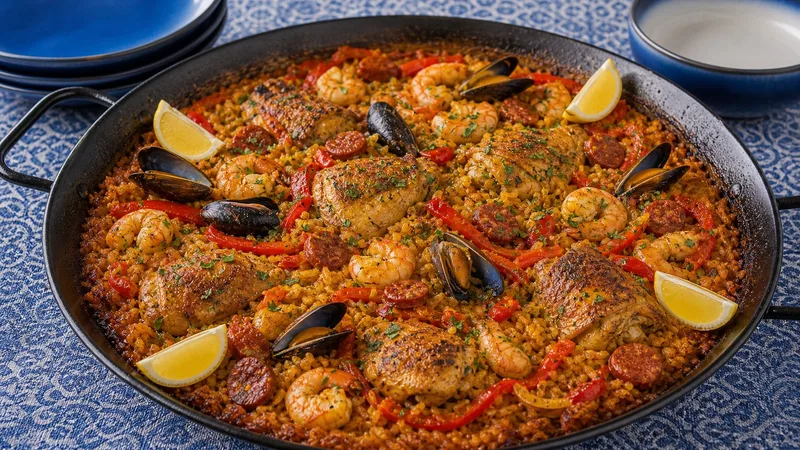
Paella
To make paella, cook seasoned chicken and seafood in a wide skillet, add saffron-infused broth and short-grain rice, and let it simmer undisturbed until the rice is cooked through and a golden crust forms on the bottom. The whole process takes about 60 minutes and serves 4 to 6 people.
Paella gets easier the moment you accept one slightly uncomfortable rule: once the rice goes in, stop messing with it. No stirring, no nervous poking, no standing over the pan like you’re trying to negotiate with it. The rice needs a wide, shallow pan, seasoned broth, and enough uninterrupted contact with the bottom to cook evenly and eventually form socarrat—the toasted crust that makes the last few bites worth fighting relatives over.
This version builds its base with browned chicken thighs, Spanish chorizo, onion, red bell pepper, garlic, and crushed tomatoes. Saffron blooms separately in warm chicken broth so its color and aroma spread evenly instead of forming one tiny, expensive yellow neighborhood. Bomba or Calasparra rice is scattered across the pan, then chicken and chorizo return while the broth reduces. Shrimp, mussels, and peas join near the end so the seafood cooks through without spending the entire afternoon being punished. The final two or three minutes matter. A little more heat should produce a faint crackle underneath the rice and a deep toasted smell—not smoke, panic, or the fire alarm doing backup vocals. Rest the pan briefly, add parsley and lemon, and serve it straight from the skillet. Paella is supposed to look communal. Nobody needs you transferring it into a tasteful ceramic bowl and erasing all the evidence.
Ingredients
- 3 tablespoons olive oil
- 6 bone-in, skin-on chicken thighs
- 1 teaspoon smoked paprika
- 1 teaspoon kosher salt, plus more to taste
- 1/2 teaspoon black pepper
- 6 oz Spanish chorizo, sliced into coins
- 1 medium yellow onion, finely diced
- 1 red bell pepper, diced
- 6 garlic cloves, minced
- 1 (14 oz) can crushed tomatoes
- 1/2 teaspoon saffron threads
- 4 cups low-sodium chicken broth, warmed
- 1 1/2 cups Bomba or Calasparra short-grain rice (do not substitute long-grain)
- 1 lb large shrimp, peeled and deveined
- 1 lb mussels, scrubbed and debearded
- 1/2 cup frozen peas
- 2 tablespoons fresh flat-leaf parsley, chopped
- 1 lemon, cut into wedges for serving
Instructions
- 1Combine the saffron threads with 1/4 cup of the warm chicken broth in a small bowl and let steep for at least 10 minutes. This blooms the saffron and distributes the flavor and color evenly through the rice.
- 2Pat the chicken thighs dry with paper towels and season on both sides with smoked paprika, salt, and pepper.
- 3Heat olive oil in a 15-inch paella pan or a wide, shallow 12-inch oven-safe skillet over medium-high heat. Once the oil shimmers, add the chicken thighs skin-side down and sear without moving them for 5 to 6 minutes until the skin is deep golden brown. Flip and sear the other side for 3 minutes. Remove to a plate. The chicken will finish cooking in the rice.
- 4Add the chorizo slices to the same pan and cook over medium heat for 2 to 3 minutes until they release their oil and edges are crispy. Remove with a slotted spoon and set aside with the chicken.
- 5Reduce heat to medium. Add the onion and red bell pepper to the pan, cooking in the remaining fat for 6 to 7 minutes until softened. Add garlic and cook 1 minute more until fragrant.
- 6Add the crushed tomatoes and cook, stirring occasionally, for 4 to 5 minutes until the mixture thickens and darkens slightly. This is the sofrito — the flavor base. Do not rush it.
- 7Pour in the remaining 3 3/4 cups warm chicken broth and the saffron broth. Bring to a boil over medium-high heat. Taste the broth and adjust salt — it should be well-seasoned because the rice will absorb it.
- 8Sprinkle the rice evenly across the pan. Do not stir. Gently push the rice under the liquid with the back of a spoon if needed to submerge, but do not mix. Nestle the chicken thighs and chorizo back into the pan, pressing them in.
- 9Cook at a moderate boil for 10 minutes without stirring. The liquid should be visibly reducing.
- 10Reduce heat to medium-low and continue cooking for 8 to 10 minutes more, until most of the liquid has been absorbed and the rice looks nearly done. Nestle the shrimp and mussels into the rice, pushing them in slightly. Scatter the frozen peas over the top.
- 11Continue cooking for 5 to 7 minutes until the shrimp are pink and cooked through and the mussels have opened. Discard any mussels that did not open. Cook poultry until the thickest piece reaches 165°F on an instant-read thermometer.
- 12To develop the socarrat — the toasted crust on the bottom — increase the heat to medium-high for the final 2 to 3 minutes. Listen for a faint crackling sound from the bottom of the pan. You can lift the edge of the rice with a thin spatula to check: you want deep golden, not burned. Remove from heat immediately when it smells toasty.
- 13Rest the paella uncovered for 5 minutes. Sprinkle with fresh parsley and serve directly from the pan with lemon wedges.
- Note Cook seafood until shrimp are opaque, mussels or clams have opened, and fish or seafood reaches 145°F where applicable.
Nutrition Information
Estimated per serving: 1 of 6 servings.
Estimated from the ingredients and quantities in this recipe using standard food-composition values. Brand choices, trimming, cooking loss, optional ingredients, and actual portion size can change the numbers. How we calculate nutrition estimates.
Pro Tips
- Do not stir the rice once it goes in the pan. I have said this once, I will say it again, and I would embroider it on a pillow if I had that kind of time. Stirring releases starch and turns your paella into something that has to apologize at the table.
- Bomba or Calasparra rice is worth finding. It absorbs more liquid than regular short-grain rice without going mushy, which is exactly the emotional stability you need from your starch at this stage. Most specialty grocery stores carry it or you can order it online.
- Warm your broth before adding it. Cold broth hitting a hot pan drops the temperature and throws off the cook time in a way that is very annoying and completely avoidable.
- The socarrat is not a mistake — it is a feature. If you smell toasted rice coming from the pan at the end, that is the dish finishing correctly. Pull it the second it smells done, not a moment later.
- A paella pan is wider and shallower than a regular skillet, which means better evaporation and crust development. If you don't have one, a 12-inch cast iron skillet or wide stainless pan works. What you want is surface area, not depth.
Substitutions
Storage Instructions
Store leftover paella in an airtight container in the refrigerator for up to 3 days. Reheat in a skillet over medium heat with a splash of water or broth to loosen the rice, covered, for 5 to 7 minutes. Microwave reheating works but softens the crust. Seafood paella does not freeze well — the shrimp and mussels turn rubbery. Freeze only if you made a chicken-only version, and use within 1 month.
Make Ahead
The sofrito base (steps 5 and 6) can be made up to 2 days ahead and refrigerated. The chicken can be seared ahead and refrigerated separately. Bring both to room temperature before continuing with the recipe. Do not cook the rice in advance — paella does not hold or reheat as a completed dish with the same quality.
Make It a Meal
Pair this recipe with a side, bread, and something sweet from the FAFO Kitchen.
More Like This
You Might Also Like
Finish With Dessert
Try this next
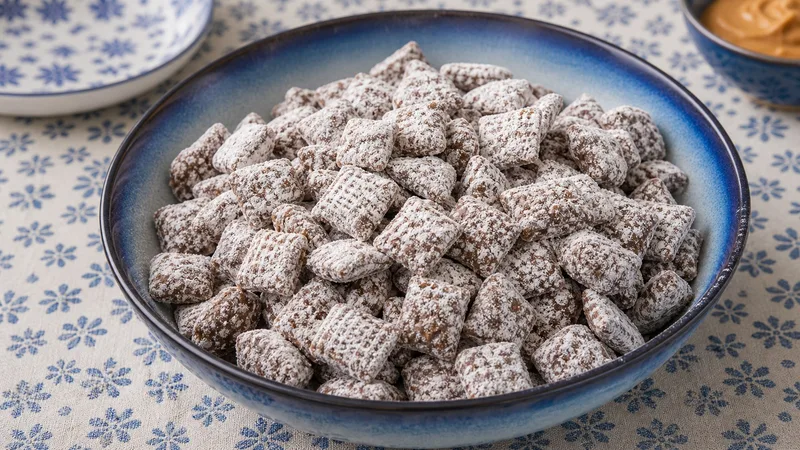
Puppy Chow
View recipe →