
Panna Cotta
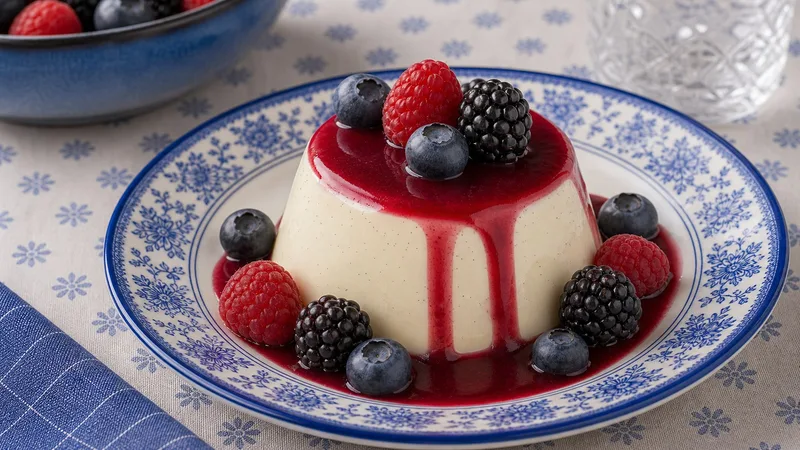
To make panna cotta, heat cream with sugar and vanilla, dissolve bloomed gelatin into the warm mixture, pour into lightly oiled molds, and refrigerate for at least 4 hours until set. The result is a silky, ivory cream dessert that unmolds cleanly and can be topped with fruit, caramel, or berry coulis.
Panna cotta is one of those desserts that looks extremely composed for something made by warming cream and asking gelatin to behave. The texture is the entire point: soft enough to wobble, firm enough to hold its shape, and creamy rather than rubbery. That starts with blooming powdered gelatin in cold milk or water for five minutes before it ever sees heat. Skip that step and you can end up chasing tiny gelatin pebbles through an otherwise perfectly good dessert.
Heavy cream, whole milk, sugar, vanilla, and a pinch of salt are warmed only until steaming with small bubbles around the edge. They do not need to boil. The bloomed gelatin is whisked into that warm mixture until completely dissolved, then everything gets strained before being divided among lightly greased ramekins. Four hours in the refrigerator gives the panna cotta time to set; overnight is even easier if you’re making dessert ahead.
Unmolding is the dramatic part, but confidence helps more than violence. Run a thin knife around the edge, put the serving plate on top, flip both together, and give the ramekin a gentle shake. If it releases cleanly, you’ll feel briefly qualified to open a tiny restaurant. Add berries, coulis, honey, caramel, or stone fruit and accept the compliment before anyone learns how little actual cooking occurred.
Ingredients
- 2 1/4 teaspoons (1 packet / 7g) unflavored powdered gelatin
- 3 tablespoons whole milk or cold water (for blooming gelatin)
- 2 cups (480ml) heavy cream
- 1 cup (240ml) whole milk
- 1/3 cup (65g) granulated sugar
- 1 teaspoon pure vanilla extract (or 1 vanilla bean, split and scraped)
- Pinch of fine salt
- Neutral oil or cooking spray (for greasing molds)
- Optional for serving: fresh berries, berry coulis, honey, caramel sauce, or sliced stone fruit
Instructions
- 1Lightly grease six 4-ounce ramekins or small cups with a neutral oil (like canola or grapeseed) using a paper towel or quick spray. Set them on a small baking sheet for easy transport.
- 2Pour 3 tablespoons of cold whole milk (or cold water) into a small bowl. Sprinkle the gelatin evenly over the surface. Do not stir. Let it sit undisturbed for 5 minutes until it looks wrinkled and fully absorbed — this is blooming, and it matters.
- 3While the gelatin blooms, combine the heavy cream, whole milk, and sugar in a medium saucepan over medium heat. Add the vanilla extract (or scraped vanilla bean and pod) and the pinch of salt.
- 4Heat the cream mixture, stirring occasionally, until the sugar is fully dissolved and the mixture is steaming and just beginning to show small bubbles at the edges — about 5 to 6 minutes. Do not let it boil. Remove from heat.
- 5Add the bloomed gelatin to the warm cream mixture. Whisk gently and steadily for about 2 minutes until the gelatin is completely dissolved. If you used a vanilla bean pod, remove and discard it now.
- 6Pour the mixture through a fine-mesh strainer into a large measuring cup or pitcher with a pour spout — this removes any undissolved gelatin bits and makes filling the molds cleaner.
- 7Divide the mixture evenly among the prepared ramekins. Let them cool at room temperature for 15 minutes, then cover loosely with plastic wrap and refrigerate for at least 4 hours, or overnight.
- 8To unmold: run a thin paring knife around the inside edge of each ramekin. Place a serving plate face-down on top, then flip both together in one confident motion. Give it a gentle shake if needed. It should release cleanly. Serve immediately with your topping of choice.
Nutrition Information
Estimated per serving: 1 of 6 servings.
Estimated from the ingredients and quantities in this recipe using standard food-composition values. Brand choices, trimming, cooking loss, optional ingredients, and actual portion size can change the numbers. How we calculate nutrition estimates.
Pro Tips
- Do not boil the cream. Boiling breaks down the gelatin's setting power and scalds the dairy — medium heat and patience will get you there in six minutes without the drama.
- The oil on the mold is the difference between a dramatic, beautiful unmolding and standing at the counter for four minutes while something refuses to move. Use a paper towel to coat every surface including the bottom.
- If you're not planning to unmold — serving straight from the ramekin with a spoon — you can skip the oiling entirely and just pour into pretty glasses. Nobody's watching. Well, someone might be watching. Oil it anyway.
Substitutions
Storage Instructions
Store panna cotta covered tightly with plastic wrap directly touching the surface (to prevent a skin) in the refrigerator for up to 4 days. Do not freeze — the gelatin structure breaks down after thawing and the texture becomes grainy and unpleasant. If you've already unmolded them, store on their plates loosely tented with plastic.
Make Ahead
Panna cotta is an ideal make-ahead dessert. Make it up to 2 days in advance and keep it in its molds, covered, in the refrigerator. Unmold and add toppings immediately before serving. The flavor improves slightly overnight as the vanilla and cream mellow together.
Frequently Asked Questions
Can I make this ahead of time?
Panna cotta is ideal for making ahead. Pour it into the molds or glasses, cover, and refrigerate overnight; unmold and add the garnish only when you are ready to serve.
How do I store the leftovers?
Store panna cotta covered tightly with plastic wrap directly touching the surface (to prevent a skin) in the refrigerator for up to 4 days. Do not freeze — the gelatin structure breaks down after thawing and the texture becomes grainy and unpleasant. If you've already unmolded them, store on their plates loosely tented with plastic.
Can I freeze it?
Do not freeze — the gelatin structure breaks down after thawing and the texture becomes grainy and unpleasant.
Can I adjust it for what I have on hand?
Yes. Tested adjustments on this recipe include heavy cream → full-fat coconut cream; whole milk (in mixture) → buttermilk; and vanilla extract → vanilla bean paste.
What's the most common mistake to avoid?
Do not boil the cream. Boiling breaks down the gelatin's setting power and scalds the dairy — medium heat and patience will get you there in six minutes without the drama.