
Pozole
Pozole is a Mexican hominy soup made by simmering pork in a broth built from rehydrated dried chiles, garlic, and onion, then finishing with toppings like shredded cabbage, radishes, and lime. This red pozole recipe takes about 3 hours total, most of which is hands-off simmering time.
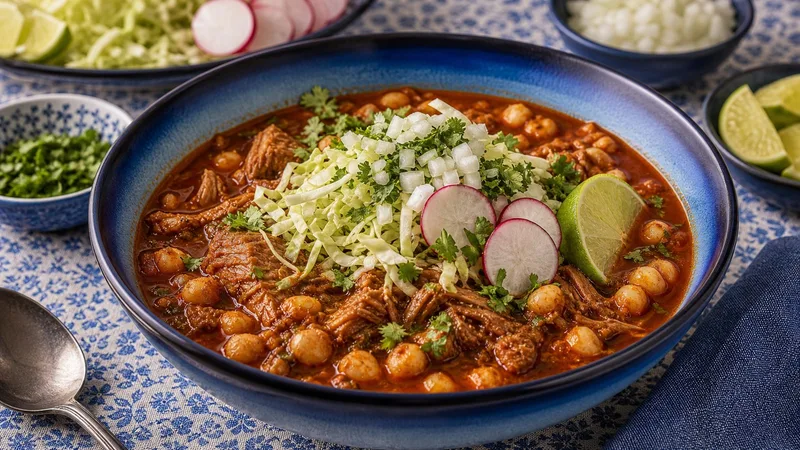
Pozole is what happens when a pot of pork, hominy, and dried chiles is given enough time to quit being a collection of ingredients and become one deeply savory thing. Here, bone-in pork shoulder simmers with onion, garlic, bay, and Mexican oregano until it pulls apart easily, while ancho and guajillo chiles get toasted, soaked, blended, strained, and then fried in oil before they ever meet the broth. That last step matters: raw chile puree can taste sharp and flat; a few minutes in hot oil darkens it, rounds it out, and gives the red broth the kind of depth that makes you stop talking for a second.
This is not a 30-minute soup wearing a fake mustache. It takes about three hours, and most of that time is the pot doing its job while you do something else. Once the hominy and shredded pork go back in, the real fun is at the table: cabbage, radishes, onion, lime, avocado, oregano, tostadas—every bowl gets built a little differently. The broth is rich, the hominy is chewy, the pork is tender, and the fresh toppings keep all of it from feeling heavy.
Ingredients
- 3 lbs bone-in pork shoulder, cut into 3-inch chunks
- 1 white onion, halved (half for broth, half for topping)
- 8 garlic cloves, divided (5 for broth, 3 for chile sauce)
- 2 bay leaves
- 1 tsp dried Mexican oregano
- 2 tsp kosher salt, plus more to taste
- 10 cups water
- 4 dried ancho chiles (about 2 oz), stemmed and seeded
- 4 dried guajillo chiles (about 1.5 oz), stemmed and seeded
- 1 dried árbol chile (optional, for heat), stemmed
- 1/2 tsp cumin
- 2 (29 oz) cans hominy, drained and rinsed
- 1 tbsp vegetable oil
- Salt to taste
- For toppings: shredded green cabbage, thinly sliced radishes, diced white onion, dried Mexican oregano, lime wedges, tostadas or tortilla chips, sliced avocado, sour cream (optional)
Instructions
- 1Place the pork shoulder chunks in a large pot or Dutch oven with the halved white onion (half of it), 5 garlic cloves, bay leaves, dried oregano, and 2 tsp kosher salt. Add 10 cups of water. Bring to a boil over high heat, skimming any gray foam that rises to the surface during the first 10 minutes.
- 2Reduce heat to a steady simmer (medium-low), partially cover the pot, and cook for 1 hour 30 minutes to 2 hours, until the pork is completely tender and pulls apart easily with two forks.
- 3While the pork simmers, toast the dried chiles. Heat a dry skillet or comal over medium heat. Press the opened chiles flat against the surface for 10-15 seconds per side until fragrant and slightly darkened — not burned. Burned chiles will make the broth bitter.
- 4Transfer the toasted chiles to a bowl and cover with 3 cups of boiling water. Let them soak for 20-25 minutes until fully softened.
- 5Drain the soaked chiles, reserving 1 cup of the soaking liquid. Add the chiles to a blender with the 3 remaining garlic cloves, cumin, and 1/2 cup of the reserved soaking liquid. Blend until very smooth. If the blender struggles, add a splash more soaking liquid. Strain through a fine mesh strainer, pressing the solids. Discard the solids.
- 6When the pork is tender, remove it from the pot and set aside. Discard the onion halves, bay leaves, and garlic cloves. Reserve all the pork broth in the pot.
- 7Heat 1 tbsp vegetable oil in the same pot over medium-high heat. Pour the strained chile sauce into the hot oil — it will sizzle dramatically and this is correct. Fry the chile paste, stirring frequently, for 3-4 minutes until it darkens slightly and smells toasted.
- 8Pour the reserved pork broth back into the pot with the chile sauce. Stir to combine. Add the drained hominy. Bring to a simmer over medium heat.
- 9Meanwhile, shred the pork, discarding bones and any large fat pieces. Add the shredded pork to the broth.
- 10Simmer everything together for 20-30 minutes, allowing the flavors to marry. Taste and adjust salt. The broth should taste rich, lightly smoky, and mildly spicy. If it tastes flat, it needs more salt. Cook pork chops or tenderloin to 145°F, then rest before slicing; cook pork shoulder until tender enough to shred.
- 11Serve in deep bowls with toppings arranged alongside: shredded cabbage, radishes, diced onion, dried oregano, lime wedges, and tostadas. Encourage people to load their bowl however they want — this is a toppings-are-part-of-the-dish situation.
Nutrition Information
Estimated per serving: 1 of 8 servings.
Estimated from the ingredients and quantities in this recipe using standard food-composition values. Brand choices, trimming, cooking loss, optional ingredients, and actual portion size can change the numbers. How we calculate nutrition estimates.
Pro Tips
- Do not skip frying the chile paste in oil before adding the broth. Frying it for those 3-4 minutes transforms the sauce from raw and sharp to deep and complex. This step is the difference between a pozole that tastes like something and a pozole that tastes like the thing.
- Taste the broth before serving and add salt in small amounts until it wakes up. Undersalted pozole broth is the most common reason the soup tastes dull. The hominy soaks up a surprising amount.
- If you can only find one type of dried chile, ancho is your best bet — it gives the most body and color. Guajillo adds brightness and a slight tartness. The árbol is optional but it keeps things honest.
Substitutions
Storage Instructions
Refrigerate leftover pozole in an airtight container for up to 4 days. Store toppings separately. Reheat on the stovetop over medium-low heat, adding a splash of water or broth if it has thickened. Freeze the soup base (without toppings) for up to 3 months in freezer-safe containers.
Make Ahead
Pozole is genuinely better the next day. Make the full recipe through step 10, cool completely, and refrigerate overnight. The broth deepens and the pork absorbs flavor. Reheat slowly on the stovetop, prep fresh toppings the day of, and serve. If making ahead for a party, keep toppings prepped and refrigerated separately.
Make It a Meal
Pair this recipe with a side, bread, and something sweet from the FAFO Kitchen.



More Like This
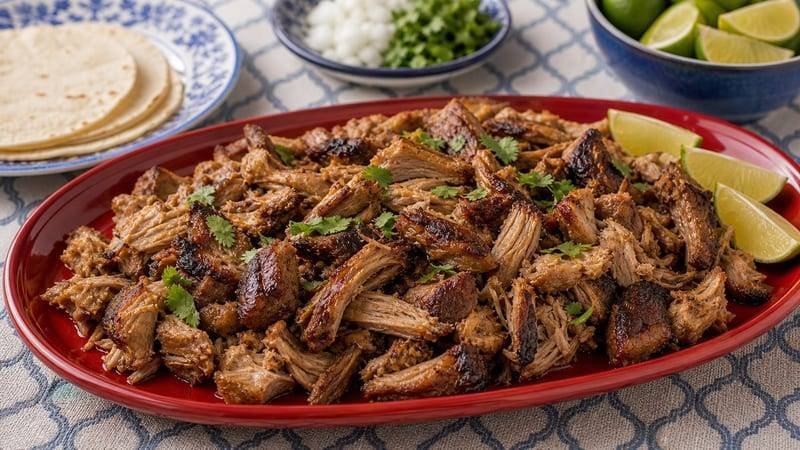 Pork CarnitasBoth feature Pork Shoulder
 Cuban Mojo PorkBoth feature Pork Shoulder
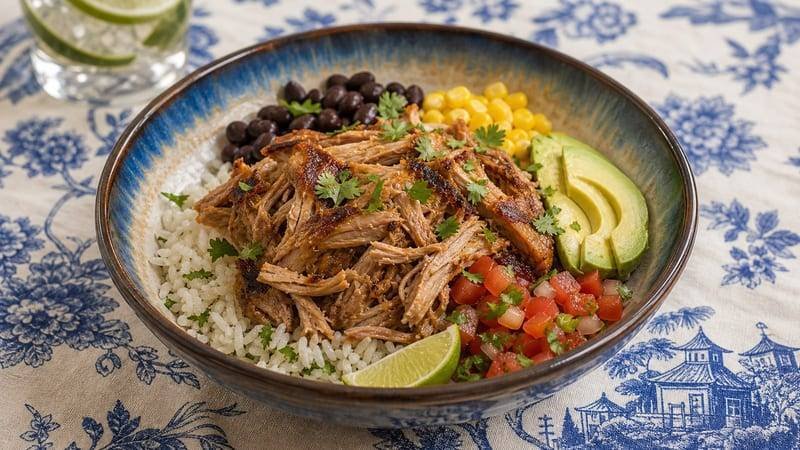 Instant Pot Carnitas BowlsBoth feature Pork Shoulder
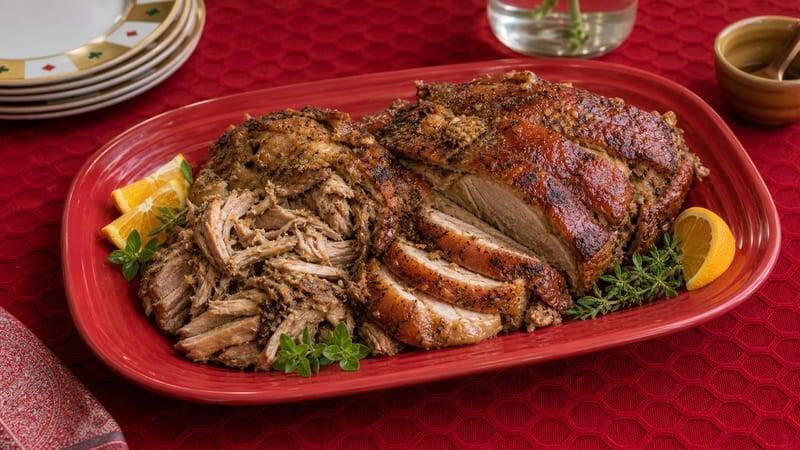 Puerto Rican PernilBoth feature Pork Shoulder