

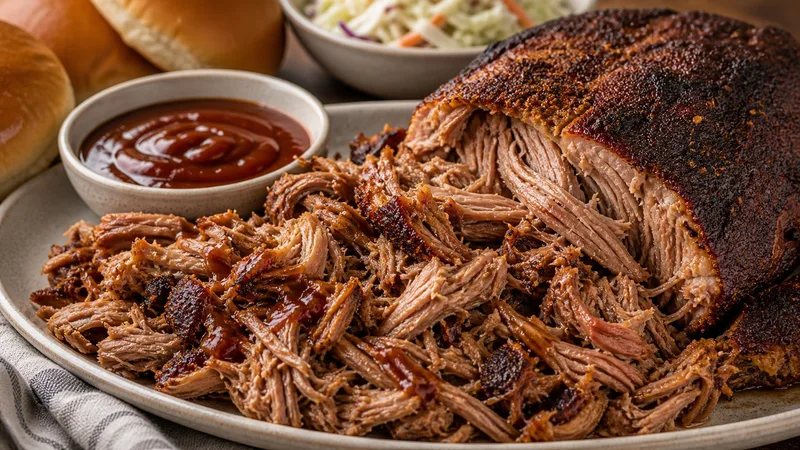
Pulled Pork
Rub a bone-in pork shoulder with a spiced brown sugar dry rub, then roast low and slow at 275°F for 6-8 hours until it reaches 200-205°F internally and shreds easily with two forks. Rest it for at least 30 minutes before pulling for the juiciest results.
There is a point during a long pork-shoulder cook when a perfectly reasonable person starts wondering whether seven hours was an administrative error. It was not. Pulled pork needs time because tenderness is not about simply reaching a safe temperature; it is about giving collagen enough heat and time to dissolve until the meat reaches roughly 200–205°F and actually wants to come apart. At 190°F you can technically pull at it. At 203°F you barely have to ask.
This version builds a bark with brown sugar, smoked paprika, mustard powder, cumin, garlic, onion, black pepper, cayenne, and a thin mustard binder. Apple cider vinegar and water sit around the pork—not poured over the rub—while the covered roast stays at 275°F. The result is moist, deeply seasoned shoulder without washing away the crust you took the trouble to build. Then comes the least glamorous and most important instruction: leave it alone for another 30 minutes after it comes out. Resting lets the juices redistribute and the texture relax before shredding. It is cruel, because the kitchen smells like barbecue and everybody suddenly develops opinions about dinner timing, but the pork is better for it.
Ingredients
- 5-6 lb bone-in pork shoulder (also called pork butt)
- 2 tablespoons brown sugar, packed
- 2 teaspoons smoked paprika
- 2 teaspoons kosher salt
- 1 teaspoon black pepper
- 1 teaspoon garlic powder
- 1 teaspoon onion powder
- 1 teaspoon dry mustard powder
- 1/2 teaspoon cayenne pepper (adjust to heat preference)
- 1/2 teaspoon cumin
- 2 tablespoons yellow mustard (as binder)
- 1/2 cup apple cider vinegar
- 1/2 cup water
- 1 1/2 cups of your preferred BBQ sauce, for serving
Instructions
- 1Remove the pork shoulder from the fridge 45 minutes before cooking and let it come toward room temperature. Pat it completely dry with paper towels — moisture is the enemy of bark.
- 2Preheat your oven to 275°F. In a small bowl, mix together the brown sugar, smoked paprika, kosher salt, black pepper, garlic powder, onion powder, dry mustard, cayenne, and cumin until fully combined.
- 3Coat the pork shoulder all over with the yellow mustard — just a thin layer. This acts as a binder for the rub and doesn't taste like mustard in the final product, so don't skip it.
- 4Press the dry rub generously onto every surface of the pork shoulder. Really work it in. Don't be polite about this.
- 5Place the pork shoulder fat-side up in a large Dutch oven or deep roasting pan. Pour the apple cider vinegar and water into the bottom of the pan — not over the pork, just around it.
- 6Cover tightly with a lid or two layers of heavy-duty aluminum foil, crimped at the edges so no steam escapes.
- 7Roast at 275°F for 6-7 hours, until the internal temperature reaches 200-205°F. At 190°F the pork is technically safe to eat but still holds together; you need 200-205°F for it to shred properly.
- 8Remove from the oven. Do not uncover it yet. Let it rest, still covered, for at least 30 minutes and up to an hour. This step matters. The juice redistributes and the texture improves noticeably.
- 9Uncover, transfer the pork to a large cutting board or sheet pan. Using two forks or your hands (with heat-safe gloves), shred the meat, pulling it apart and discarding any large fat pieces and the bone.
- 10Skim the fat off the pan drippings and pour some of the remaining juices back over the pulled pork to keep it moist. Serve with BBQ sauce on the side or mixed in, depending on your personal convictions.
Nutrition Information
Estimated per serving: 1 serving (calculated using 11 servings, the midpoint of the stated 10–12 range).
Estimated from the ingredients and quantities in this recipe using standard food-composition values. The calculation uses the midpoint of the stated yield range. Brand choices, trimming, cooking loss, optional ingredients, and actual portion size can change the numbers. How we calculate nutrition estimates.
Pro Tips
- Bone-in pork shoulder almost always produces better results than boneless. The bone conducts heat, adds flavor, and tells you the pork is done when it wiggles loose cleanly — that's the old-school internal thermometer and it's never wrong.
- If you notice the bark going too dark before the internal temp is where it needs to be, just tent with foil and keep going. You're in charge here, even when it doesn't feel like it.
- The pan drippings are not garbage. Skim the fat, taste them, and pour a ladle back over the shredded pork. This is what separates 'good pulled pork' from 'pulled pork someone is still talking about three Saturdays later.'
Substitutions
Storage Instructions
Store leftover pulled pork in an airtight container in the refrigerator for up to 4 days. Freeze in zip-lock bags or freezer containers for up to 3 months. Reheat in a covered skillet over medium-low with a splash of broth or water to restore moisture, or microwave covered at 50% power.
Make Ahead
This is one of the best make-ahead meats you can cook. Make it the day before, shred it, store it in the fridge with a little of the pan drippings mixed in to keep it moist. Reheat low and slow in a covered pot or slow cooker on warm. It's often better the second day, which is annoying but true.
Frequently Asked Questions
Can I make Pulled Pork ahead of time?
Yes. Cook the pork shoulder ahead, cool it with some of its cooking liquid, and refrigerate it covered. Reheat the shredded pork with those juices so the meat stays moist rather than drying out during a second heat.
How do I store leftover Pulled Pork?
Store the leftovers in an airtight container in the refrigerator for up to 4 days. Freeze in zip-lock bags or freezer containers for up to 3 months. Reheat in a covered skillet over medium-low with a splash of broth or water to restore moisture, or microwave covered at 50% power.
Can I freeze Pulled Pork after cooking?
Yes. Freeze the shredded pork in airtight portions with enough of its cooking juices to keep the meat moist. Thaw in the refrigerator and reheat gently in those juices before serving.
Can I substitute ingredients in Pulled Pork?
Yes. Tested adjustments on this recipe include bone-in pork shoulder → boneless pork shoulder or pork butt; smoked paprika → regular paprika plus 1/2 teaspoon liquid smoke; and apple cider vinegar → white wine vinegar or plain white vinegar.
What's the most common mistake when making Pulled Pork?
Bone-in pork shoulder almost always produces better results than boneless. The bone conducts heat, adds flavor, and tells you the pork is done when it wiggles loose cleanly — that's the old-school internal thermometer and it's never wrong.
Make It a Meal
Pair this recipe with a side, bread, and something sweet from the FAFO Kitchen.


More Like This

You Might Also Like




Finish With Dessert

Try this next
Cranberry Orange Cookies
View recipe →