Salmon Recipes That Actually Work on a Weeknight
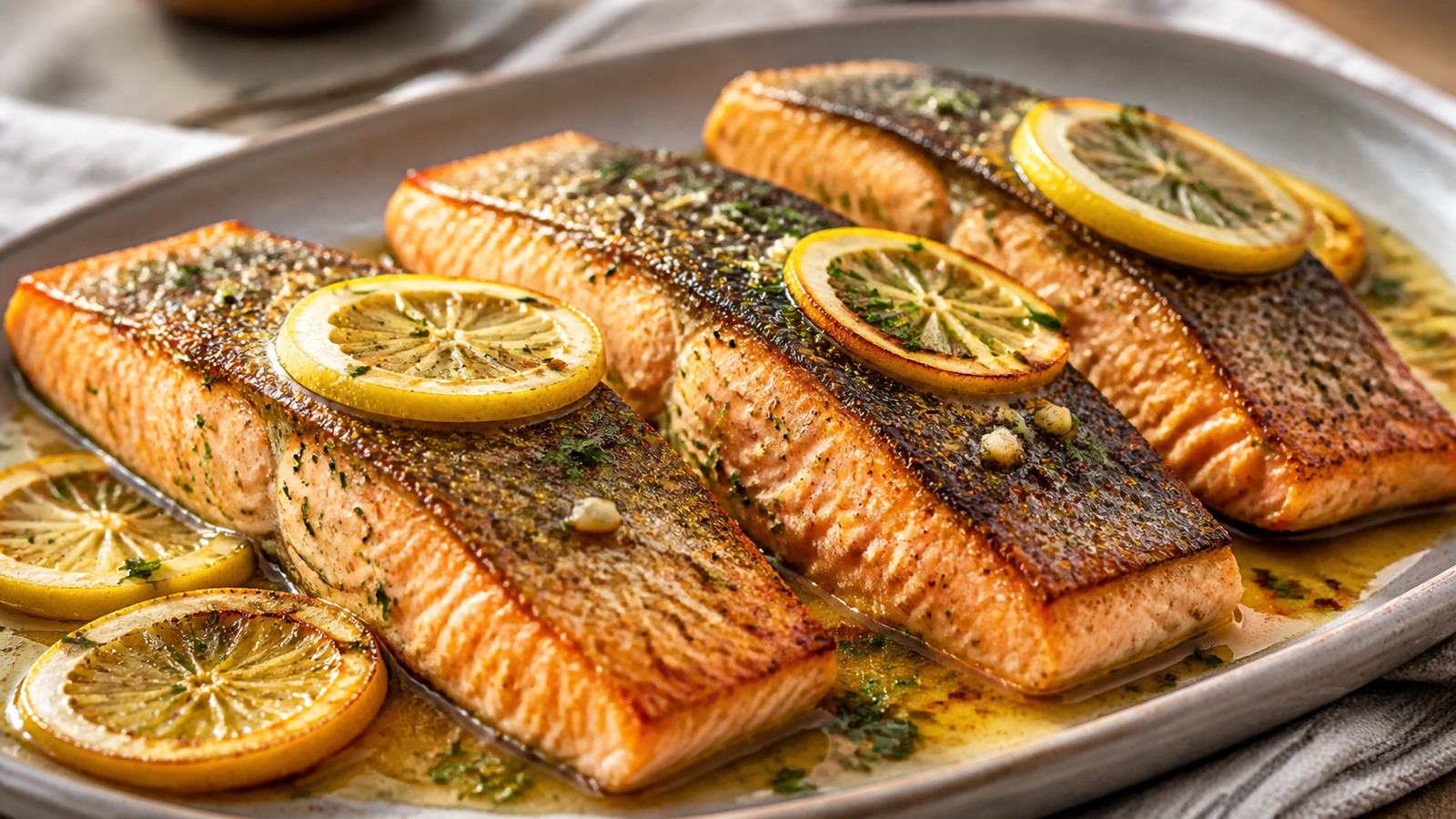
To make a reliable weeknight salmon recipe, season fillets with salt, pepper, and garlic, then pan-sear skin-side down in a hot cast iron skillet for 4-5 minutes per side. Finish with lemon butter in the pan and serve immediately.
I started buying salmon regularly because a doctor told me to eat more of it and I committed to this without having much of a plan for how to cook it, which is how I ended up eating overcooked gray salmon for three weeks before deciding to actually figure out what I was doing. The difference between good salmon and the salmon I was making was substantial enough that I considered whether they were the same species.
The issues were two: I was cooking it too long and I was cooking it at too low a temperature. Salmon cooked to 145°F — the FDA safe temperature — is fully cooked in a way that means dry, chalky, and gray through the center. Salmon pulled at 125°F is silky, moist, and slightly translucent at the very center, which is where it wants to be. It's safe to eat at this temperature. The USDA guidelines are set conservatively for the most vulnerable populations; for a healthy adult eating fresh salmon from a reliable source, 125°F produces a noticeably better result.
For pan-seared salmon: dry the fillets, season with salt and pepper, start skin-side down in a cold pan with oil, then raise the heat to medium-high. The slow start renders the fat under the skin without burning it, and the skin gets crispy rather than soggy. Don't move it until the skin releases cleanly. Flip for the last ninety seconds.
For baked salmon: 400°F for twelve to fifteen minutes depending on thickness, finished with a squeeze of lemon. Simple glazes — soy and honey, miso and butter, mustard and dill — go on for the last five minutes so they caramelize rather than burn. Either method produces dinner in fifteen minutes with one pan to wash.
Ingredients
- 4 salmon fillets, skin-on (about 6 oz each, roughly 1 inch thick)
- 1 teaspoon kosher salt
- 1/2 teaspoon freshly ground black pepper
- 1/2 teaspoon garlic powder
- 1/2 teaspoon smoked paprika
- 2 tablespoons olive oil
- 3 tablespoons unsalted butter, divided
- 4 garlic cloves, minced
- 3 tablespoons fresh lemon juice (about 1 large lemon)
- 1 teaspoon lemon zest
- 2 tablespoons fresh parsley, chopped
- Lemon slices, for serving
Instructions
- 1Remove the salmon fillets from the refrigerator 15 minutes before cooking. Pat them thoroughly dry with paper towels —? and I mean thoroughly, every surface, because moisture is what stands between you and a crispy skin. Mix the salt, pepper, garlic powder, and smoked paprika in a small bowl, then season the salmon evenly on all sides.
- 2Heat a large cast iron skillet over medium-high heat for 2 full minutes until it is genuinely hot. Add the olive oil and 1 tablespoon of the butter. When the butter stops foaming, you are ready.
- 3Place the salmon fillets skin-side down in the skillet. Press each fillet gently with a spatula for the first 30 seconds to prevent the skin from curling up. Cook undisturbed for 4 to 5 minutes. The salmon will turn opaque about two-thirds of the way up the side —? that is your visual cue it is almost time to flip.
- 4Flip the fillets carefully. Cook for 2 to 3 minutes on the flesh side, depending on thickness. The center should be just slightly translucent —? that is not undercooked, that is correct. Transfer the salmon to a plate and tent loosely with foil.
- 5Reduce the heat to medium. Add the remaining 2 tablespoons of butter to the same skillet. Once melted, add the minced garlic and cook for 30 seconds, stirring constantly so it does not burn. Add the lemon juice and lemon zest. Stir and let the sauce bubble for 1 minute, scraping up any brown bits from the bottom of the pan —? those are flavor, not mistakes.
- 6Pour the lemon butter sauce over the salmon fillets. Top with fresh parsley and serve immediately with lemon slices.
Pro Tips
- Dry the fish. I am repeating this because the first seventeen times I made salmon I skipped this step and wondered why the skin was sad and pale. Moisture creates steam; steam is the enemy of crust.
- Do not move the salmon around the pan while it cooks skin-side down. It will release naturally when it is ready to be flipped. If it is sticking, it is not done. The pan is not being difficult —? it is making a point.
- Let the skillet get fully hot before the fish goes in. A cold pan produces a fish that sticks, steams, and refuses to forgive you. Two full minutes on medium-high, no shortcuts.
Substitutions
Storage Instructions
Store leftover salmon in an airtight container in the refrigerator for up to 2 days. Reheat gently in a skillet over low heat with a splash of water or broth, covered, for 2-3 minutes. Do not microwave at full power —? it will dry out and smell alarming. Leftovers are also excellent cold, flaked over a salad.
Make Ahead
You can season the salmon fillets up to 4 hours in advance and keep them uncovered on a rack in the refrigerator —? the dry surface will actually improve the crust. The lemon butter sauce can be made separately and rewarmed, but the salmon itself is best cooked fresh and served immediately.
Frequently Asked Questions
How do I know when salmon is done cooking without cutting into it?
Watch the color change on the side of the fillet. When the opaque color creeps about two-thirds of the way up from the bottom, it is time to flip. After flipping, the salmon is done when it flakes easily with a fork at the thickest part but still looks slightly glossy in the very center. An instant-read thermometer should read 125°F to 130°F for medium, 145°F for fully cooked.
Can I make this salmon recipe without a cast iron skillet?
Yes. A stainless steel skillet works nearly as well and gets equally hot. Non-stick pans will give you cooked salmon but not a deeply crispy skin —? the coating prevents the kind of sear that makes the difference. Whatever pan you use, heat it thoroughly before the fish goes in. That step matters more than the pan material.
Why did my salmon skin stick to the pan?
Two likely causes: the pan was not hot enough before the fish went in, or the fish was wet on the surface. A properly preheated pan with fat creates an instant barrier between skin and surface. Also, do not try to move the fillet too early —? salmon skin releases naturally when it has built enough crust. Patience here is not optional, it is structural.
Can I make this salmon recipe ahead of time for meal prep?
Salmon is genuinely best the moment it comes off the heat, but it holds reasonably well for meal prep when stored properly. Cook it, let it cool fully, then store in an airtight container for up to 2 days. It is excellent flaked cold into grain bowls, salads, or pasta. For reheating, use low heat in a covered skillet with a splash of liquid. Avoid the microwave on full blast.
How do I store leftover salmon?
Refrigerate in an airtight container within two hours of cooking. It keeps well for up to 2 days. Do not freeze cooked salmon —? the texture suffers significantly after thawing. Raw salmon fillets can be frozen for up to 3 months; thaw overnight in the refrigerator before using. Never thaw fish on the counter at room temperature.
Is this salmon recipe gluten-free or dairy-free?
As written, this recipe is naturally gluten-free. To make it dairy-free, replace the butter in both the searing step and the sauce with a dairy-free butter alternative or use ghee if lactose is the issue rather than all dairy. The flavor will shift slightly but the technique stays the same. The rest of the ingredients contain no gluten or dairy.
Can I use frozen salmon for this recipe?
Yes, with one condition: thaw it completely in the refrigerator overnight, then pat it aggressively dry before seasoning. Frozen salmon often releases more moisture during thawing, which is the main enemy of a good sear. Do not cook salmon from frozen in a pan —? the outside overcooks before the inside comes to temperature. For oven methods, cooking from frozen is more forgiving, but not for this one.
What should I serve with pan-seared salmon?
Roasted asparagus, garlic mashed potatoes, steamed rice, or a simple arugula salad all work well and take roughly the same amount of time to prepare. If you want a full dinner that comes together in under 30 minutes, start the side dish first since the salmon is the fastest element. A crusty piece of bread to soak up the lemon butter sauce is also not a bad call.