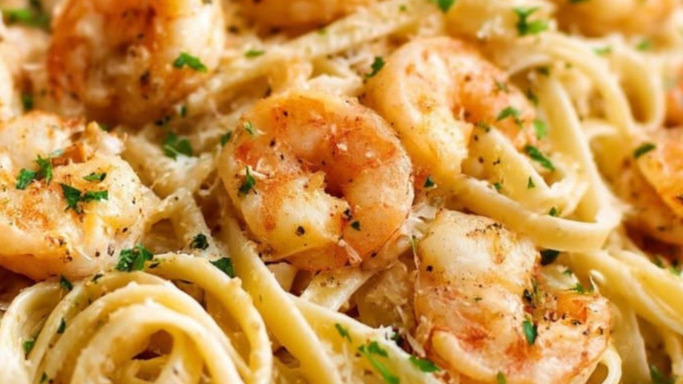
Shrimp Recipes: Garlic Butter Shrimp in 15 Minutes
To make garlic butter shrimp, sauté seasoned shrimp in butter and olive oil over medium-high heat for 1–2 minutes per side, then finish with garlic, lemon juice, and fresh parsley. The entire dish comes together in about 15 minutes from prep to plate.
I discovered that I could cook frozen shrimp in fifteen minutes on a night when I had nothing in the house and no energy for a real production. Shrimp had been in my freezer for three weeks because I'd bought them with vague intentions and then made something else instead. They defrosted under cold running water in about eight minutes and were in the pan two minutes after that. The whole situation resolved itself in a quarter of an hour and produced a dinner that tasted like something a person made on purpose.
The technique that makes garlic butter shrimp actually work: the pan has to be hot before the shrimp go in, the shrimp have to be dry when they hit the pan, and you cannot crowd them. Three rules, all pointing at the same thing: shrimp need to sear, not steam. Steam gives you gray, rubbery shrimp in liquid. A hot, uncrowded pan gives you pink shrimp with slightly caramelized edges and a snap when you bite.
The garlic goes in off the heat, not on. Garlic burns in thirty seconds when the pan is hot, and burned garlic is bitter in a way that ruins the dish. Pull the shrimp from heat, add the butter and minced garlic, toss everything in the residual heat until the garlic softens slightly, then squeeze lemon over the top. The butter melts into the pan juices and becomes a light sauce that coats the shrimp without needing to reduce.
Serve over rice or pasta or with bread for the sauce. The fifteen minutes includes prep. The frozen-shrimp-to-dinner gap is surprisingly small once you've done it the first time.
Ingredients
- 1 ½ lbs large shrimp (16/20 count), peeled and deveined, tails on or off
- 3 tablespoons unsalted butter, divided
- 1 tablespoon olive oil
- 6 cloves garlic, minced (about 2 tablespoons)
- ½ teaspoon kosher salt
- ¼ teaspoon black pepper
- ¼ teaspoon red pepper flakes (optional)
- 3 tablespoons fresh lemon juice (about 1 large lemon)
- 1 teaspoon lemon zest
- 3 tablespoons fresh parsley, chopped
- Crusty bread or pasta, for serving
Instructions
- 1Pat the shrimp completely dry with paper towels. This step matters more than it sounds —? wet shrimp steam instead of sear, and you want a sear. Season with salt, pepper, and red pepper flakes if using.
- 2Heat a large skillet (12-inch) over medium-high heat. Add 1 tablespoon butter and the olive oil. Wait until the butter foams and subsides, about 1 minute —? the pan needs to be genuinely hot before the shrimp go in.
- 3Add the shrimp in a single layer. Do not overcrowd. If your pan isn't large enough, cook in two batches rather than stacking them. Cook undisturbed for 1 to 2 minutes until the bottom turns pink and lightly golden.
- 4Flip each shrimp and cook for another 1 minute on the second side. The shrimp are done when they're pink all the way through and just barely curled into a loose C shape. A tight curl means overcooked. Remove from the pan and set aside.
- 5Reduce the heat to medium. Add the remaining 2 tablespoons butter to the same pan. Once melted, add the minced garlic and cook, stirring constantly, for 60 to 90 seconds until fragrant and just barely golden. Watch it closely —? garlic goes from perfect to burnt in about fifteen seconds.
- 6Add the lemon juice and lemon zest, scraping up any browned bits from the bottom of the pan. Let it bubble for 30 seconds.
- 7Return the shrimp to the pan and toss to coat in the sauce. Remove from heat immediately. Stir in the fresh parsley.
- 8Serve over pasta, with crusty bread for the sauce, or over rice. Eat while it's hot —? this dish does not improve from waiting around.
Pro Tips
- Use 16/20 count shrimp if you can find them. That's the size per pound, and larger shrimp are more forgiving on timing than small ones, which overcook before you've even turned around.
- Dry your shrimp. I know I already said this in the instructions but I'm saying it again because I ignored this step for two years and wondered why my shrimp were pale and sad. Dry them.
- The garlic goes in after the shrimp come out. If you add garlic to a screaming hot pan at the start, it will burn, and burned garlic tastes like a decision you regret.
Substitutions
Storage Instructions
Store leftovers in an airtight container in the refrigerator for up to 2 days. Reheat gently in a skillet over low heat with a small splash of water or butter —? the microwave will overcook them. Shrimp do not freeze well once cooked; they turn grainy and sad.
Make Ahead
You can peel, devein, and dry the shrimp up to 24 hours in advance. Store uncovered on a paper-towel-lined plate in the refrigerator. The garlic can be minced and stored in a small bowl covered with plastic wrap. Don't make the full dish ahead —? this one's meant to be eaten immediately.
Frequently Asked Questions
How do I know when shrimp are cooked through?
Cooked shrimp will be opaque, pink on the outside, and white-pink through the middle. The shape is your best cue: a loose C-shape means done, a tight O-shape means overcooked. Once overcooked, there's no coming back from it, so pull them off heat as soon as that C appears and the color is solid throughout.
Can I use frozen shrimp for this recipe?
Yes, and it works well. Thaw frozen shrimp overnight in the refrigerator or under cold running water for 5 to 10 minutes. The critical step is drying them thoroughly afterward —? frozen shrimp hold more moisture and need extra patting before they'll sear properly. Do not thaw in warm water or the microwave.
Why did my shrimp turn out rubbery?
Overcooked. Shrimp cook extremely fast and the window between done and rubbery is about 30 seconds per side. High heat and short cook time is the correct method —? low and slow does not apply here. If your shrimp are tight little spirals, they went too long. Next batch: pull them the moment they turn opaque.
Can I make garlic butter shrimp ahead of time for a party?
Not really —? this dish is at its best the moment it comes out of the pan. For a party, prep everything in advance (peel, devein, mince garlic, zest lemon) and cook it in under 10 minutes right before you serve. It's fast enough that guests won't wait long, and it'll be significantly better than anything held in a warming dish.
How long do shrimp leftovers last?
Up to 2 days in an airtight container in the refrigerator. Reheat over low heat in a skillet with a small splash of butter or water —? just until warmed through, not re-cooked. Leftover shrimp are also excellent cold over a salad, which sidesteps the reheating problem entirely.
Is this recipe gluten-free?
Yes, as written. Just check your red pepper flakes and butter labels if you're cooking for someone with a serious gluten sensitivity, as cross-contamination can vary by brand. Serve over rice or gluten-free pasta instead of bread and the whole meal is naturally gluten-free without any adjustments.
What's the best pan for cooking shrimp?
A wide, heavy-bottomed skillet —? stainless steel or cast iron both work well. You want surface area so the shrimp sear rather than steam, and you want a pan that holds heat evenly. Nonstick works in a pinch but won't give you the same golden color or the browned bits at the bottom that make the sauce worth scraping up.
Can I add vegetables to this shrimp recipe?
Yes. Cherry tomatoes, baby spinach, or thinly sliced zucchini work well. Add firmer vegetables before the shrimp and sauté until just tender, then remove them and follow the recipe. Stir delicate greens like spinach in at the very end with the parsley —? they'll wilt in about 30 seconds from residual heat.