
Tiramisu
Tiramisu is an Italian dessert of espresso-soaked ladyfinger cookies layered with sweetened mascarpone cream, then chilled overnight until the flavors meld and the texture sets. The secret is using cold ingredients and a quick dip for the ladyfingers to avoid sogginess.
Tiramisu is supposed to be soft enough to eat with a spoon but firm enough to come out of the pan looking like it remembers where its edges were. That balance comes down to two things: a mascarpone filling with enough structure and ladyfingers dipped in coffee quickly enough that they absorb flavor without becoming caffeinated drywall paste.
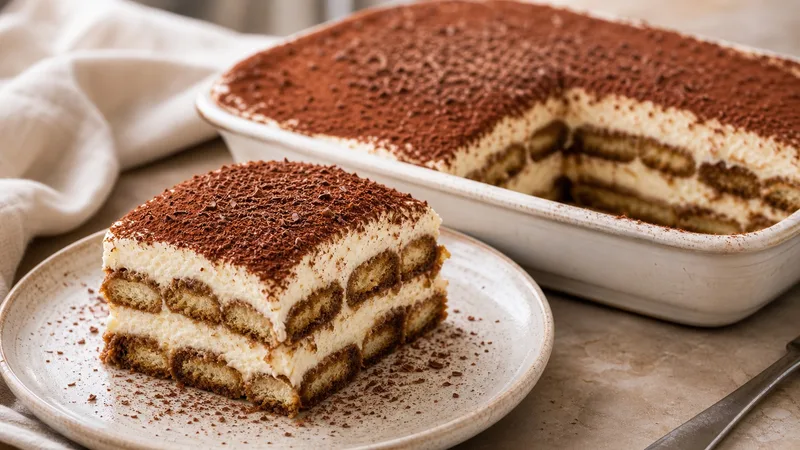
Work with cool espresso, dip each ladyfinger briefly, and build even layers. The mascarpone mixture should stay smooth and airy; aggressive mixing can make mascarpone loosen or turn grainy. Once assembled, the refrigerator does the final work. Several hours of chilling let the coffee move through the cookies and the filling firm around them, which is why tiramisu made ahead is better than tiramisu made while guests are already taking off their coats.
Dust with cocoa just before serving for a dry, bittersweet finish. A clean slice is satisfying, but the first bite—coffee, cocoa, cream, and softened cookie—is the actual point.
Ingredients
- 6 large egg yolks, cold
- 3/4 cup (150g) granulated sugar, divided
- 1 lb (450g) mascarpone cheese, cold
- 4 large egg whites, cold
- 1/4 teaspoon cream of tartar
- 1 1/2 cups (355ml) strong brewed espresso or very strong coffee, cooled to room temperature
- 3 tablespoons coffee liqueur such as Kahlúa, optional
- 24 to 28 Italian ladyfinger cookies (savoiardi)
- 3 tablespoons unsweetened cocoa powder, for dusting
- 1 oz (28g) dark chocolate, optional, for grating on top
Instructions
- 1Brew your espresso and let it cool completely to room temperature. Stir in the coffee liqueur if using. Set aside in a shallow dish wide enough to dip a ladyfinger flat.
- 2In a large bowl, beat the egg yolks with 1/2 cup (100g) of the sugar using a hand mixer or stand mixer on medium-high speed for 4 to 5 minutes until the mixture is pale yellow, thick, and falls off the beaters in a slow ribbon.
- 3Add the cold mascarpone to the yolk mixture and beat on medium speed just until smooth and fully combined, about 1 minute. Do not overbeat — stop as soon as no streaks remain.
- 4In a separate large clean bowl with clean beaters, beat the cold egg whites and cream of tartar on medium speed until foamy, about 1 minute. Increase to high speed and gradually add the remaining 1/4 cup (50g) sugar. Beat until stiff, glossy peaks form, 3 to 4 minutes.
- 5Using a large rubber spatula, fold one-third of the egg white mixture into the mascarpone mixture to lighten it. Add the remaining egg whites in two more additions, folding gently each time until just combined. Do not deflate the whites.
- 6Working one at a time, dip each ladyfinger in the cooled espresso for exactly 2 to 3 seconds per side. The cookie should be moistened but not waterlogged. It should still hold its shape. Lay dipped ladyfingers in a single layer in a 9x13 inch (23x33 cm) baking dish or equivalent, trimming as needed to fit.
- 7Spread half of the mascarpone cream evenly over the ladyfinger layer using an offset spatula or the back of a spoon.
- 8Add a second layer of espresso-dipped ladyfingers over the cream.
- 9Spread the remaining mascarpone cream smoothly over the top.
- 10Cover the dish tightly with plastic wrap without letting it touch the surface. Refrigerate for at least 6 hours, but preferably overnight. The tiramisu needs this time to firm up and for the flavors to meld.
- 11Just before serving, dust generously with unsweetened cocoa powder through a fine-mesh sieve. Add grated dark chocolate if desired. Cut into portions and serve cold.
Nutrition Information
Estimated per serving: 1 of 8 servings.
Estimated from the ingredients and quantities in this recipe using standard food-composition values. Brand choices, trimming, cooking loss, optional ingredients, and actual portion size can change the numbers. How we calculate nutrition estimates.
Pro Tips
- Cold ingredients are not optional. Cold mascarpone whips into a stable cream. Room-temperature mascarpone turns into a situation you'll need to explain to someone.
- The espresso must be fully cooled before you dip anything. Warm espresso softens the ladyfingers too fast and you're back to soup. Plan ahead, brew early.
- If your egg whites won't form stiff peaks, your bowl or beaters had grease on them. Wipe everything with a little lemon juice or white vinegar, dry completely, and start again. The whites know. They always know.
Substitutions
Storage Instructions
Cover tightly with plastic wrap and refrigerate for up to 3 days. The texture is best on day 2. After day 3, the ladyfingers become very soft and the cream loses some of its structure. Do not freeze assembled tiramisu — the cream separates on thawing and the texture does not recover.
Make Ahead
Tiramisu is one of the rare desserts that genuinely requires making ahead. Assemble the full dish, cover tightly, and refrigerate for a minimum of 6 hours. Overnight (8 to 12 hours) is ideal. The dust of cocoa powder should be added right before serving, not in advance, as it absorbs moisture and loses its clean finish.
Frequently Asked Questions
Can I make this ahead of time?
Yes — tiramisu is supposed to be made ahead. Assemble the espresso-dipped ladyfingers and mascarpone layers, then chill the dessert overnight as the recipe directs so the cookies soften and the layers set cleanly before slicing.
How do I store the leftovers?
Cover tightly with plastic wrap and refrigerate for up to 3 days. The texture is best on day 2. After day 3, the ladyfingers become very soft and the cream loses some of its structure. Do not freeze assembled tiramisu — the cream separates on thawing and the texture does not recover.
Can I freeze it?
Do not freeze assembled tiramisu — the cream separates on thawing and the texture does not recover.
What substitutions work in Tiramisu?
Tested swaps for this recipe: espresso: very strong brewed coffee. Brew coffee at double strength — about 2 tablespoons per 4 oz of water. The flavor will be slightly less intense but totally workable. coffee liqueur: rum or brandy. Use the same 3-tablespoon amount. Dark rum gives a slightly different but pleasant warmth. Omit entirely for an alcohol-free version.
What's the most common mistake to avoid?
Cold ingredients are not optional. Cold mascarpone whips into a stable cream. Room-temperature mascarpone turns into a situation you'll need to explain to someone.