

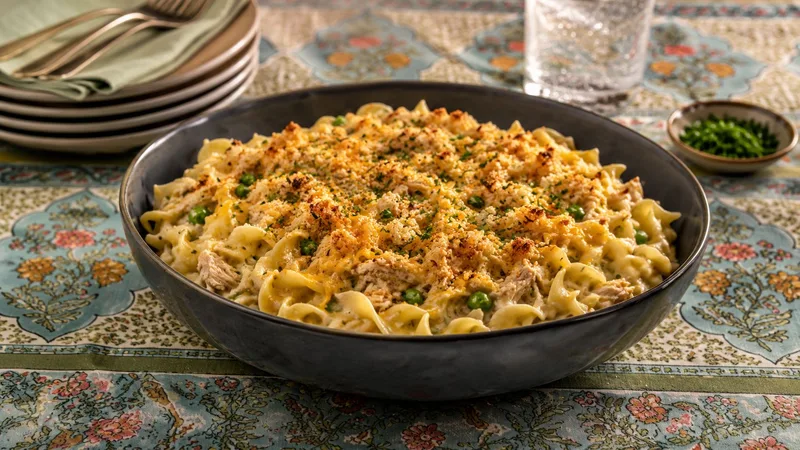
Tuna Noodle Casserole
Tuna noodle casserole is made by combining cooked egg noodles, drained canned tuna, a homemade or canned cream sauce, and vegetables, then baking it in a 375°F oven for 25-30 minutes with a buttered breadcrumb topping until golden and bubbling. The whole dish comes together in about 50 minutes and serves six people.
Tuna noodle casserole survives because the basic idea is still good: egg noodles, a creamy savory sauce, tuna, peas, cheddar, and a crisp breadcrumb top. The problem starts when “easy” becomes an excuse for a casserole that tastes like one undiluted can of soup wearing breadcrumbs.
This version builds the sauce in the skillet with butter, onion, garlic, flour, milk, chicken broth, Dijon, celery salt, sour cream, and cheddar. Cook the noodles just shy of al dente because they will keep absorbing liquid in the oven. Fold in drained tuna and thawed peas gently so the tuna stays in recognizable pieces, then top the casserole with buttered panko.
Bake until the edges bubble and the crumbs turn deeply golden, then let it stand for five minutes before serving. The goal is creamy noodles under a crisp top, not a casserole that can be cut into load-bearing bricks. Nostalgia is welcome. Dryness is not.
Ingredients
- 12 oz wide egg noodles
- 3 tablespoons unsalted butter
- 1 medium yellow onion, diced (about 1 cup)
- 3 cloves garlic, minced
- 3 tablespoons all-purpose flour
- 2 cups whole milk, warmed
- 1 cup low-sodium chicken broth
- 1 teaspoon Dijon mustard
- 1 teaspoon kosher salt, plus more for pasta water
- 1/2 teaspoon black pepper
- 1/4 teaspoon celery salt
- 2 cans (5 oz each) solid white albacore tuna in water, drained and flaked
- 1 cup frozen peas, thawed
- 1/2 cup sour cream
- 1 cup shredded sharp cheddar cheese, divided
- 1 cup panko breadcrumbs
- 2 tablespoons unsalted butter, melted (for topping)
- 1 tablespoon fresh parsley, chopped (optional, for garnish)
Instructions
- 1Preheat your oven to 375°F. Grease a 9x13-inch baking dish with butter or nonstick spray and set aside.
- 2Bring a large pot of heavily salted water to a boil. Cook the egg noodles until just barely al dente — about 1 minute less than the package directions, usually 6-7 minutes. They will continue cooking in the oven. Drain and set aside.
- 3In a large oven-safe skillet or heavy-bottomed saucepan, melt 3 tablespoons of butter over medium heat. Add the diced onion and cook, stirring occasionally, until softened and translucent, about 5 minutes. Add the minced garlic and cook for 1 minute more until fragrant.
- 4Sprinkle the flour over the onion and garlic mixture. Stir constantly for 1-2 minutes to cook out the raw flour taste. The mixture will look dry and paste-like — that's correct.
- 5Slowly pour in the warmed milk, about 1/4 cup at a time, whisking constantly after each addition to prevent lumps. Once all the milk is incorporated, pour in the chicken broth and continue whisking. Cook over medium heat, stirring frequently, until the sauce thickens enough to coat the back of a spoon, about 4-5 minutes.
- 6Remove the pan from heat. Stir in the Dijon mustard, kosher salt, black pepper, celery salt, sour cream, and 3/4 cup of the shredded cheddar. Stir until the cheese is fully melted and the sauce is smooth.
- 7Add the drained egg noodles, flaked tuna, and thawed peas to the sauce. Fold everything together gently until the noodles are evenly coated. Taste and adjust seasoning if needed.
- 8Transfer the mixture to the prepared 9x13-inch baking dish and spread into an even layer. Sprinkle the remaining 1/4 cup of cheddar over the top.
- 9In a small bowl, combine the panko breadcrumbs with 2 tablespoons of melted butter and a pinch of salt. Toss until the breadcrumbs are evenly coated. Scatter them in an even layer over the casserole.
- 10Bake at 375°F for 25-30 minutes, until the top is deep golden brown, the edges are bubbling, and the casserole is heated through. If the breadcrumbs brown too quickly before the center is hot, tent loosely with foil for the last 10 minutes.
- 11Let the casserole rest for 5 minutes before serving. Garnish with fresh parsley if desired.
Nutrition Information
Estimated per serving: 1 of 6 servings.
Estimated from the ingredients and quantities in this recipe using standard food-composition values. Brand choices, trimming, cooking loss, optional ingredients, and actual portion size can change the numbers. How we calculate nutrition estimates.
Pro Tips
- Undercook your noodles on purpose. Seriously. If they go into the oven fully cooked they come out the other side having made a terrible decision about their texture. Al dente means they finish cooking in the sauce and hold up like they have somewhere to be.
- Warm your milk before adding it to the roux. Cold milk hitting a hot roux is how lumps happen, and lumps in a cream sauce feel like a personal failure every time. Thirty seconds in the microwave is enough.
- Solid white albacore tuna is worth the extra fifty cents over chunk light here. The flavor is cleaner and it flakes into pieces instead of disintegrating into dust, which matters more than you think when you're already dealing with noodles and sauce competing for attention.
Substitutions
Storage Instructions
Store leftover tuna noodle casserole covered tightly in the refrigerator for up to 3 days. Reheat individual portions in the microwave with a splash of milk stirred in to loosen the sauce, or reheat the whole dish covered with foil at 350°F for 20-25 minutes. The breadcrumb topping will soften in the fridge; re-crisp it under the broiler for 2-3 minutes if you want the crunch back. This casserole does not freeze well — the noodles turn mushy and the cream sauce separates.
Make Ahead
Assemble the casserole completely through step 9 (including the breadcrumb topping), cover tightly with plastic wrap, and refrigerate for up to 24 hours before baking. When ready to cook, remove from the refrigerator 20 minutes before baking to take the chill off, then bake at 375°F for 35-40 minutes since you're starting from cold. The topping may need an extra few minutes to brown.
Frequently Asked Questions
Can I make Tuna Noodle Casserole ahead of time?
Yes. Cook the egg noodles just shy of done, make the tuna sauce, and assemble the casserole ahead, then cover and refrigerate it before baking. Keep any crisp topping separate until the final bake so it does not absorb moisture while the casserole sits.
How do I store leftover Tuna Noodle Casserole?
Store leftover tuna noodle casserole covered tightly in the refrigerator for up to 3 days. Reheat individual portions in the microwave with a splash of milk stirred in to loosen the sauce, or reheat the whole dish covered with foil at 350°F for 20-25 minutes. The breadcrumb topping will soften in the fridge; re-crisp it under the broiler for 2-3 minutes if you want the crunch back. This casserole does not freeze well — the noodles turn mushy and the cream sauce separates.
Can I freeze Tuna Noodle Casserole after cooking?
Yes. Assemble the casserole with the noodles slightly undercooked, cool it, and freeze it tightly covered before adding any crisp topping. Thaw in the refrigerator, add the topping, and bake until the center is hot.
Can I substitute ingredients in Tuna Noodle Casserole?
Yes. Tested adjustments on this recipe include whole milk → 2% milk or evaporated milk; sour cream → full-fat Greek yogurt or cream cheese (softened); and frozen peas → frozen corn, diced roasted red peppers, or blanched broccoli florets.
What's the most common mistake when making Tuna Noodle Casserole?
Undercook your noodles on purpose. Seriously. If they go into the oven fully cooked they come out the other side having made a terrible decision about their texture. Al dente means they finish cooking in the sauce and hold up like they have somewhere to be.
Make It a Meal
Pair this recipe with a side, bread, and something sweet from the FAFO Kitchen.
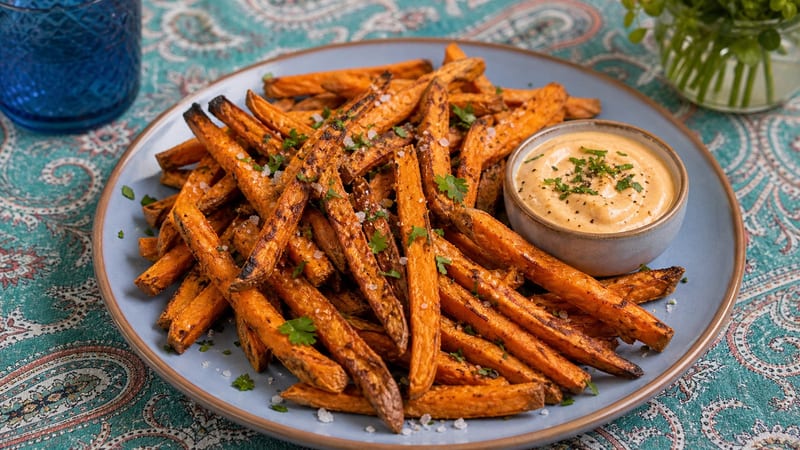
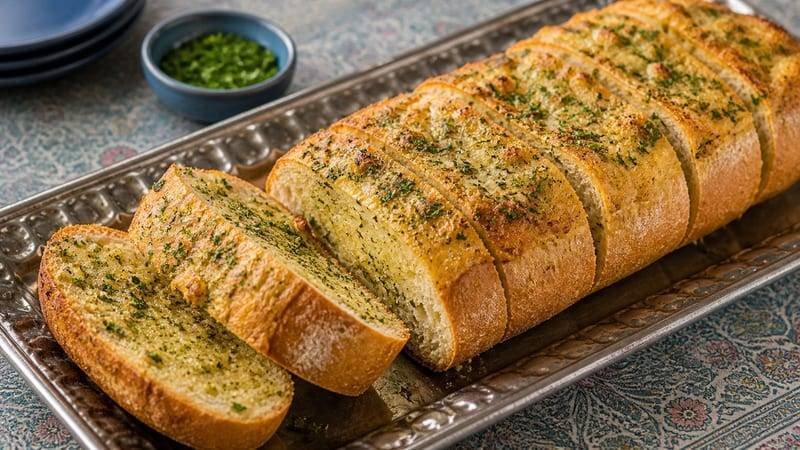
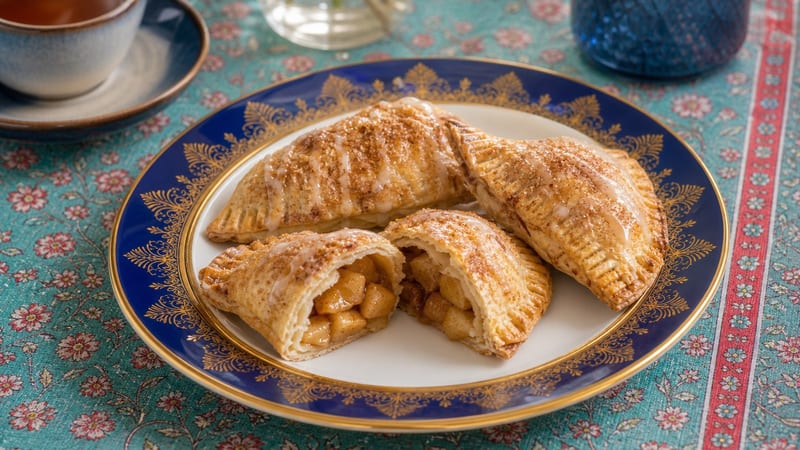
More Like This
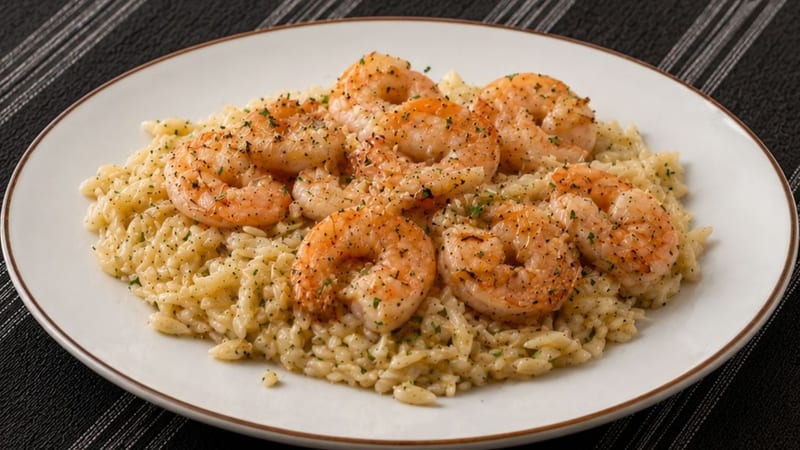 Garlic Butter Shrimp and OrzoSame main ingredient: Seafood
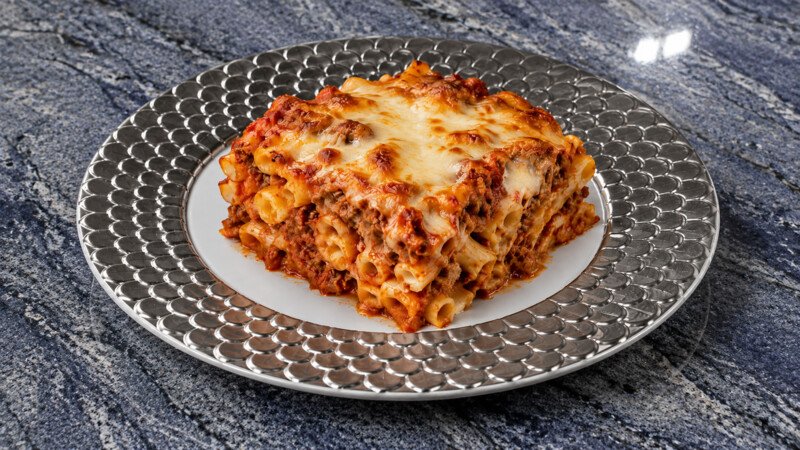 Baked ZitiSame main ingredient: Pasta
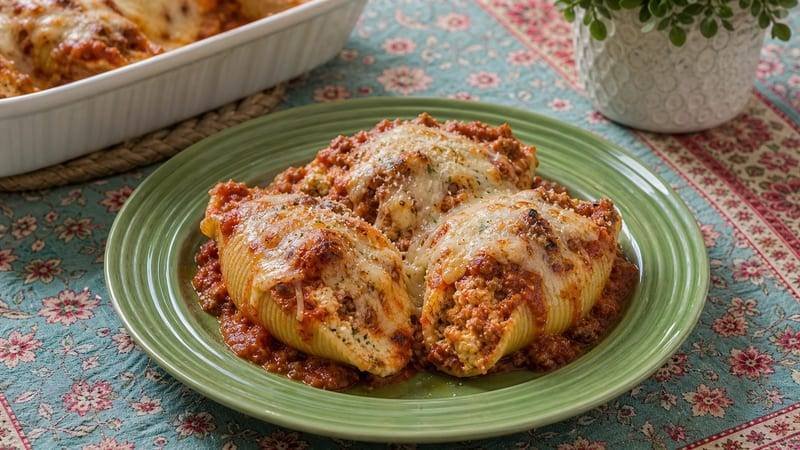 Bolognese Stuffed ShellsSame main ingredient: Pasta
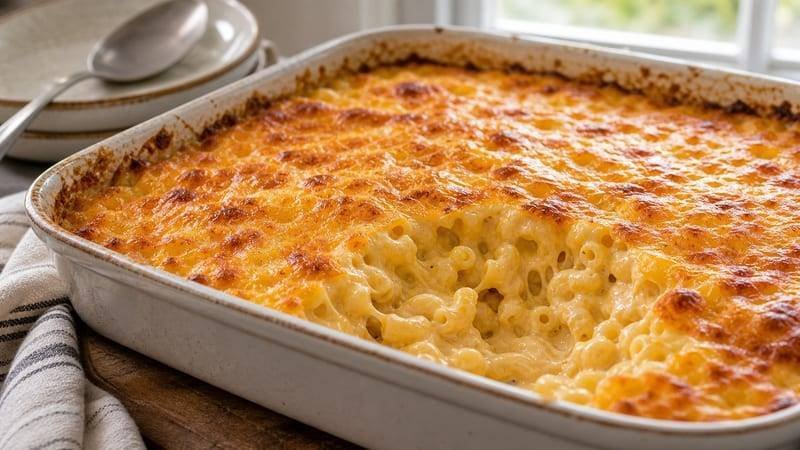 Mac and CheeseSame main ingredient: Pasta
You Might Also Like

Finish With Dessert
Try this next
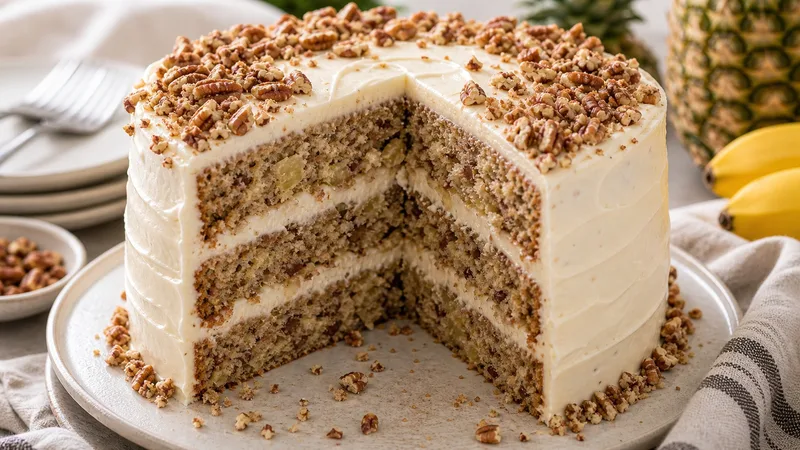
Hummingbird Cake
View recipe →