
Mashed Potatoes
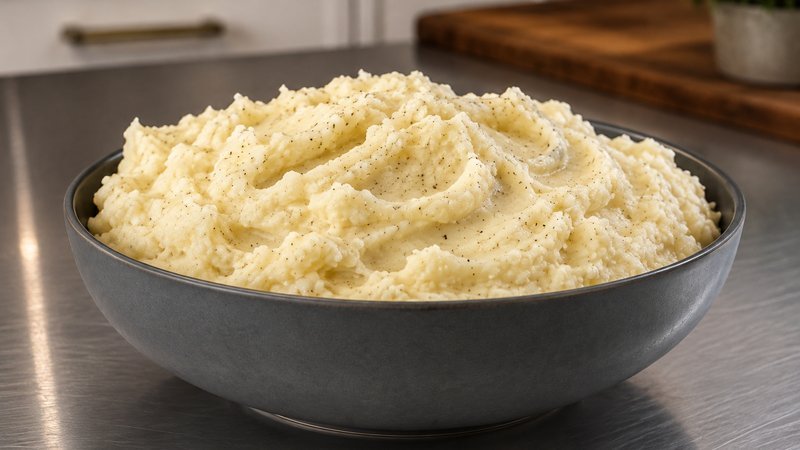
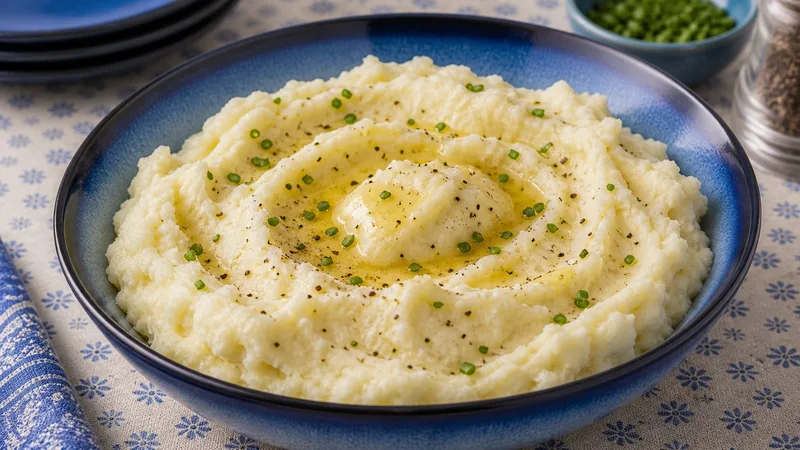
Boil peeled, cubed Yukon Gold potatoes in salted water until fork-tender, about 15–18 minutes, then drain and rice or mash them with warm butter and hot cream. Season generously with salt and white pepper and serve immediately for best texture.
Mashed potatoes look harmless until somebody gets out a stand mixer and turns three pounds of Yukon Golds into wallpaper paste. The starch in potatoes does not need encouragement. Treat it gently and you get a smooth, buttery mash with actual body; beat it aggressively and you get something that can probably patch drywall.
Start the peeled chunks in cold salted water so the centers and outsides cook at roughly the same pace. Once a fork slides through with no resistance, drain them well and put them back in the hot pot for a minute or two. That little drying step is important because water sitting on the potatoes is occupying space that could otherwise be filled with butter, which is not the kind of inefficiency we tolerate here. Meanwhile, warm the butter, heavy cream, and milk. Cold dairy drops the potato temperature fast and makes the starch tighten up.
A ricer or food mill gives the smoothest texture, but a hand masher works if you stop as soon as the lumps are gone. Fold in the warm cream mixture gradually, season with white pepper and salt, and quit stirring once the texture is where you want it. The goal is rich and fluffy, not whipped into witness protection.
Ingredients
- 3 pounds Yukon Gold potatoes, peeled and cut into 1½-inch chunks
- 1 tablespoon kosher salt, plus more for seasoning
- 8 tablespoons (1 stick) unsalted butter, cut into pieces
- ¾ cup heavy cream
- ¼ cup whole milk
- ½ teaspoon white pepper
- Salt to taste
Instructions
- 1Place the peeled, cut potatoes in a large pot and cover with cold water by at least 2 inches. Add 1 tablespoon kosher salt. Starting in cold water instead of boiling water ensures the potatoes cook evenly all the way through.
- 2Bring to a boil over high heat, then reduce to a steady simmer. Cook uncovered for 15–18 minutes, until a fork slides into the center of a chunk with zero resistance. If it drags even slightly, give it 2 more minutes.
- 3While the potatoes cook, combine the butter, heavy cream, and whole milk in a small saucepan over low heat. Warm until the butter is fully melted and the mixture is hot but not boiling — about 3–4 minutes. Keep warm on the lowest setting. Cold dairy will cool your potatoes down fast and seize the starch. Don't skip this step.
- 4Drain the potatoes thoroughly and return them to the hot pot over low heat for 1–2 minutes, shaking gently, to drive off excess moisture. Dry potatoes absorb butter better. This step matters.
- 5Pass the potatoes through a ricer or food mill directly back into the pot. If you don't have either, use a handheld potato masher — mash firmly but stop the moment there are no lumps. Do not use a hand mixer or stand mixer under any circumstances.
- 6Pour in about two-thirds of the warm cream-butter mixture and fold it in gently with a wooden spoon or rubber spatula, using slow folding motions rather than aggressive stirring. Add more of the warm mixture until you reach your preferred consistency.
- 7Season with white pepper and salt to taste. Taste again. Add more butter if you want to — there is no wrong answer here. Serve immediately.
Nutrition Information
Estimated per serving: 1 of 6 servings.
Estimated from the ingredients and quantities in this recipe using standard food-composition values. Brand choices, trimming, cooking loss, optional ingredients, and actual portion size can change the numbers. How we calculate nutrition estimates.
Pro Tips
- Reaching for russets alone. Russets are high-starch and can mash up dry and grainy on their own, while Yukon Golds bring a natural buttery flavor and a texture that stays creamy without turning gluey. Yukon Golds are the safer single potato, which is what this everyday version is built on. For a holiday-sized batch, blending 2 parts Yukon Gold with 1 part russet gets you both the buttery flavor and the fluffiness — that is our classic mashed potatoes, scaled for a Thanksgiving table.
- Rice or mill your potatoes if you have the equipment. A ricer breaks the cells more gently than a masher, which means less starch release, which means your potatoes stay fluffy instead of turning into wallpaper paste. It's a fifteen-dollar tool and it will change how you feel about yourself.
- Taste the water before you drain. The pot water should taste pleasantly salty, like a mild soup. If you can't taste any salt, your potatoes are underseasoned at their core — and no amount of finishing salt will fix what the interior never had.
Substitutions
Storage Instructions
Store leftover mashed potatoes in an airtight container in the refrigerator for up to 4 days. They will thicken as they cool. Reheat gently on the stovetop over low heat, stirring in a splash of warm cream or milk to bring them back to their original consistency. Microwave reheating works in a pinch — cover loosely, heat in 60-second intervals, and stir between each interval. Do not freeze — the texture breaks down on thawing and you will be sad.
Make Ahead
You can boil and rice the potatoes up to 2 hours ahead and hold them uncovered at room temperature. When ready to serve, rewarm the pot gently over low heat and add your warm butter-cream mixture as directed. Full make-ahead (fully finished, then reheated) is possible but results in slightly less fluffy texture. If doing a full make-ahead, undercook the potatoes by 2 minutes and add an extra splash of cream when reheating.
Frequently Asked Questions
Can I make this ahead of time?
Prep the measured ingredients for Mashed Potatoes ahead, but keep the final cooking step close to serving when possible. Starches continue to absorb moisture as they sit, so freshly finished texture is better than holding the completed dish for a long time.
How do I store the leftovers?
Store the leftovers in an airtight container in the refrigerator for up to 4 days. They will thicken as they cool. Reheat gently on the stovetop over low heat, stirring in a splash of warm cream or milk to bring them back to their original consistency. Microwave reheating works in a pinch — cover loosely, heat in 60-second intervals, and stir between each interval. Do not freeze — the texture breaks down on thawing and you will be sad.
Can I freeze it?
Do not freeze — the texture breaks down on thawing and you will be sad.
Can I adjust it for what I have on hand?
Yes. Tested adjustments on this recipe include heavy cream → half-and-half or whole milk only; unsalted butter → salted butter; and butter and cream (dairy-free version) → vegan butter and full-fat oat milk or canned coconut cream.
What's the most common mistake to avoid?
Reaching for russets alone. Russets are high-starch and can mash up dry and grainy on their own, while Yukon Golds bring a natural buttery flavor and a texture that stays creamy without turning gluey. Yukon Golds are the safer single potato, which is what this everyday version is built on. For a holiday-sized batch, blending 2 parts Yukon Gold with 1 part russet gets you both the buttery flavor and the fluffiness.