America 250 Freedom anniversary
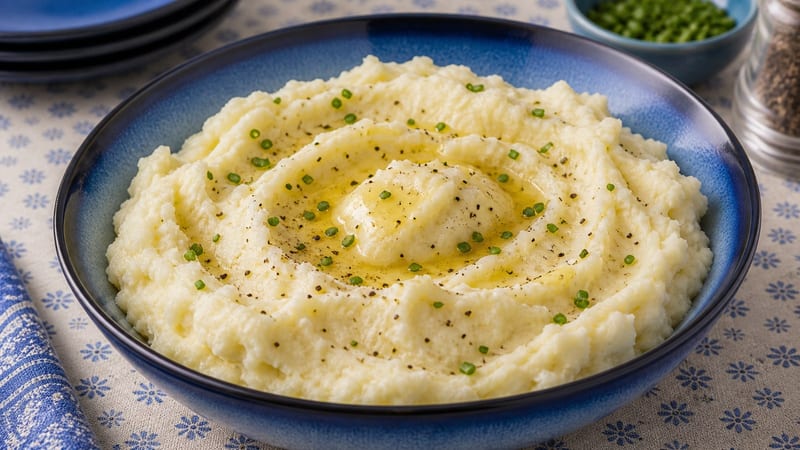
Bowl of classic mashed potatoes whipped into soft peaks with visible butter and cracked black pepper

Classic Mashed Potatoes

Quick Answer

Use 2 parts Yukon Gold to 1 part russet, cutting the russet chunks about a quarter larger so both finish together. Start them in cold salted water, simmer 15 to 20 minutes until a fork meets no resistance, dry them in the hot pot, then work in the butter first and the warm cream second. Butter coats the starch so the potatoes stay creamy instead of soaking up liquid and going gluey.

Jump to Recipe

Mashed potatoes are simple right up until somebody brings out a stand mixer and turns dinner into drywall compound. The texture here comes from using two potatoes on purpose: Yukon Golds bring buttery flavor and a creamy body, while russets add enough dry starch to keep the mash light. They are cut to slightly different sizes so both varieties finish cooking together, then drained and dried briefly in the hot pot so excess water leaves before the good stuff goes in.

The order matters too. Butter gets folded into the hot potatoes before the warm cream and milk, coating the starch with fat before it can greedily absorb all that liquid and become heavy. Use a ricer, food mill, or hand masher and stop once the lumps are gone; blenders and mixers tear open starch cells until the potatoes start behaving like paste with excellent benefits. Done gently, you get mashed potatoes that are rich, fluffy, and creamy at the same time—which should be enough to end at least one holiday argument.
Prep20 minutes
Cook25 minutes
Total45 minutes
Serves8 servings
DifficultyEasy

Ingredients

Servings

Potatoes

  • 2 pounds Yukon Gold potatoes, peeled and cut into 1½-inch chunks
  • 1 pound russet potatoes, peeled and cut into 2-inch chunks
  • 1 tablespoon Diamond Crystal kosher salt, for the cooking water

Butter and Cream

  • 8 tablespoons (1 stick) unsalted butter, cut into pieces, at cool room temperature
  • ¾ cup heavy cream
  • ¼ cup whole milk
  • ½ teaspoon white pepper, or freshly ground black pepper
  • Kosher salt, to taste
  • 2 tablespoons unsalted butter, for the top (optional)

Instructions

  1. 1Cut the two potatoes to different sizes. Peel both. Cut the Yukon Golds into 1½-inch chunks and the russets into slightly larger 2-inch chunks. Russets are more porous and cook faster, so sizing them up is what gets both potatoes tender at the same moment instead of leaving you with waterlogged russets and undercooked Yukons.
  2. 2Start them in cold, well-salted water. Put all the potatoes in a large pot and cover with cold water by 2 inches. Add the tablespoon of kosher salt — the water should taste like a mild soup. Starting in cold water lets the outside and the center come up to temperature together. Dropping potatoes into already-boiling water cooks the edges to mush before the middles are done.
  3. 3Simmer until a fork meets no resistance. Bring to a boil over high heat, then reduce to a steady simmer and cook uncovered 15 to 20 minutes. Test the largest russet chunk: a fork should slide to the center and back out with zero drag. If it catches even slightly, give it 2 more minutes and test again. Undercooked potatoes will not mash smooth no matter what you do to them afterward.
  4. 4Warm the cream and milk. While the potatoes simmer, heat the heavy cream and whole milk together in a small saucepan over low heat until steaming but not boiling, about 3 to 4 minutes. Keep it warm. Cold dairy hitting hot potatoes drops the temperature fast, seizes the starch, and makes everything gluey.
  5. 5Drain, then dry the potatoes in the pot. Drain thoroughly and return the potatoes to the empty hot pot over low heat. Shake the pot gently for 1 to 2 minutes until you see the surfaces go chalky-dry and steam stops rising. Every bit of water you drive off now is room for butter later. Skipping this step is why mashed potatoes turn out watery.
  6. 6Rice or mash them, off the heat. Pull the pot off the burner. Pass the potatoes through a ricer or food mill back into the pot, or mash firmly by hand and stop the moment the lumps are gone. Do not use a stand mixer, hand mixer, blender, or food processor. Those tear the starch cells open and release enough free starch to turn the whole bowl into paste, and there is no coming back from it.
  7. 7Butter first. Add all 8 tablespoons of butter to the hot potatoes and fold gently with a spatula or wooden spoon until it disappears completely. Take your time here. The butter needs to coat the starch before any liquid arrives — that is the entire reason these come out creamy instead of heavy.
  8. 8Then the warm cream, in stages. Pour in about two-thirds of the warm cream and milk and fold it in with slow strokes, not aggressive stirring. Add more until the potatoes are just past the consistency you want, since they firm up slightly as they sit. Season with the white pepper and salt to taste, then taste again — potatoes need more salt than people expect. Serve hot, with the optional 2 tablespoons of butter melting on top.

Nutrition Information

Estimated per serving: 1 of 8 servings.

340Calories
4 gProtein
31 gCarbohydrates
23 gTotal Fat
14 gSaturated Fat
4 gFiber
2 gTotal Sugars
910 mgSodium
70 mgCholesterol

Estimated from the ingredients and quantities in this recipe using standard food-composition values. Brand choices, trimming, cooking loss, optional ingredients, and actual portion size can change the numbers. How we calculate nutrition estimates.

Pro Tips

  • The 2-to-1 blend is doing real work. Yukon Golds are lower in starch, so they stay creamy and carry a naturally buttery flavor. Russets are high-starch and mash light and fluffy. Two parts Yukon to one part russet gives you flavor and body from the first and lift from the second, which is more than either potato manages by itself.
  • Salt the water like you mean it. The interior of a potato chunk can only be seasoned while it is cooking. If the cooking water is bland, the middle of every bite will be bland, and finishing salt only fixes the surface. The water should taste like a mild soup.
  • Warm dairy, always. Cold cream shocks hot starch, and shocked starch goes gummy. Thirty seconds of warming in a small saucepan is the whole cost, and it changes the texture noticeably.
  • A ricer is the best fifteen dollars in your kitchen. It presses the potato through small holes without dragging or smearing, which releases far less free starch than a masher does. If you make mashed potatoes more than twice a year, buy one.
  • Don't chase leftovers with more cream. Reheated mashed potatoes tighten up. Loosen them with warm milk a splash at a time over low heat, stirring gently. Dumping in cold cream cold-shocks them a second time and you end up right back at gluey.

Substitutions

Yukon Gold and russet blend → all Yukon Gold Still very good — buttery and creamy, just denser and less fluffy. That is our everyday weeknight mashed potatoes, which is built around Yukons alone and scaled for a smaller table.
heavy cream → half-and-half or whole milk Lighter and less rich. Keep the butter at the full 8 tablespoons and warm the dairy the same way, or the texture falls off noticeably.
whole milk → additional heavy cream Richer and heavier. Use 1 cup of cream total if you want it closer to a steakhouse texture.
white pepper → freshly ground black pepper Purely a look. White pepper disappears into the potatoes; black pepper leaves visible flecks and tastes slightly sharper.
potato ricer → a handheld masher Works fine. Mash firmly, stop the second the lumps are gone, and expect a slightly more rustic texture. Never reach for a mixer as the substitute.

Storage Instructions

Refrigerate in an airtight container for up to 4 days. Reheat gently in a saucepan over low heat or in a covered dish at 325°F, stirring in warm milk a splash at a time until they loosen. Microwaving works if you cover the bowl, stop every 60 seconds to stir, and add a little warm milk as you go.

Make Ahead

Mashed potatoes hold better than most people think, which matters when the oven is full. Make them up to a day ahead, transfer to a buttered baking dish, dot the top with butter, cover, and refrigerate. Reheat covered at 325°F for 30 to 40 minutes, stirring once, and stir in a few tablespoons of warm cream before serving. You can also hold them hot for up to 2 hours in a slow cooker set to warm, stirring every 30 minutes.

Freezer

Mashed potatoes made with this much butter and cream freeze better than lean ones, because the fat protects the texture. Freeze in an airtight container up to 2 months, thaw overnight in the refrigerator, and reheat low and slow with extra warm milk. Expect them to be slightly grainier than fresh.

Frequently Asked Questions

What are the best potatoes for mashed potatoes?

A blend beats either potato alone. Use 2 parts Yukon Gold for buttery flavor and a creamy set, and 1 part russet for starch and fluffiness. If you can only get one, Yukon Gold is the safer single choice because russets alone can turn out dry and grainy.

Why did my mashed potatoes turn out gluey?

Almost always one of three things: a mixer or food processor tore the starch cells open, the potatoes went in undried so they absorbed water, or the cream went in before the butter. Fixing the order alone — butter first, warm cream second — solves most of it.

Can I make mashed potatoes ahead for Thanksgiving?

Yes, and you probably should. Make them a day ahead, spread into a buttered baking dish, dot with butter, cover, and refrigerate. Reheat covered at 325°F for 30 to 40 minutes and stir in a few tablespoons of warm cream just before serving.

Should I start potatoes in cold water or boiling water?

Cold. Cold water lets the outside and the center of each chunk come up to temperature together. Dropping raw potatoes into boiling water overcooks the edges into mush well before the middles are tender.

Do I have to peel the potatoes?

For this recipe, yes. Russet skins in particular turn tough and stringy in a smooth mash. If you want a rustic skin-on mash, use all Yukon Golds, scrub them well, and mash by hand rather than ricing.

How much mashed potatoes do I need per person?

Figure about ½ pound of raw potatoes per person for a holiday table where people go back for seconds. This 3-pound recipe comfortably serves 8 — use the 2× scale button above for a crowd of 16.

Lila, the editorial persona and visual host of Fork Around & Find Out Kitchen

About Lila

Lila is the editorial persona and visual host of Fork Around & Find Out Kitchen. Recipes presented in the Lila voice are developed, edited, and published under FAFO Kitchen's editorial standards.

Found a problem? Tell FAFO Kitchen.