
America 250 Freedom anniversary
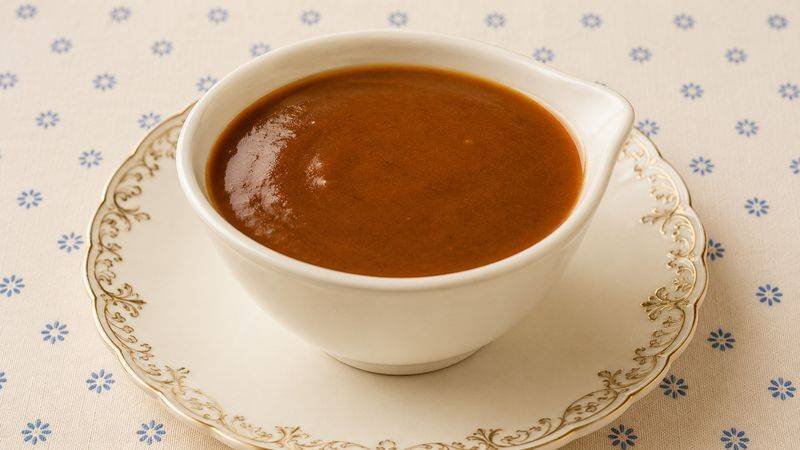
Homemade turkey gravy simmering in a stainless skillet, being whisked to a smooth glossy consistency that coats the wires

Homemade Turkey Gravy

Quick Answer

Pour the roasting pan drippings into a fat separator, then cook 6 tablespoons of the reserved turkey fat with 6 tablespoons of flour for 2 to 3 minutes to make a roux. Whisk in 4 cups of combined defatted drippings and turkey stock a little at a time, simmer 8 to 10 minutes until it coats a spoon, and season with black pepper, 1 teaspoon Worcestershire, and salt only at the very end.

Jump to Recipe

The best turkey gravy starts with the stuff people are usually in a hurry to wash out of the roasting pan. Browned fond, rendered turkey fat, and concentrated drippings are the entire point. Here, the neck, heart, and gizzard simmer ahead of time with onion, celery, carrot, thyme, and stock to make a turkey-heavy base; the liver stays out because bitterness is not a holiday tradition worth preserving.

Once the bird comes out, the drippings get separated and the roasting pan gets deglazed so every browned bit makes it into the gravy. Six tablespoons of turkey fat meet six tablespoons of flour for a roux cooked until nutty and peanut-butter colored. Then the warm drippings and stock go in gradually. The first additions may tighten into something that looks like paste from an elementary-school art cart. Keep whisking. It smooths out. The gravy simmers until it coats a spoon but still pours freely, then gets finished off the heat with herb butter, Worcestershire, and black pepper. Salt waits until the end because a dry-brined turkey may already have contributed plenty. That one decision can be the difference between gravy people keep passing around the table and gravy that requires an apology plus another quart of unsalted stock.
Prep10 minutes
Cook20 minutes
Total30 minutes
Serves12 (about cups)
DifficultyEasy

Ingredients

Servings

Gravy

  • 6 tablespoons turkey fat, skimmed from the roasting pan drippings (supplement with unsalted butter if you come up short)
  • 6 tablespoons all-purpose flour
  • 4 cups liquid total — defatted pan drippings plus unsalted or low-sodium turkey or chicken stock to make up the difference
  • 2 tablespoons reserved herb butter from the turkey, or plain unsalted butter
  • 1 teaspoon Worcestershire sauce
  • ½ teaspoon freshly ground black pepper, plus more to taste
  • Kosher salt, to taste and only at the end

Giblet Stock (make ahead — optional, but better)

  • 1 turkey neck, plus the heart and gizzard from the giblet packet — discard the liver
  • 1 small onion, quartered
  • 1 celery stalk, cut in half
  • 1 carrot, cut in half
  • 4 cups unsalted or low-sodium chicken stock
  • 2 sprigs fresh thyme

Instructions

  1. 1Make the giblet stock, up to 3 days ahead. Put the turkey neck, heart, and gizzard in a saucepan with the onion, celery, carrot, thyme sprigs, and 4 cups of chicken stock. Discard the liver — it turns the whole pot bitter and metallic. Bring to a bare simmer, then cook uncovered on low for 1½ to 2 hours, until the liquid has reduced by about a third and tastes distinctly of turkey. Strain, cool, and refrigerate up to 3 days. Skip this step if you are short on time and use good low-sodium stock instead.
  2. 2Separate the drippings while the turkey rests. As soon as the turkey comes out of the oven, pour everything in the roasting pan through a fine strainer into a fat separator or a tall glass measuring cup. Press gently on the roasted aromatics to get the liquid out, then discard them. Let it stand 5 minutes and the clear fat will rise to the top.
  3. 3Deglaze the roasting pan. Set the empty roasting pan across two burners over medium heat and pour in about 1 cup of your giblet stock. Scrape hard with a flat wooden spoon and get every browned bit off the bottom — that fond is the darkest, most concentrated turkey flavor in the entire kitchen. Pour it back in with the rest of your liquid.
  4. 4Measure your fat and your liquid. Skim 6 tablespoons of the clear turkey fat off the top and set it aside. If the bird did not render that much, make up the difference with unsalted butter. Combine the defatted drippings with enough giblet stock to reach 4 cups total and keep it warm.
  5. 5Cook the roux. Heat the 6 tablespoons of turkey fat in a wide skillet or saucepan over medium heat. Whisk in the 6 tablespoons of flour all at once and keep whisking for 2 to 3 minutes, until the paste smells nutty and turns the color of peanut butter. This step is not optional — undercooked roux tastes like raw flour and no amount of simmering afterward will hide it.
  6. 6Add the liquid slowly. Pour in the warm liquid about ½ cup at a time, whisking each addition completely smooth before adding the next. The first two additions will seize up and look wrong. Keep whisking. Once about half the liquid is in, you can add the rest in a steady stream.
  7. 7Simmer to the right body. Bring the gravy to a gentle simmer and cook 8 to 10 minutes, whisking often, until it coats the back of a spoon and holds a clean line when you draw a finger through it — but still pours freely off the whisk. If it thickens past that point, whisk in warm stock a few tablespoons at a time.
  8. 8Finish and season last. Take the pan off the heat. Whisk in the 2 tablespoons of reserved herb butter, the Worcestershire, and the black pepper. Now taste it and add salt if it needs it. Drippings from a dry-brined turkey are already well salted, so seasoning earlier is the fastest way to ruin an otherwise perfect gravy. Pour through a fine strainer into a warmed gravy boat if you want it glass-smooth.

Nutrition Information

Estimated per serving: 2 tablespoons (about 28 servings in the batch).

45Calories
1 gProtein
2 gCarbohydrates
3 gTotal Fat
2 gSaturated Fat
0 gFiber
0 gTotal Sugars
240 mgSodium
9 mgCholesterol

Estimated from the ingredients and quantities in this recipe using standard food-composition values. Brand choices, trimming, cooking loss, optional ingredients, and actual portion size can change the numbers. How we calculate nutrition estimates.

Pro Tips

  • Season at the end, every time. Pan drippings from a dry-brined bird carry a lot of salt, and the gravy concentrates as it simmers. Salt on the front end and you have no way back. Salt at the finish and you always land it.
  • Warm liquid goes into hot roux. Cold stock hitting a hot roux is the number one cause of lumps. Keep your liquid warm on a back burner and add it gradually, and the gravy comes together smooth without any rescue work.
  • The fond is the flavor. Everything stuck to the bottom of the roasting pan is concentrated browned turkey. Deglazing takes ninety seconds and does more for the finished gravy than any other single step.
  • Skip the liver. The neck, heart, and gizzard build a clean savory stock. The liver is aggressive, bitter, and mineral, and it will dominate a pot it has no business dominating. Save it for something else or leave it out.
  • Lumps are fixable. Push the gravy through a fine-mesh strainer, or hit it with an immersion blender for five seconds. Nobody at the table will ever know, and pretending otherwise is how gravy anxiety gets passed down through generations.

Substitutions

turkey pan drippings → all stock, plus butter for the fat You lose the roasted depth that makes it turkey gravy, so lean harder on the giblet stock. Use 6 tablespoons unsalted butter in place of the turkey fat.
all-purpose flour → an equal weight of a 1-to-1 gluten-free flour blend Thickens comparably. A cornstarch slurry also works — 3 tablespoons cornstarch whisked into ¼ cup cold stock, stirred into simmering liquid — but skip the roux entirely if you go that route.
Worcestershire sauce → ½ teaspoon soy sauce, or a splash of dry sherry You are after savory depth and a little acidity. Either gets you there; use a light hand with both.
giblet stock → good low-sodium turkey or chicken stock Perfectly acceptable. Reduce 5 cups down to 4 over medium heat first to concentrate the flavor and make up some of the difference.
reserved herb butter → plain unsalted butter Whisk in a pinch of chopped fresh sage and thyme along with it if you have them out.

Storage Instructions

Cool the gravy quickly and refrigerate it in an airtight container for up to 4 days. It will set up firm and gelatinous when cold — that is a good sign, and it means your stock had real body. Reheat gently over low heat, whisking in stock or water a tablespoon at a time until it loosens back to a pourable consistency.

Make Ahead

Make the giblet stock up to 3 days ahead and refrigerate it. You can also build a complete base gravy the day before using stock alone, then whisk the fresh pan drippings and deglazed fond into it on Thanksgiving Day. That takes the last-minute work down to about five minutes.

Freezer

Freeze in airtight containers or a zip-top bag laid flat for up to 3 months. Flour-thickened gravy can separate slightly on thawing; reheat it slowly over low heat and whisk hard as it comes back together and it will re-emulsify.

Frequently Asked Questions

How do I fix lumpy gravy?

Pour it through a fine-mesh strainer, or run an immersion blender through it for about five seconds. Both work completely. To prevent lumps next time, keep your liquid warm and add it to the roux gradually, whisking each addition smooth before the next.

My gravy is too thin. What now?

Simmer it longer — most thin gravy is just underreduced. If you need it thickened fast, whisk 1 tablespoon of softened butter together with 1 tablespoon of flour into a paste and whisk that into the simmering gravy a little at a time, cooking 2 minutes after the last addition.

Can I make turkey gravy without drippings?

Yes. Use 6 tablespoons of unsalted butter for the fat and build the gravy on a well-reduced turkey or chicken stock. It will not have the roasted depth of true drippings gravy, so reduce your stock first to concentrate it and be generous with the black pepper.

Why does my gravy taste like flour?

The roux was not cooked long enough. Raw flour has a distinct pasty taste that simmering will not remove. Cook the fat and flour together for a full 2 to 3 minutes, until it smells nutty and turns the color of peanut butter, before any liquid goes in.

How much gravy do I need per person?

Plan on about ¼ to ⅓ cup per person for a Thanksgiving table, which makes this batch right for 10 to 12 people. Make extra if you are serving both dressing and mashed potatoes, because gravy is the first thing on the table to run out.

Can I use the turkey liver in the stock?

Leave it out. The liver is much stronger than the neck, heart, and gizzard, and it turns the stock bitter and metallic in a way you cannot balance back out. The other giblets give you clean, savory turkey flavor.

Lila, the editorial persona and visual host of Fork Around & Find Out Kitchen

About Lila

Lila is the editorial persona and visual host of Fork Around & Find Out Kitchen. Recipes presented in the Lila voice are developed, edited, and published under FAFO Kitchen's editorial standards.

Found a problem? Tell FAFO Kitchen.