
Homemade Dinner Rolls
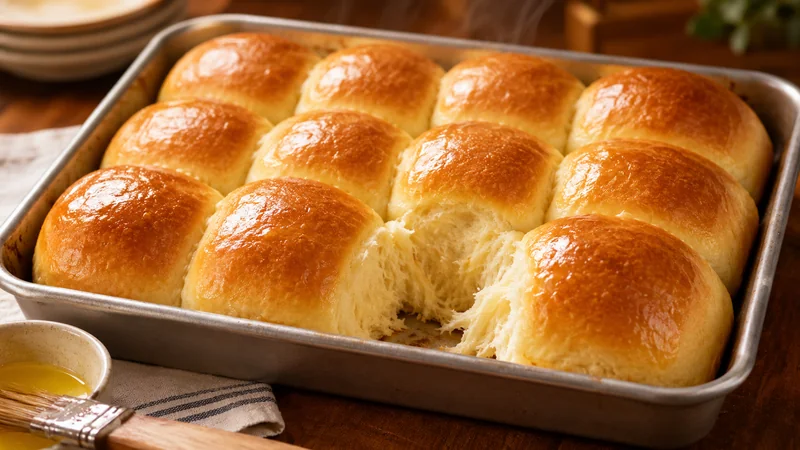
To make homemade dinner rolls, combine flour, instant yeast, sugar, and salt, then add warm milk, melted butter, and eggs and knead 8–10 minutes until the dough is smooth and slightly tacky. Let it rise until doubled, divide into 15 balls, arrange in a greased 9x13-inch pan, proof until puffy, and bake at 375°F (190°C) for 18–22 minutes until deep golden. Brush with melted butter as soon as they come out of the oven.
Dinner rolls are supposed to be the quiet little side dish, right up until a basket of genuinely good ones hits the table and everybody suddenly develops a strong opinion about bread. These homemade dinner rolls use an enriched dough with warm milk, melted butter, eggs, and just enough sugar to keep the crumb soft without wandering into dessert territory. Kneading for 8–10 minutes builds the structure, and the first rise gives the yeast time to turn that dough from a heavy lump into something light, smooth, and slightly tacky.
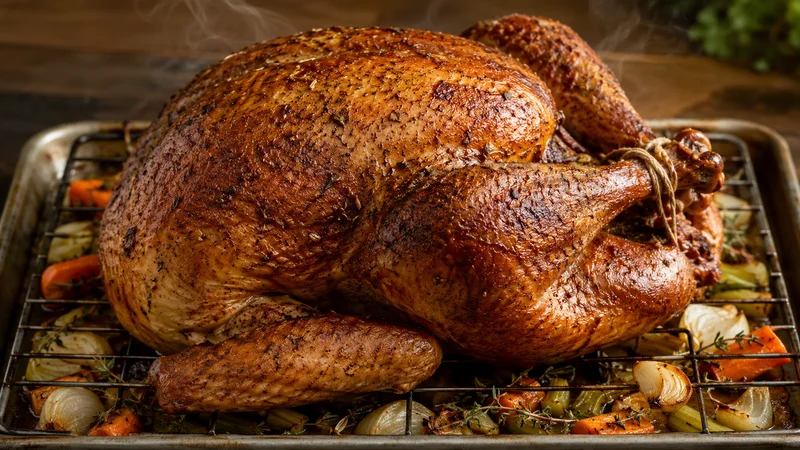
After that, divide the dough into 15 balls, tuck them into a greased 9x13-inch pan, and let them proof until they look properly puffy—not “I got bored after twenty minutes” puffy. A 375°F oven gives the tops a deep golden color while the rolls stay feathery and pull-apart tender inside. Brush them with melted butter while they’re still hot and put the pan on the table. At that point the turkey, soup, roast, or whatever else you made is going to have to accept that it now has competition.
Ingredients
- 4 to 4¼ cups all-purpose flour, divided
- 2¼ teaspoons instant yeast (one ¼-oz packet)
- ¼ cup granulated sugar
- 1½ teaspoons kosher salt
- 1 cup whole milk, warmed to about 110°F (43°C)
- ⅓ cup unsalted butter, melted and slightly cooled
- 2 large eggs, at room temperature
- 2 tablespoons unsalted butter, melted, for finishing
Instructions
- 1In a large bowl or the bowl of a stand mixer, whisk together 4 cups of the flour, the instant yeast, sugar, and salt. Adding the yeast dry with the flour is what "instant yeast" is designed for — no need to bloom it in water first.
- 2Warm the milk to about 110°F (43°C). It should feel warm on the wrist, never hot. Anything above 130°F will start killing the yeast, and cold milk will slow the rise to a crawl.
- 3Add the warm milk, melted butter, and eggs to the dry ingredients. Mix on low speed with the dough hook, or stir with a sturdy wooden spoon, until a shaggy, slightly sticky dough comes together.
- 4Knead 8–10 minutes by machine on medium-low, or about 12 minutes by hand on a lightly floured surface. The dough is ready when it is smooth, elastic, and slightly tacky to the touch — not dry. Add the remaining ¼ cup flour only a tablespoon at a time, and only if the dough is still gluing itself to the sides of the bowl after the first few minutes. Too much flour is the fastest route to heavy rolls.
- 5Transfer the dough to a lightly greased bowl, cover with plastic wrap or a damp towel, and let rise in a warm spot until roughly doubled in volume, about 1 to 1½ hours.
- 6Grease a 9x13-inch baking pan. Turn the dough out onto a lightly floured surface and divide it into 15 equal pieces — use a bench scraper and, if you want them truly even, weigh the pieces to about 60 grams each.
- 7Shape each piece into a tight ball: pull the dough outward and tuck the edges underneath, then roll the ball seam-side down against the counter with a cupped hand until the surface is smooth and taut. Arrange the balls in the pan in 3 rows of 5 with a little space between them.
- 8Cover loosely and let the rolls proof at room temperature until visibly puffy and just touching each other in the pan, 30 to 45 minutes. Meanwhile, heat the oven to 375°F (190°C) with a rack in the middle.
- 9Bake for 18–22 minutes, until the tops are deep golden brown and an instant-read thermometer inserted into a center roll registers about 190°F (88°C). If the tops brown too fast, tent loosely with foil for the last few minutes.
- 10Brush the hot rolls generously with the 2 tablespoons melted butter as soon as they come out of the oven. Cool in the pan 5 minutes, then serve warm.
Nutrition Information
Estimated per serving: 1 roll (recipe makes 15).
Estimated from the ingredients and quantities in this recipe using standard food-composition values. Brand choices, trimming, cooking loss, optional ingredients, and actual portion size can change the numbers. How we calculate nutrition estimates.
Pro Tips
- Weigh the flour if you have a scale — 1 cup of all-purpose flour is 125 grams. Scooping straight from the bag with a measuring cup packs in an extra 20–30 grams per cup and is one of the main reasons homemade rolls come out heavy.
- The dough is supposed to feel slightly tacky when you finish kneading, not dry. Tacky dough rises higher, bakes lighter, and pulls apart into feathery strands. A perfectly clean, non-sticky dough is a dough that has been fed too much flour.
- For the softest tops, brush a second time with melted butter after the rolls have cooled about 5 minutes. Once they are warm rather than hot, the butter soaks in instead of sitting on the surface.
- The internal temperature trick is the honest one for bread: pull them at 190°F (88°C) in the center. Color is a good clue, but a thermometer takes it out of the guesswork column.
Substitutions
Storage Instructions
Cool the rolls completely before storing. Wrapped tightly in foil or a zip-top bag, they keep at room temperature for 2 days, or up to 4 days refrigerated. Reheat wrapped in foil in a 300°F (150°C) oven for about 8 minutes to bring back the just-baked softness. Microwaving works in a pinch — 10 to 15 seconds per roll, covered with a damp paper towel — but it softens the top rather than the whole roll.
Make Ahead
You can do the first rise overnight in the refrigerator: after kneading, cover and refrigerate 8 to 24 hours instead of the counter rise. Shape and proof as directed the next day, letting the cold dough warm up during the second proof. Baked rolls also freeze well for up to 2 months — cool fully, wrap tightly in foil, then bag. Thaw at room temperature and reheat wrapped at 300°F for 10 minutes.
Frequently Asked Questions
Can I make these ahead of time?
Yes — either do the first rise overnight in the fridge and finish the next day, or fully bake and freeze up to 2 months. Reheat wrapped in foil at 300°F (150°C) for 8–10 minutes to restore the just-baked texture.
Why did my rolls come out dense?
Almost always too much flour, water that was too hot and killed the yeast, or an underproofed second rise. Aim for a slightly tacky dough, milk warm to the wrist, and rolls that are visibly puffy and just touching in the pan before they go into the oven.
Do I have to use a stand mixer?
No. The dough kneads by hand in about 12 minutes on a lightly floured counter — push it away with the heel of your hand, fold it back on itself, quarter-turn, repeat. It is ready when it is smooth, elastic, and springs back slowly when poked.
How do I store leftover rolls?
Cool them completely, then wrap tightly in foil or a zip-top bag. They keep 2 days at room temperature or up to 4 days refrigerated. Reheat wrapped in foil at 300°F for about 8 minutes to bring back the just-baked softness.
Can I freeze them?
Yes. Baked rolls freeze for up to 2 months — cool fully, wrap tightly in foil, then bag them. Thaw at room temperature and reheat wrapped at 300°F for 10 minutes.
Make It a Meal
Pair this recipe with a side, bread, and something sweet from the FAFO Kitchen.