
Classic Pumpkin Pie
To make classic pumpkin pie, whisk 1 can pure pumpkin purée with 3 eggs, brown and granulated sugar, warm spices, vanilla, and salt, then whisk in 1 cup evaporated milk and ½ cup heavy cream. Pour into a chilled 9-inch pie crust. Bake at 425°F (220°C) for 15 minutes, drop the oven to 350°F (175°C), and continue baking 35–45 minutes until the outer filling is set but the center still wobbles. Cool completely before slicing.
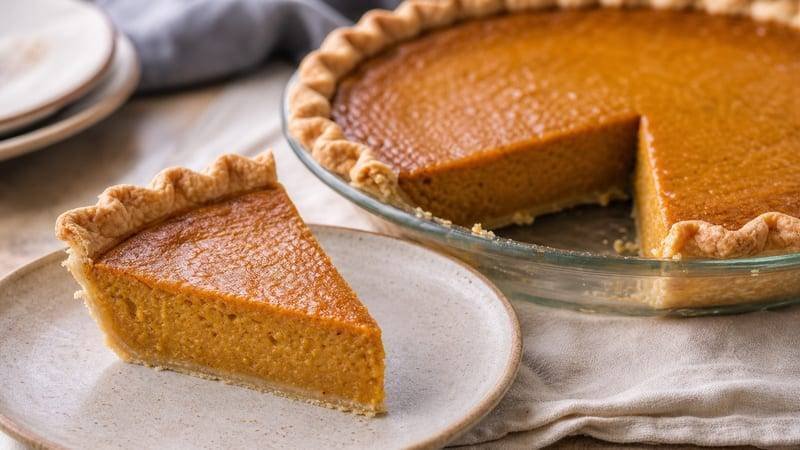
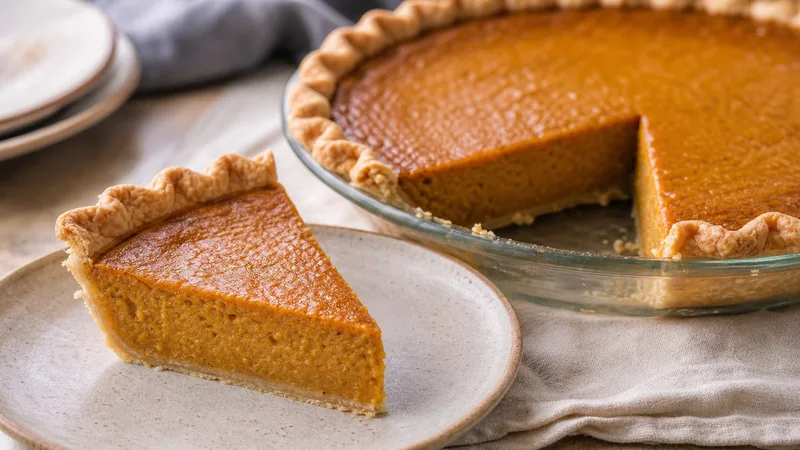
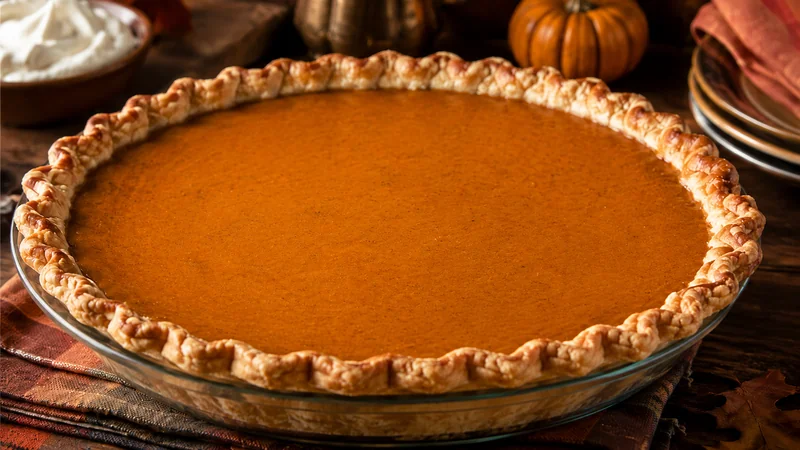
Classic pumpkin pie should be silky, warmly spiced, and clean-slicing—not a dense orange brick that tastes like somebody opened the cinnamon drawer during an earthquake. This filling uses pure pumpkin, eggs, dark brown sugar, evaporated milk, heavy cream, cinnamon, ginger, nutmeg, cloves, vanilla, and salt, with enough dairy to soften the pumpkin without washing it out. The chilled crust goes into a hot 425°F oven first, which helps set the pastry before the temperature drops to 350°F for the slower custard bake.
The real skill is knowing when to stop. Pumpkin pie is done while the center still has a controlled jiggle; the eggs continue setting as the pie cools, so baking until the middle looks completely firm is how silky custard becomes grainy and cracked. Give it at least 3 hours to cool before slicing, even though that is an offensively long time to stare at a finished pie without touching it. Trust the wobble, trust the rest, and the first slice will come out looking like you knew exactly what you were doing.
Ingredients
- 1 unbaked 9-inch pie crust, chilled
- 1 can (15 ounces) pure pumpkin purée (not pumpkin pie filling)
- 3 large eggs, at room temperature
- ¾ cup packed dark brown sugar
- ¼ cup granulated sugar
- 1 cup evaporated milk
- ½ cup heavy cream
- 1½ teaspoons ground cinnamon
- ¾ teaspoon ground ginger
- ¼ teaspoon ground nutmeg
- ⅛ teaspoon ground cloves
- 1 teaspoon pure vanilla extract
- ½ teaspoon Diamond Crystal kosher salt
Instructions
- 1Heat the oven to 425°F (220°C) with a rack in the lower third. Fit the pie crust into a 9-inch pie plate, crimp the edges, and chill in the refrigerator or freezer while you make the filling. A cold crust holds its pleated edge instead of slumping when it hits a hot oven.
- 2In a large bowl, whisk the pumpkin purée, eggs, dark brown sugar, granulated sugar, cinnamon, ginger, nutmeg, cloves, vanilla, and salt until completely smooth, about 1 minute. Take an extra pass to break up any lumps of brown sugar; a smooth base is a smooth pie.
- 3Slowly whisk in the evaporated milk and heavy cream, mixing just until incorporated. Do not whip air into the filling — too many bubbles will cause the top to puff, then crack as it cools.
- 4Pour the filling into the chilled crust. Place the pie plate on a rimmed baking sheet to catch any drips.
- 5Bake at 425°F for 15 minutes to set the crust and start the filling. Without opening the oven, reduce the oven temperature to 350°F (175°C) and continue baking 35–45 minutes.
- 6The pie is done when the outer 2 inches of filling are set and no longer wet-shiny, but the center 2 inches still jiggle like set gelatin when the plate is gently moved. If you push past this, the custard turns grainy and the top cracks; the eggs will finish setting as the pie cools.
- 7If the crust edge browns faster than the filling, shield the rim with foil or a pie shield for the last 15–20 minutes.
- 8Cool the pie completely on a wire rack, at least 3 hours, before slicing. This is the step people rush; it is also the step that separates a silky slice from a soupy one. Serve at room temperature or lightly chilled.
Nutrition Information
Estimated per serving: 1 of 8 servings.
Estimated from the ingredients and quantities in this recipe using standard food-composition values. Brand choices, trimming, cooking loss, optional ingredients, and actual portion size can change the numbers. How we calculate nutrition estimates.
Pro Tips
- Reach for pure pumpkin purée, not “pumpkin pie filling.” Pie filling is already sweetened and spiced and it will not match these ratios — the pie ends up cloying and one-note.
- The wobble is the whole doneness test. If the center is fully set when you pull it out, the pie is already overbaked. Trust that the residual heat and cooling time will finish the job.
- Evaporated milk plus a little heavy cream gives a richer, silkier custard than either the classic all-evaporated-milk version or an all-cream one. All-cream pies taste heavy; the small pour of cream here just rounds it out.
- Cool the pie fully before slicing — warm pumpkin pie has not finished setting and will slice into a puddle. Three hours minimum, longer if the kitchen is warm.
Substitutions
Storage Instructions
Cover the cooled pie loosely with plastic wrap or foil and refrigerate for up to 4 days. Custard pies must be refrigerated once cool — they should not sit out overnight. Bring slices to room temperature 20 minutes before serving for the best texture, or serve cold, which is also very good.
Make Ahead
This pie is genuinely better made a day ahead — the custard finishes setting overnight in the refrigerator and the spices smooth out. Bake, cool completely, cover loosely, and refrigerate up to 24 hours before serving. The crust can be blind-baked separately up to 2 days in advance and stored covered at room temperature.
Freezing
Yes. Freeze the fully baked, fully cooled pie wrapped tightly in plastic and then foil for up to 1 month. Thaw overnight in the refrigerator; the texture holds up well but is best within a month.
Frequently Asked Questions
Why did my pumpkin pie crack?
The pie was baked past the wobble stage. Once the center is fully set in the oven, the outside has overcooked and the custard cracks as it cools. Pull it when the outer ring is set but the center still jiggles — the residual heat finishes it.
Can I use fresh pumpkin instead of canned?
You can, but drain it well — fresh purée is much wetter than canned and will give a soggy pie if it goes in as-is. Cook it down or drain it in cheesecloth until it is the same thick, scoopable texture as canned pumpkin.
Can I make pumpkin pie ahead of time?
Yes, it is genuinely better a day ahead. The custard finishes setting overnight and the spices smooth out. Bake, cool completely, cover loosely, and refrigerate up to 24 hours. The crust can be blind-baked separately up to 2 days in advance.
How do I store leftover pumpkin pie?
Cover the cooled pie loosely and refrigerate it for up to 4 days. Custard pies must be refrigerated once cool and should not sit out overnight. Bring slices to room temperature 20 minutes before serving, or serve them cold.
Can I freeze it?
Yes. Freeze the fully baked, fully cooled pie wrapped tightly in plastic and then foil for up to 1 month, and thaw it overnight in the refrigerator.