America 250 Freedom anniversary
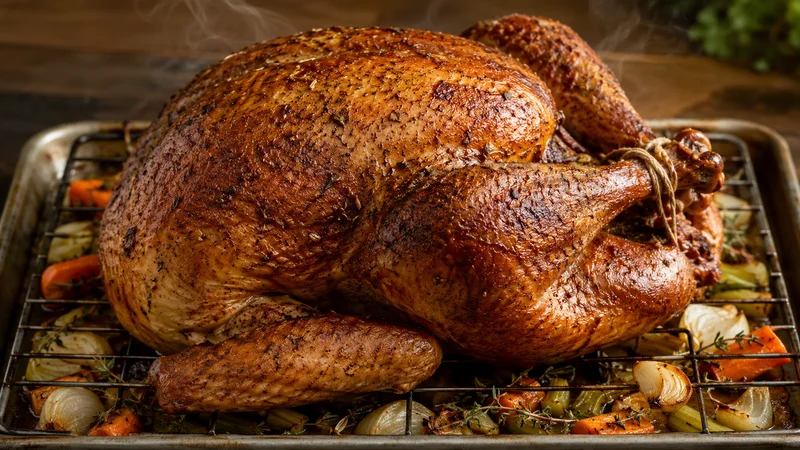
Whole roasted Thanksgiving turkey with deeply browned herb-flecked skin resting on a rack over onions, carrots, celery, and thyme

Traditional Thanksgiving Turkey

Quick Answer

Dry-brine a 12 to 14 pound turkey with 3 tablespoons Diamond Crystal kosher salt and refrigerate it uncovered for 24 to 48 hours. Roast at 450°F for 30 minutes, drop the oven to 325°F, and cook until the thickest part of the breast and the innermost thigh both read 165°F — about 2½ to 3¼ hours total. Rest 30 to 45 minutes before carving.

Jump to Recipe

A Thanksgiving turkey is mostly a logistics problem wearing ceremonial importance. It is large, it takes hours, everyone asks when it will be done, and somehow the side dishes are expected to coordinate their lives around it. The easiest way through is to season the bird thoroughly, control the oven temperature, and judge doneness with a thermometer instead of family folklore.

This recipe keeps the flavor classic so the turkey still belongs with gravy, stuffing, cranberry sauce, and everything else on the table. Dry the skin well before roasting so it can brown, season inside and out, and keep aromatics where they add fragrance without blocking heat. The breast and dark meat cook differently, so temperature—not a clock alone—is the final authority. Once the turkey reaches its proper safe temperatures, rest it before carving so the juices redistribute instead of immediately running onto the board.

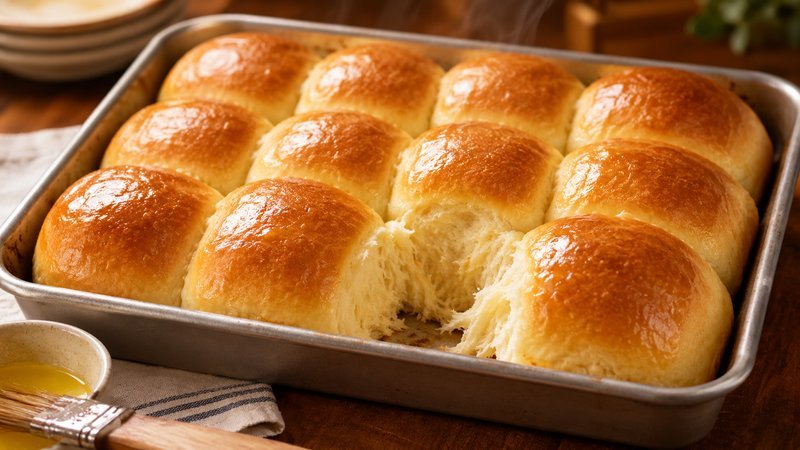
The rest period also gives you something Thanksgiving cooks desperately need: a block of oven-free time. Use it wisely. Someone is already asking where the rolls are.
Prep35 minutes
Cook3 hours
Total4 hr 20 min
Serves10 to 12 servings
DifficultyMedium

Ingredients

Turkey WeightIngredients, times, and servings update for your selected bird size. Always finish by thermometer — 165°F is the real signal, not the clock.

Turkey

  • 1 whole turkey, 12 to 14 pounds, completely thawed
  • 3 tablespoons Diamond Crystal kosher salt (or 1¾ tablespoons Morton kosher salt)
  • 1 teaspoon freshly ground black pepper

Herb Butter

  • 8 tablespoons (1 stick) unsalted butter, softened
  • 1 tablespoon finely chopped fresh sage
  • 1 tablespoon finely chopped fresh thyme leaves
  • 2 teaspoons finely chopped fresh rosemary
  • 3 garlic cloves, finely grated
  • 1 teaspoon lemon zest
  • ½ teaspoon freshly ground black pepper

Roasting Pan

  • 2 yellow onions, quartered
  • 3 celery stalks, cut into large pieces
  • 3 carrots, cut into large pieces
  • 1 head garlic, halved crosswise
  • 4 sprigs fresh thyme
  • 4 sprigs fresh sage
  • 2 cups unsalted or low-sodium turkey or chicken stock
  • 1 tablespoon neutral oil

Instructions

  1. 1Check the label before you salt anything. Look at the packaging for the words kosher, enhanced, self-basting, or contains up to X% solution. A bird carrying any of those has already been brined at the plant, and adding a full dry brine on top of it will make both the meat and the drippings genuinely too salty to serve. If your turkey is pre-brined, skip the salt entirely and use only the black pepper. Everything else in this recipe stays the same.
  2. 2Dry-brine the turkey, 1 to 2 days ahead. Remove the neck and giblets from both cavities and refrigerate them for stock or gravy. Pat the turkey completely dry inside and out with paper towels. Season it evenly all over with the 3 tablespoons kosher salt and 1 teaspoon black pepper, including inside the cavity, and gently work some of the seasoning up under the breast skin without tearing it. Set the bird breast-side up on a rack over a rimmed sheet pan and refrigerate uncovered for 24 to 48 hours.
  3. 3Temper the bird and heat the oven. Pull the turkey out of the refrigerator about 45 minutes before it goes in the oven. Do not rinse it and do not pat off the dried surface — that dry skin is the whole point. Heat the oven to 450°F with a rack positioned in the lower third so the bird sits near the center of the oven.
  4. 4Make the herb butter and get it under the skin. Mash together the softened butter, sage, thyme, rosemary, grated garlic, lemon zest, and ½ teaspoon black pepper until evenly combined. Set aside 2 tablespoons of this butter in the refrigerator for the gravy. Slide your fingers between the skin and the meat over both breasts and the tops of the thighs, loosening the skin without tearing it. Spread about two-thirds of the remaining butter directly under the skin, working it out to the edges, then rub the rest lightly over the outside of the bird.
  5. 5Build the pan and set the turkey. Scatter the onions, celery, carrots, halved garlic head, thyme sprigs, and sage sprigs across the bottom of a large roasting pan and pour in the 2 cups of stock. Set a roasting rack over the vegetables and place the turkey on it breast-side up. Tuck the wing tips underneath the bird so they do not scorch, and brush the exposed skin lightly with the tablespoon of neutral oil.
  6. 6Roast hot, then drop the heat. Roast at 450°F for 30 minutes to start the browning. Without pulling the pan out, reduce the oven to 325°F and continue roasting. Do not baste. Every time the door opens the oven loses heat, the cook time stretches, and the steam softens the skin you are trying to crisp.
  7. 7Cook to temperature, not to the clock. Start checking at the 2 hour mark. The turkey is done when an instant-read thermometer reads 165°F in both the thickest part of the breast and the innermost part of the thigh, without touching bone. For a 12 to 14 pound bird this usually lands somewhere between 2½ and 3¼ hours total, but ovens vary and the thermometer is the only thing that actually knows. If the breast skin darkens before the thighs are done, lay a loose piece of foil over that section only.
  8. 8Rest the turkey before you carve it. Move the turkey to a carving board and let it rest 30 to 45 minutes. Do not wrap it tightly — trapped steam turns crisp skin soft. A loosely draped piece of foil is fine if your kitchen is cold. Pour the pan drippings and roasted aromatics through a strainer into a fat separator and reserve them; that is the base for the gravy, and this resting window is exactly when you make it.

Nutrition Information

Estimated per serving: 1 serving (calculated using 11 servings, the midpoint of the stated 10–12 range).

840Calories
157 gProtein
7 gCarbohydrates
20 gTotal Fat
8 gSaturated Fat
2 gFiber
2 gTotal Sugars
2510 mgSodium
345 mgCholesterol

Estimated from the ingredients and quantities in this recipe using standard food-composition values. The calculation uses the midpoint of the stated yield range. Brand choices, trimming, cooking loss, optional ingredients, and actual portion size can change the numbers. How we calculate nutrition estimates.

Pro Tips

  • Uncovered in the fridge is not optional. The dry, moving air of a refrigerator pulls surface moisture out of the skin over 24 to 48 hours. Wet skin steams and stays pale. Dry skin renders and browns. Covering the bird defeats the entire technique.
  • Do not swap salts by volume. Diamond Crystal, Morton, and table salt have wildly different densities. Three tablespoons of Diamond Crystal is roughly 1¾ tablespoons of Morton kosher and only about 1½ tablespoons of fine table salt. Using table salt at the Diamond Crystal volume will over-salt the bird badly.
  • Butter under the skin, not on top of it. Butter rubbed on the outside melts, runs into the pan, and leaves the breast meat exactly as bland as it started. Under the skin it has nowhere to go but into the meat, and it bastes the breast continuously without you opening the oven once.
  • Buy the thermometer. An instant-read thermometer is the single cheapest upgrade to your Thanksgiving. Pop-up timers are calibrated to trip well past 165°F, which is precisely how turkey got its dry reputation in the first place.
  • The rest is part of the cooking. Thirty to forty-five minutes of resting lets the juices redistribute instead of running onto the board the second you cut in. It also frees the oven for the dressing and gives you a clean window to finish the gravy.
  • Standard equipment works fine. A 12 to 14 pound bird fits a normal roasting pan and a standard home oven without any adjustments.

Substitutions

Diamond Crystal kosher salt → Morton kosher salt Use 1¾ tablespoons instead of 3. Morton crystals are denser, so equal volumes are not equal salt.
fresh sage, thyme, and rosemary → dried herbs Use one-third the amount — 1 teaspoon dried sage, 1 teaspoon dried thyme, and ¾ teaspoon dried rosemary, crushed between your fingers as they go into the butter.
roasting rack → a bed of thick-cut onion and carrot rounds Lay the vegetables in a single tight layer and set the turkey directly on them. The bird needs to sit up out of the drippings so the bottom does not stew.
turkey or chicken stock (in the pan) → water The drippings will be thinner and less savory, which matters most when you make the gravy. Stock is the better choice if you have it.
12 to 14 pound turkey → a larger or smaller bird Use the Turkey Weight selector above the ingredient list to switch between 12–14, 16–18, 20–22, and 24–26 pound birds — every ingredient, time, and serving count updates automatically. For a weight outside those four ranges, the dry brine scales at about ¾ teaspoon Diamond Crystal kosher salt per pound, and roasting time changes with weight, so lean on the thermometer rather than adjusting the clock.

Storage Instructions

Carve the leftover meat off the bone within 2 hours of serving and refrigerate it in shallow airtight containers for up to 4 days. Leaving a whole carcass on the counter to cool slowly is the classic Thanksgiving food safety mistake — a large dense mass holds heat for hours right in the temperature range where bacteria multiply fastest.

Make Ahead

The dry brine is the make-ahead. Salt the bird 1 to 2 days before Thanksgiving and it sits in the refrigerator doing the work for you. The herb butter can be mixed up to 3 days ahead and refrigerated; let it soften on the counter for 30 minutes before you try to spread it under the skin.

Freezer

Freeze carved turkey in airtight portions with a little stock or gravy poured over the meat for up to 3 months — the liquid is what keeps it from drying out. Thaw overnight in the refrigerator. Simmer the picked-clean carcass into stock and freeze that too; it is the best turkey soup base you will get all year.

Frequently Asked Questions

How long does a 12 to 14 pound turkey take to roast?

Plan on roughly 2½ to 3¼ hours total: 30 minutes at 450°F followed by about 2 to 2¾ hours at 325°F. Treat that as an estimate for planning only. The bird is done when the thickest part of the breast and the innermost thigh both read 165°F on an instant-read thermometer.

Do I have to dry-brine for a full 48 hours?

No. Twenty-four hours seasons the meat well and dries the skin enough to brown properly. Forty-eight hours seasons it more deeply and gives you slightly better skin. Anything under 12 hours mostly just salts the surface. If you are short on time, 24 hours is the sweet spot.

Should I rinse the turkey before roasting?

No. Rinsing raw poultry splashes bacteria around your sink and counters, and it rewets the skin you spent two days drying out. Wipe off any loose salt with a dry paper towel if you want, and go straight into the pan.

Can I stuff this turkey?

This recipe is written for an unstuffed bird, and that is deliberate. Stuffing inside the cavity has to reach 165°F itself, which usually means overcooking the breast to get there. Bake your dressing in a separate dish instead. It is safer, it cooks evenly, and you get crisp edges you would never get inside the bird.

Why is my turkey skin pale instead of brown?

Almost always moisture. Either the bird was covered in the refrigerator, it was rinsed or patted with a wet towel before roasting, or the oven door was opened repeatedly for basting. Dry skin and undisturbed heat are what produce color.

My turkey hit 165°F earlier than expected. Now what?

Take it out. An early finish usually means a smaller bird, a hot-running oven, or a turkey that was not fully thawed at the center and cooked unevenly, so verify the temperature in two or three spots first. If it is genuinely done, pull it and let it rest. A rested turkey holds well for up to an hour under a loose foil tent.

Build the plate

Make It a Meal

Pair this recipe with a side, bread, and something sweet from the FAFO Kitchen.

Lila, the editorial persona and visual host of Fork Around & Find Out Kitchen

About Lila

Lila is the editorial persona and visual host of Fork Around & Find Out Kitchen. Recipes presented in the Lila voice are developed, edited, and published under FAFO Kitchen's editorial standards.

Found a problem? Tell FAFO Kitchen.