
Cast-Iron Skillet Cornbread
Cast-iron skillet cornbread is a simple buttermilk batter baked in a preheated cast-iron skillet, producing crispy, golden edges with a tender, moist crumb. Ready in 35 minutes.
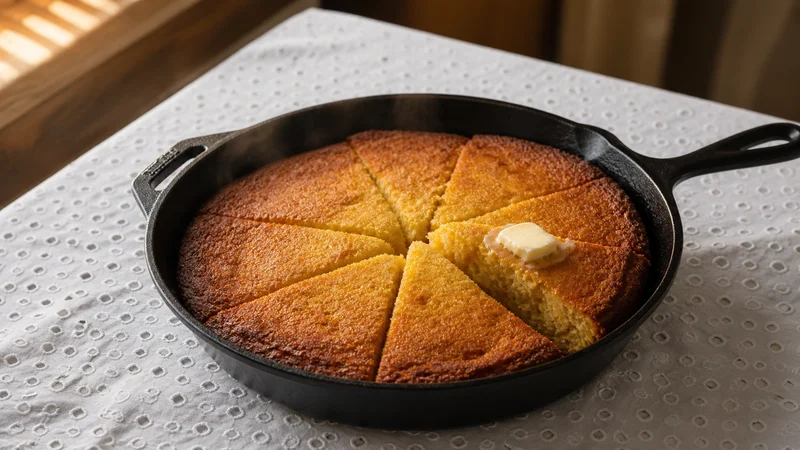
Good cast-iron cornbread announces itself before you cut it. Pour the batter into a properly preheated buttered skillet and the edges should sizzle immediately—that sound is the crust getting a head start. The batter itself is straightforward: yellow cornmeal and flour, baking powder, salt, eggs, buttermilk, whole milk, and melted butter. Sugar is adjustable, from a quarter cup for a sweeter cornbread down to a tablespoon or none at all if you want the cornmeal to run the meeting.
The hot 10-inch skillet is the piece that makes this different from cornbread baked in an ordinary pan. Direct contact with hot cast iron browns the bottom and edges while the center stays tender. Stir the wet and dry ingredients only until combined; a few small lumps are fine. Overmixing develops gluten and can turn a tender crumb into something that feels like it was designed to patch drywall.
Bake at 425°F until the top is golden, the edges pull slightly from the skillet, and a toothpick comes out clean. Give it about 10 minutes before slicing. You get a crisp buttery shell around a soft cornmeal center, which is exactly why people own cast iron skillets heavy enough to qualify as home-defense equipment.
Ingredients
Dry Ingredients
- 1 cup yellow cornmeal
- 1 cup all-purpose flour
- 1/4 cup granulated sugar, optional (reduce to 1 tablespoon for traditional Southern-style)
- 1 tablespoon baking powder
- 1 teaspoon kosher salt
Wet Ingredients
- 2 large eggs
- 1 cup buttermilk, room temperature
- 1/3 cup whole milk
- 1/2 cup unsalted butter, melted
- 1 tablespoon unsalted butter for the skillet
Instructions
- 1Preheat the oven to 425°F (220°C). Place a 10-inch cast-iron skillet in the oven while it preheats. This takes about 10 minutes and is crucial for developing the crispy, golden crust.
- 2In a large bowl, whisk together cornmeal, flour, sugar (if using), baking powder, and salt until evenly distributed.
- 3In a separate bowl, whisk together eggs, buttermilk, whole milk, and melted butter until well combined and smooth.
- 4Pour the wet ingredients into the dry ingredients. Stir gently until just combined. Do not overmix. A few small lumps are perfectly fine and indicate proper technique.
- 5Carefully remove the hot skillet from the oven. Add 1 tablespoon butter and swirl until completely melted and the pan is evenly coated. Immediately pour in the batter. It should begin sizzling around the edges.
- 6Bake for 20–25 minutes until the top is golden brown, a toothpick inserted into the center comes out clean, and the edges pull slightly away from the skillet with a caramelized crust.
- 7Allow the cornbread to cool for about 10 minutes in the skillet before slicing. Serve warm with butter and honey or your favorite accompaniment.
Nutrition Information
Estimated per serving: 1 of 8 servings.
Estimated from the ingredients and quantities in this recipe using standard food-composition values. Brand choices, trimming, cooking loss, optional ingredients, and actual portion size can change the numbers. How we calculate nutrition estimates.
Pro Tips
- Preheating the skillet is non-negotiable. This creates the signature crispy crust that makes cast-iron cornbread special.
- Room-temperature buttermilk and milk blend more smoothly into the batter. Cold dairy can create lumps.
- Do not overmix the batter. Overmixing develops gluten, making the cornbread tough and dense instead of tender.
- For traditional Southern cornbread, reduce the sugar to 1 tablespoon or omit it entirely. Less sugar lets the cornmeal flavor shine.
- Leftover cornbread can be toasted with butter or crumbled into chili, stew, or soups.
Substitutions
Storage Instructions
Store cooled cornbread covered at room temperature for up to 2 days. It can also be wrapped tightly and refrigerated for up to 4 days. Reheat gently in a 300°F oven for 10 minutes, or toast slices for a crispy exterior.
Make Ahead
The dry and wet ingredients can be prepared separately up to 24 hours ahead. Store the dry mix in an airtight container and the wet ingredients in the refrigerator. Combine just before baking. You can also bake the cornbread ahead, cool completely, and rewarm before serving.
Frequently Asked Questions
Can I use a regular baking pan instead of cast iron?
Yes, but you will not get the same crispy crust. Cast iron retains heat exceptionally well and creates the caramelized edge. A metal or ceramic pan will work, but bake for the same time and check at 20 minutes.
What if my cornbread is too dense?
This usually means the batter was overmixed. Mix only until the dry and wet ingredients are just combined. Small lumps are fine. Overmixing develops gluten, which makes the crumb dense and tough.
Can I add cheese or jalapeños?
Absolutely. Fold in 1/2 to 1 cup shredded sharp cheddar cheese, diced jalapeños, or corn kernels into the batter just before baking. These additions add flavor without affecting the texture.
Is my skillet too small or too large?
A 10-inch skillet is ideal for this recipe. If using a smaller (8-inch) skillet, reduce baking time to 15–20 minutes. A larger (12-inch) skillet may require adding 25% more batter.
Why do you add sugar to cornbread?
Sugar is optional and regional. Northern-style cornbread uses more sugar (1/4 cup) and is sweeter. Southern-style uses 1 tablespoon or none at all and lets the cornmeal flavor dominate. Choose based on your preference.