
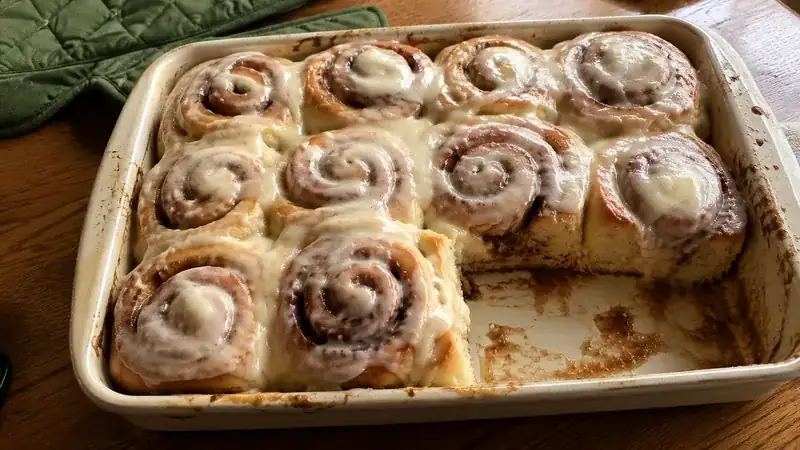
Cinnamon Rolls
To make cinnamon rolls from scratch, mix a soft enriched dough with milk, butter, eggs, and yeast, let it rise until doubled, roll it out with a cinnamon-sugar filling, slice, and bake at 350°F for 22-25 minutes. Frost while warm with cream cheese icing for best results.
Homemade cinnamon rolls are not difficult in the way people mean when they say "difficult." They are difficult in the way a dog at the back door is difficult: mostly they need time, warmth, and for you to stop opening the door every four minutes to see what is happening. The dough starts with milk warmed to 110°F, active dry yeast, sugar, eggs, butter, salt, and flour, then gets a full first rise until doubled.
Keep the dough soft. Adding flour until it stops being even slightly tacky feels responsible, but that is how fluffy cinnamon rolls get turned into bread spirals. Roll the risen dough into an 18-by-12-inch rectangle, spread it edge to edge with softened butter, brown sugar, cinnamon, and salt, then roll from the long side and cut twelve pieces. A second rise in the pan gives them the height and pull-apart texture worth waiting for.
After 22–25 minutes at 350°F, the tops should be lightly golden and the centers baked through. Cream cheese frosting goes over the rolls while they are warm enough to soften it but not so hot that it disappears into the pan. Three hours sounds like a commitment until the kitchen smells like cinnamon and butter. Then suddenly everyone acts like they supported the project from the beginning.
Ingredients
- FOR THE DOUGH:
- 3/4 cup whole milk, warmed to 110°F
- 2 1/4 teaspoons active dry yeast (one standard packet)
- 1/4 cup granulated sugar, divided
- 2 large eggs, room temperature
- 1/3 cup unsalted butter, melted and slightly cooled
- 1 teaspoon fine salt
- 4 cups all-purpose flour, plus more for dusting
- FOR THE FILLING:
- 1/2 cup unsalted butter, softened to room temperature
- 1 cup packed light brown sugar
- 2 1/2 tablespoons ground cinnamon
- 1/4 teaspoon fine salt
- FOR THE CREAM CHEESE FROSTING:
- 4 ounces cream cheese, softened to room temperature
- 1 cup powdered sugar, sifted
- 3 tablespoons whole milk or heavy cream
- 1/2 teaspoon pure vanilla extract
- Pinch of fine salt
Instructions
- 1ACTIVATE THE YEAST: Warm milk to exactly 110°F — use a thermometer if you have one; it should feel warm on your wrist but not hot. Combine warm milk, 1 tablespoon of the granulated sugar, and the yeast in the bowl of a stand mixer or a large mixing bowl. Stir gently and let sit for 5-10 minutes until foamy. If nothing happens after 10 minutes, your yeast is dead. Start over. This is not a judgment, it's just true.
- 2MAKE THE DOUGH: To the foamy yeast mixture, add the remaining 3 tablespoons granulated sugar, the eggs, melted butter, and salt. Mix with a dough hook on medium-low (or stir by hand) until combined. Add 3 1/2 cups of flour and mix on medium speed for 4-5 minutes until a soft, slightly tacky dough forms. Add the remaining 1/2 cup flour a tablespoon at a time only if the dough is so sticky it won't pull away from the bowl sides. It should be soft and a little clingy, not dry.
- 3FIRST RISE: Turn the dough out onto a lightly floured surface and knead by hand for 1 minute, shaping it into a smooth ball. Place in a lightly oiled bowl, turn to coat, and cover tightly with plastic wrap or a damp towel. Let rise in a warm, draft-free spot for 1 to 1.5 hours, until doubled in size.
- 4MAKE THE FILLING: While the dough rises, beat the softened butter, brown sugar, cinnamon, and salt together with a fork until it forms a thick, spreadable paste. Set aside at room temperature.
- 5SHAPE THE ROLLS: Once the dough has doubled, punch it down gently and turn it out onto a lightly floured surface. Roll it into a rectangle approximately 18 inches wide by 12 inches tall, with the long edge facing you. Spread the cinnamon filling evenly across the entire surface, going all the way to the edges. Starting from the long edge closest to you, roll the dough into a tight log, keeping the tension even as you go. Pinch the seam closed.
- 6CUT AND ARRANGE: Using a sharp serrated knife or unflavored dental floss, cut the log into 12 equal rolls, each about 1.5 inches wide. Arrange them cut-side up in a lightly greased 9x13-inch baking pan, spacing them close but not touching.
- 7SECOND RISE: Cover the pan loosely with plastic wrap and let the rolls rise for 45 minutes to 1 hour, until they are puffed and touching each other. Preheat your oven to 350°F during the last 20 minutes of this rise.
- 8BAKE: Bake at 350°F for 22-25 minutes, until the tops are light golden brown. The center rolls should not look wet, but don't push past golden — overbaking dries them out fast. Remove from oven and let cool for exactly 5 minutes before frosting.
- 9MAKE THE FROSTING: While rolls bake, beat cream cheese, powdered sugar, milk, vanilla, and salt together until smooth and pourable. It should be thick enough to coat a spoon but thin enough to drip into the rolls.
- 10FROST AND SERVE: Spread or pour the cream cheese frosting over the warm rolls immediately. The heat will pull it down into the layers. Serve within 15-20 minutes for peak gooeyness.
Nutrition Information
Estimated per serving: 1 roll (recipe makes 12).
Estimated from the ingredients and quantities in this recipe using standard food-composition values. Brand choices, trimming, cooking loss, optional ingredients, and actual portion size can change the numbers. How we calculate nutrition estimates.
Pro Tips
- Use a thermometer on your milk. 110°F is warm like bathwater. 130°F is warm like regret. The difference matters because yeast is sensitive and completely uninterested in your schedule.
- Softened butter for the filling is non-negotiable. Cold butter tears the dough; melted butter runs right out. You want it at room temperature — the texture of a firm lip balm is about right, which is a strange thing to say but it's accurate.
- For the cleanest cuts without squashing the rolls, use unflavored dental floss. Slide it under the log, cross the ends over the top, and pull. Works better than a knife and gives you a moment to feel like you know something other people don't.
- If your kitchen is cold, your rise will be slow. Put the covered bowl in a barely-warm oven (turn it on for 2 minutes, then off) or near a warm stove. Dough rises based on temperature, not your feelings about the timeline.
- Frost the rolls while they're still warm, not hot and not cooled. Hot rolls will make the frosting disappear into the pan. Cool rolls won't absorb it properly. Five minutes out of the oven is the sweet spot.
Substitutions
Storage Instructions
Store cooled leftover rolls in an airtight container at room temperature for up to 2 days, or refrigerate for up to 5 days. To reheat, microwave individual rolls for 20-25 seconds. They come back remarkably well. Do not freeze frosted rolls — freeze unfrosted, baked rolls tightly wrapped for up to 2 months, then thaw, warm at 300°F for 10 minutes, and frost fresh.
Make Ahead
After the second rise (rolls arranged in the pan, puffed and touching), cover the pan tightly with plastic wrap and refrigerate overnight, up to 16 hours. In the morning, remove from the refrigerator 30-45 minutes before baking to take the chill off, then bake as directed. This is the move if you want warm rolls without a 6 a.m. project.
Frequently Asked Questions
Can I make this ahead of time?
Yes. Bake the cinnamon rolls ahead, cool them, and keep them covered. Rewarm them gently before serving and add or refresh the icing afterward so it stays smooth instead of melting into the pan.
How do I store the leftovers?
Store the leftovers in an airtight container at room temperature for up to 2 days, or refrigerate for up to 5 days. To reheat, microwave individual rolls for 20-25 seconds. They come back remarkably well. Do not freeze frosted rolls — freeze unfrosted, baked rolls tightly wrapped for up to 2 months, then thaw, warm at 300°F for 10 minutes, and frost fresh.
Can I freeze it?
Partly. Don't freeze frosted rolls, but you can freeze unfrosted, baked rolls tightly wrapped for up to 2 months. Thaw, warm at 300°F for 10 minutes, and frost them fresh.
Can I adjust it for what I have on hand?
Yes. Tested adjustments on this recipe include whole milk → 2% milk or oat milk; unsalted butter in dough → salted butter; and cream cheese frosting → simple vanilla glaze.
What's the most common mistake to avoid?
Use a thermometer on your milk. 110°F is warm like bathwater. 130°F is warm like regret. The difference matters because yeast is sensitive and completely uninterested in your schedule.
More Like This
 Apple Cinnamon MuffinsBoth feature Cinnamon
 Cinnamon Roll French Toast BakeBoth feature Cinnamon
 Homemade Dinner RollsSame method: Oven
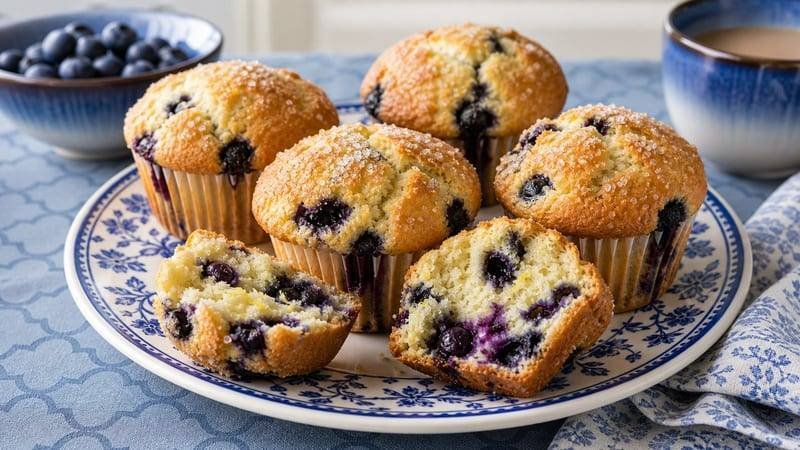 Blueberry MuffinsSame method: Oven