

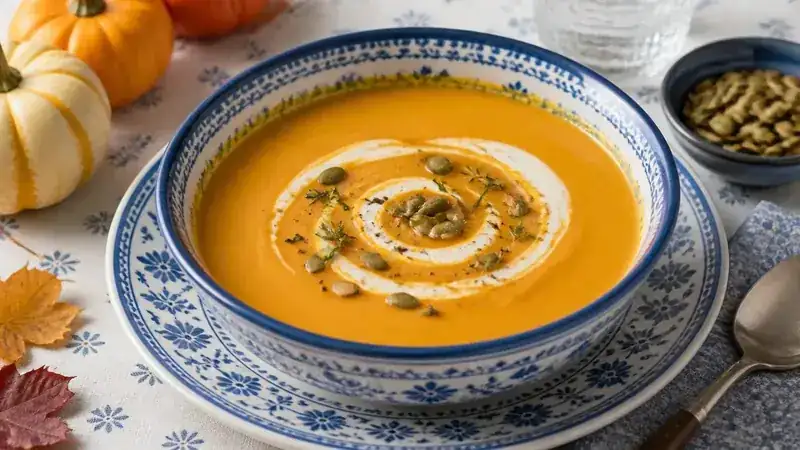
Butternut Squash Soup
To make Butternut Squash Soup, roast caramelized squash, simmer with aromatics and broth, and blend into a silky puree finished with cream and warm spices.
Butternut squash soup can go wrong by being too sweet, too flat, or suspiciously close to warm baby food. Roasting the squash before it ever reaches the pot fixes a lot of that. The 1-inch cubes get olive oil, salt, and black pepper, then roast at 400°F until the edges turn dark golden and caramelized. Those browned edges bring deeper flavor than boiled squash can manage, and leaving enough space on the sheet pan is what lets them happen instead of steaming everything into orange compliance.
While the squash roasts, onion cooks until lightly golden, followed by garlic, fresh ginger, cumin, cinnamon, and a little cayenne. Broth turns it into soup; blending makes it silky. The final three additions are where the balance shows up: heavy cream for richness, maple syrup for a measured bit of sweetness, and apple cider vinegar for acidity. That tablespoon of vinegar is the quiet adult in the room. You should not taste “vinegar”; you should notice that the squash suddenly tastes more like itself. Smooth, warm-spiced, creamy, and just sweet enough, this is fall soup without requiring a decorative gourd or a porch sign insisting everyone be grateful.
Ingredients
- 1 large butternut squash (about 3 pounds), peeled, seeded, and cut into 1-inch cubes
- 3 tablespoons olive oil, divided
- 1 teaspoon kosher salt, plus more to taste
- ½ teaspoon black pepper
- 1 medium yellow onion, diced
- 4 garlic cloves, minced
- 1 teaspoon fresh ginger, grated (or ½ teaspoon ground ginger)
- 1 teaspoon ground cumin
- ½ teaspoon ground cinnamon
- ¼ teaspoon cayenne pepper (optional, but recommended)
- 4 cups low-sodium vegetable or chicken broth
- ½ cup heavy cream (or full-fat coconut milk for dairy-free)
- 1 tablespoon maple syrup
- 1 tablespoon apple cider vinegar
Instructions
- 1Preheat your oven to 400°F. Line a large rimmed baking sheet with parchment paper.
- 2Toss the cubed butternut squash with 2 tablespoons of the olive oil, 1 teaspoon kosher salt, and ½ teaspoon black pepper. Spread in a single layer on the prepared baking sheet — crowding the pan is how you steam instead of roast, and steamed squash soup will remind you that you settled.
- 3Roast for 30 to 35 minutes, flipping once at the halfway mark, until the squash is tender and the edges have gone dark golden and caramelized. Some pieces should look almost too far. Those are the good ones.
- 4While the squash roasts, heat the remaining tablespoon of olive oil in a large heavy-bottomed pot or Dutch oven over medium heat. Add the diced onion and cook, stirring occasionally, for 6 to 8 minutes until softened and just starting to turn golden.
- 5Add the garlic and ginger and cook for 1 minute, stirring constantly, until fragrant. Add the cumin, cinnamon, and cayenne and stir for 30 seconds. The spices will bloom in the fat and stop smelling raw.
- 6Add the roasted squash to the pot. Pour in the broth and stir everything together. Bring to a gentle simmer over medium heat and cook for 10 minutes to let the flavors come to an agreement.
- 7Remove the pot from heat. Using an immersion blender, blend the soup directly in the pot until completely smooth. If using a countertop blender, let the soup cool for 5 minutes first, fill the blender no more than halfway, hold the lid down firmly with a folded kitchen towel, and blend in batches. Learn from my mistakes. Please.
- 8Return the blended soup to low heat. Stir in the heavy cream, maple syrup, and apple cider vinegar. Taste and adjust salt, pepper, or a touch more maple syrup as needed. The vinegar is not optional — it is what keeps this soup from tasting flat.
- 9Serve hot, topped with a swirl of cream, roasted pepitas, fresh sage, or a pinch of cayenne. A good crusty bread nearby does not hurt anyone. Cook poultry until the thickest piece reaches 165°F on an instant-read thermometer.
Nutrition Information
Estimated per serving: 1 of 6 servings.
Estimated from the ingredients and quantities in this recipe using standard food-composition values. Brand choices, trimming, cooking loss, optional ingredients, and actual portion size can change the numbers. How we calculate nutrition estimates.
Pro Tips
- Don't skip the apple cider vinegar at the end. A tablespoon of acid is what separates a soup that tastes like something from a soup that tastes like nothing in particular. It brightens everything without making the soup taste sour.
- Peel the squash before cubing it, not after roasting — roasting it skin-on and scooping works but the texture gets uneven. A sharp Y-peeler makes the peeling part less of a whole event.
- If your soup is thicker than you'd like after blending, add warm broth a quarter-cup at a time until it reaches the consistency you're after. If it's too thin, let it simmer uncovered for five minutes. The soup knows what it wants. You just have to negotiate.
Substitutions
Storage Instructions
Refrigerate cooled soup in an airtight container for up to 5 days. Freeze in freezer-safe containers or zip bags (lay flat to save space) for up to 3 months. Thaw overnight in the refrigerator and reheat gently on the stovetop over medium-low heat, adding a splash of broth or water if needed to loosen it up. Do not boil after adding the cream.
Make Ahead
This soup is genuinely better the next day once the spices have had time to settle into each other. Make it up to 3 days ahead and reheat before serving. Store the cream swirl and any garnishes separately and add fresh when serving.
Frequently Asked Questions
Can I make this ahead of time?
Yes. Cook Butternut Squash Soup ahead, cool it promptly, and refrigerate it covered. Reheat gently before serving; hold back fresh herbs, dairy swirls, or crunchy garnishes until the end.
How do I store the leftovers?
Refrigerate cooled soup in an airtight container for up to 5 days. Freeze in freezer-safe containers or zip bags (lay flat to save space) for up to 3 months. Thaw overnight in the refrigerator and reheat gently on the stovetop over medium-low heat, adding a splash of broth or water if needed to loosen it up. Do not boil after adding the cream.
Can I freeze it?
Yes. See the storage section on this page for exact freezing and thawing directions — most versions of Butternut Squash Soup freeze well for up to 2–3 months when cooled fully first and portioned into airtight containers.
What substitutions work in Butternut Squash Soup?
Tested swaps for this recipe: butternut squash: kabocha or acorn squash. Both work well and roast similarly; kabocha is slightly richer and earthier. heavy cream: full-fat coconut milk. Makes the soup dairy-free with a subtle coconut undertone that works well with the warm spices.
What's the most common mistake to avoid?
Don't skip the apple cider vinegar at the end. A tablespoon of acid is what separates a soup that tastes like something from a soup that tastes like nothing in particular. It brightens everything without making the soup taste sour.
Make It a Meal
Pair this recipe with a side, bread, and something sweet from the FAFO Kitchen.



More Like This



You Might Also Like



Finish With Dessert

Try this next
Strawberry Shortcake Recipe That Actually Tastes Right
View recipe →