
Cheesecake
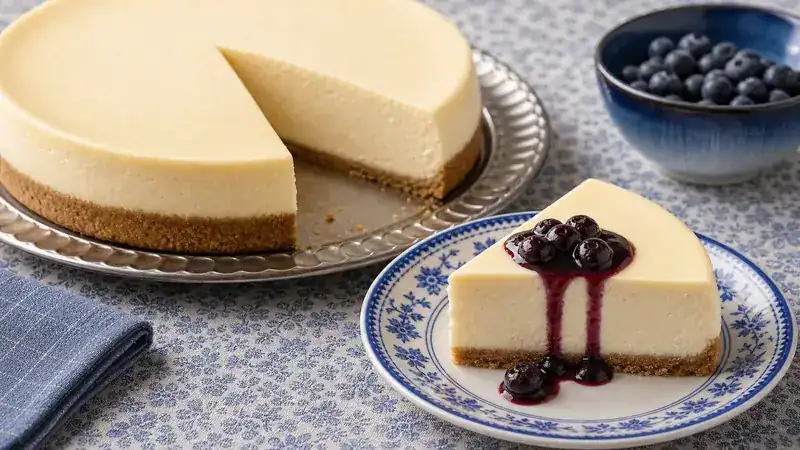
To make Cheesecake, beat room-temperature cream cheese and sugar until smooth, fold in eggs gently, pour over a baked graham cracker crust, and bake in a water bath at 325°F until the edges set and center jiggles slightly.
Cheesecake is less about difficult ingredients than it is about refusing to rush dairy. The cream cheese, sour cream, and eggs need to be at room temperature before mixing, because cold cream cheese leaves stubborn little lumps that survive baking with the confidence of people who know you cannot send the cake back. Once the filling is smooth, the mixer slows down: too much air whipped in after the eggs are added can puff the cake in the oven and encourage cracks as it cools.
The other piece is temperature control. A water bath keeps the oven environment humid and gentle, and the cheesecake is done while the center still has a slow wobble rather than looking fully firm. Then it cools gradually in the turned-off oven before moving to the counter and finally the refrigerator. That long chill is when the filling sets into the dense, creamy slice you actually wanted.Underneath all of that is a simple graham cracker crust and a filling of full-fat cream cheese, sour cream, vanilla, lemon, and just enough flour for structure. The process takes patience, not wizardry. Most cheesecake disasters are just impatience wearing an apron.
Ingredients
- For the Crust:
- 2 cups (200g) graham cracker crumbs (about 14 full crackers)
- 1/4 cup (50g) granulated sugar
- 1/2 cup (113g) unsalted butter, melted
- Pinch of kosher salt
- For the Filling:
- 4 blocks (32 oz / 904g) full-fat cream cheese, room temperature
- 1 1/4 cups (250g) granulated sugar
- 1 cup (240g) full-fat sour cream, room temperature
- 1 teaspoon pure vanilla extract
- 2 teaspoons fresh lemon juice
- 1/4 teaspoon kosher salt
- 4 large eggs, room temperature
- 2 tablespoons all-purpose flour
Instructions
- 1Pull your cream cheese, sour cream, and eggs out of the refrigerator at least 2 hours before you start. Cold dairy is the number one cause of lumpy, cracked cheesecake. Set a timer. Walk away.
- 2Preheat your oven to 325°F (163°C). Bring a kettle or medium pot of water to a boil — you'll need it for the water bath. Wrap the outside of a 9-inch springform pan tightly in two layers of heavy-duty aluminum foil. This keeps water out. Do not skip this.
- 3Make the crust: Stir together graham cracker crumbs, sugar, melted butter, and salt in a bowl until the mixture looks like wet sand. Press it evenly into the bottom and about 1 inch up the sides of the foil-wrapped springform pan. Use the flat bottom of a measuring cup to really pack it in. Bake the crust for 10 minutes, then set it aside to cool while you make the filling.
- 4Make the filling: Beat the room-temperature cream cheese in a stand mixer fitted with the paddle attachment (or use a hand mixer) on medium speed for 3 full minutes, until it's completely smooth with no lumps. Scrape down the bowl and sides twice during this process.
- 5Add the sugar and beat another 2 minutes on medium. Scrape the bowl again.
- 6Add the sour cream, vanilla extract, lemon juice, salt, and flour. Mix on low just until combined, about 30 seconds. Do not overmix from this point forward — overmixing incorporates air and air causes cracks.
- 7Add the eggs one at a time, mixing on low after each addition just until the yolk disappears. Scrape the bowl between each egg. The batter should be smooth, pale, and thick.
- 8Pour the filling into the cooled crust and smooth the top with a spatula.
- 9Set the foil-wrapped springform pan inside a larger roasting pan. Place both pans in the oven, then carefully pour the boiling water into the roasting pan until it reaches about 1 inch up the sides of the springform pan. This water bath creates steam that keeps the cheesecake moist and prevents cracking.
- 10Bake at 325°F for 55-65 minutes. The cheesecake is done when the edges are set and puffed slightly and the center 2-3 inches still have a slow, gentle jiggle when you nudge the pan. It will look underdone. That's correct.
- 11Turn the oven off. Crack the oven door open 1-2 inches using a wooden spoon or folded dish towel. Let the cheesecake sit in the cooling oven for 1 hour. This slow cooldown is what prevents the top from sinking and cracking.
- 12Remove the cheesecake from the water bath and roasting pan. Carefully peel back the foil. Run a thin knife or offset spatula around the edge of the pan to loosen the cheesecake from the sides — do this now while it's warm. Let it cool completely on a wire rack at room temperature, about 1 more hour.
- 13Cover loosely with plastic wrap and refrigerate for at least 4 hours, or overnight. Do not skip the chill time. A warm cheesecake is a sad cheesecake.
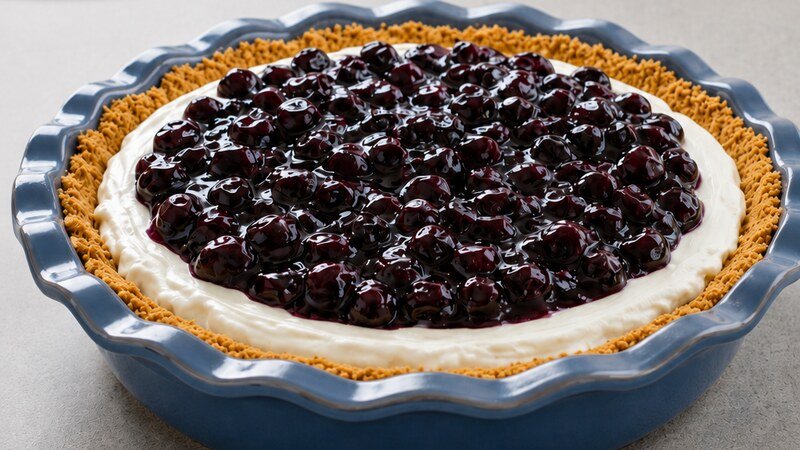
- 14To serve: Remove the springform ring. Slice with a sharp knife dipped in hot water and wiped clean between each cut. Serve plain or topped with fresh strawberries, cherry pie filling, or a simple blueberry sauce.
Nutrition Information
Estimated per serving: 1 of 12 servings.
Estimated from the ingredients and quantities in this recipe using standard food-composition values. Brand choices, trimming, cooking loss, optional ingredients, and actual portion size can change the numbers. How we calculate nutrition estimates.
Pro Tips
- Room temperature everything is not optional. Cold cream cheese will not beat smooth — you'll have tiny lumps baked into a permanent situation. Two hours out of the fridge minimum.
- Run a knife around the edge of the pan as soon as it comes out of the oven, before it cools. The cheesecake contracts as it chills, and if it's stuck to the sides, it tears itself in the middle. The crack you get is not random. It is a structural protest.
- If your cheesecake cracks anyway — and sometimes it just does, because kitchens are humbling places — pour a thin layer of sour cream mixed with a tablespoon of sugar over the top, return it to a 350°F oven for 5 minutes, and chill. Cracks covered. Reputation intact.
Substitutions
Storage Instructions
Store cheesecake covered in the refrigerator for up to 5 days. Cover tightly with plastic wrap or transfer to an airtight container. Do not leave at room temperature longer than 2 hours. Freezes well: wrap individual slices in plastic wrap, then foil, and freeze for up to 2 months. Thaw overnight in the refrigerator.
Make Ahead
Cheesecake is an ideal make-ahead dessert. Make it the day before serving and refrigerate overnight — it actually slices better after a full night of chilling. You can also freeze the whole cheesecake (without toppings) up to 2 months in advance, wrapped tightly in plastic wrap then foil. Thaw in the refrigerator for 24 hours before serving.
Frequently Asked Questions
Can I make this ahead of time?
Yes. Cheesecake is an ideal make-ahead dessert. Make it the day before serving and refrigerate overnight — it actually slices better after a full night of chilling. You can also freeze the whole cheesecake (without toppings) up to 2 months in advance, wrapped tightly in plastic wrap then foil. Thaw in the refrigerator for 24 hours before serving.
How do I store the leftovers?
Store cheesecake covered in the refrigerator for up to 5 days. Cover tightly with plastic wrap or transfer to an airtight container. Do not leave at room temperature longer than 2 hours. Freezes well: wrap individual slices in plastic wrap, then foil, and freeze for up to 2 months. Thaw overnight in the refrigerator.
Can I freeze it?
Yes. See the storage section on this page for exact freezing and thawing directions — most versions of Cheesecake freeze well for up to 2–3 months when cooled fully first and portioned into airtight containers.
Can I adjust it for what I have on hand?
Yes. Tested adjustments on this recipe include graham cracker crumbs → Biscoff cookie crumbs or vanilla wafer crumbs; sour cream → Full-fat plain Greek yogurt; and full-fat cream cheese → Do not substitute reduced-fat cream cheese.
What's the most common mistake to avoid?
Room temperature everything is not optional. Cold cream cheese will not beat smooth — you'll have tiny lumps baked into a permanent situation. Two hours out of the fridge minimum.