

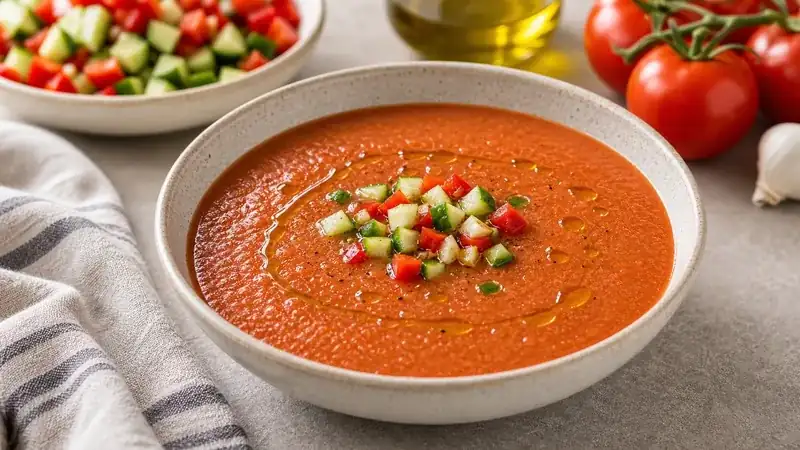
Gazpacho
Gazpacho is a chilled Spanish tomato soup made by blending ripe tomatoes, cucumber, bell pepper, garlic, olive oil, sherry vinegar, and bread until smooth, then refrigerating for at least two hours. Serve it cold, straight from the blender jar if no one is watching.
Gazpacho is one of those dishes that immediately exposes whether your tomatoes are worth eating. There is no oven, no long simmer, and no browned butter coming in later to distract anybody. Ripe tomatoes, cucumber, red bell pepper, garlic, sherry vinegar, and olive oil are blended cold, which means the ingredients have to show up sober and do their jobs. Day-old bread sounds like an odd guest until you see what it does: soaked and blended into the vegetables, it gives the soup body without making it heavy or creamy. The other quiet trick is the olive oil. Streaming it into the blender turns the mixture glossy and cohesive instead of leaving little greasy puddles floating around like somebody tried to repair a salad with a power tool. Sherry vinegar sharpens the tomatoes, a pinch of cumin adds background warmth, and a few reserved pieces of cucumber and pepper keep the final bowl from feeling like cold vegetable paint.
Then you chill it. Really chill it. Two hours is the minimum because the raw garlic, vinegar, and tomato need time to stop shouting over one another. What comes out of the refrigerator should be bright, savory, cool, and silky enough to pour—but still unmistakably food, not a smoothie having an identity crisis.
Ingredients
- 2 pounds ripe Roma or heirloom tomatoes, cored and roughly chopped
- 1 medium English cucumber (about 12 oz), peeled and roughly chopped, divided
- 1 medium red bell pepper, seeded and roughly chopped
- 2 cloves garlic, smashed
- 2 oz (about 2 thick slices) day-old crusty white bread, crusts removed, torn into pieces
- 3 tablespoons sherry vinegar, plus more to taste
- 1/3 cup extra-virgin olive oil, plus more for serving
- 3/4 teaspoon kosher salt, plus more to taste
- 1/4 teaspoon freshly ground black pepper
- 1/2 cup cold water, plus more to adjust consistency
- Small pinch of cumin (optional but recommended)
Instructions
- 1Soak the bread: Place torn bread pieces in a small bowl, pour 1/2 cup cold water over them, and let soak for 5 minutes while you prep everything else. The bread is not optional — it gives the soup body and keeps it from tasting like a punishment.
- 2Reserve your garnish: Set aside about one-quarter of the chopped cucumber and a small handful of the chopped bell pepper. These go back in at the end as a textured topping, not into the blender.
- 3Blend the base: Add tomatoes, the remaining cucumber, the remaining bell pepper, garlic, soaked bread with its soaking water, sherry vinegar, salt, black pepper, and cumin (if using) to a high-powered blender. Blend on high for 60–90 seconds until very smooth.
- 4Stream in the olive oil: With the blender running on medium speed, slowly pour in the olive oil through the lid opening over about 30 seconds. This emulsifies the soup and gives it a glossy, cohesive texture rather than a greasy one.
- 5Taste and adjust: Add more salt, sherry vinegar, or cold water to reach your preferred seasoning and consistency. Gazpacho should be pourable but not watery — somewhere between a thick juice and a thin smoothie.
- 6Strain if desired: For a silkier result, pass the blended soup through a fine-mesh strainer, pressing with a spatula. This step is optional but worth doing if you want restaurant-style texture.
- 7Chill completely: Transfer to a large bowl or pitcher, cover tightly, and refrigerate for at least 2 hours, and ideally overnight. The soup needs this time — flavors that seem harsh right after blending mellow and integrate in the cold.
- 8Serve cold: Pour or ladle into bowls or glasses. Top each serving with the reserved diced cucumber and bell pepper, a drizzle of good olive oil, and cracked black pepper. Crusty bread on the side is traditional and correct.
Nutrition Information
Estimated per serving: 1 of 4 servings.
Estimated from the ingredients and quantities in this recipe using standard food-composition values. Brand choices, trimming, cooking loss, optional ingredients, and actual portion size can change the numbers. How we calculate nutrition estimates.
Pro Tips
- Use the ripest, most deeply colored tomatoes you can find. This is not the soup for January grocery store tomatoes — those will produce a result that is technically gazpacho and emotionally devastating. Peak summer tomatoes, farmers market tomatoes, or even good canned whole San Marzanos in a pinch.
- The sherry vinegar is doing real work here. Red wine vinegar is sharper and harsher; white wine vinegar is thinner. Sherry vinegar has a round, slightly nutty flavor that belongs in this soup the way a good hat belongs at a funeral — you'll notice if it's wrong.
- Don't skip the chill time. Gazpacho blended and served immediately tastes aggressive and raw. After two hours in the refrigerator it tastes like it was always going to be this good, which is a lie it earns the right to tell.
Substitutions
Storage Instructions
Store gazpacho in a sealed container or pitcher in the refrigerator for up to 4 days. Stir or shake before serving — it will separate slightly, which is normal and not a crisis. Do not freeze: the texture breaks down badly and the result is watery and sad.
Make Ahead
Gazpacho is genuinely better made the day before serving. Make a full batch, refrigerate overnight covered, and it will taste more cohesive and deeply flavored than it did the day you blended it. This is one of the rare recipes where procrastination is technically correct technique.
Frequently Asked Questions
Can I make this ahead of time?
Yes. Gazpacho benefits from being made ahead because it needs time to chill. Blend the soup, refrigerate it until very cold, and keep the reserved cucumber and pepper garnish separate until serving.
How do I store the leftovers?
Store gazpacho in a sealed container or pitcher in the refrigerator for up to 4 days. Stir or shake before serving — it will separate slightly, which is normal and not a crisis. Do not freeze: the texture breaks down badly and the result is watery and sad.
Can I freeze it?
Do not freeze: the texture breaks down badly and the result is watery and sad.
What substitutions work in Gazpacho?
Tested swaps for this recipe: sherry vinegar: red wine vinegar. Use about 2 tablespoons instead of 3 — it's sharper and will overpower if you go one-for-one. Add a tiny pinch of sugar to compensate for the missing depth. day-old crusty white bread: gluten-free sandwich bread, soaked the same way. Works structurally; the flavor will be slightly less complex but the texture holds up well.
What's the most common mistake to avoid?
Use the ripest, most deeply colored tomatoes you can find. This is not the soup for January grocery store tomatoes — those will produce a result that is technically gazpacho and emotionally devastating. Peak summer tomatoes, farmers market tomatoes, or even good canned whole San Marzanos in a pinch.
Make It a Meal
Pair this recipe with a side, bread, and something sweet from the FAFO Kitchen.


More Like This



You Might Also Like


Finish With Dessert
Try this next
Panna Cotta
View recipe →