
Korean Beef Bulgogi
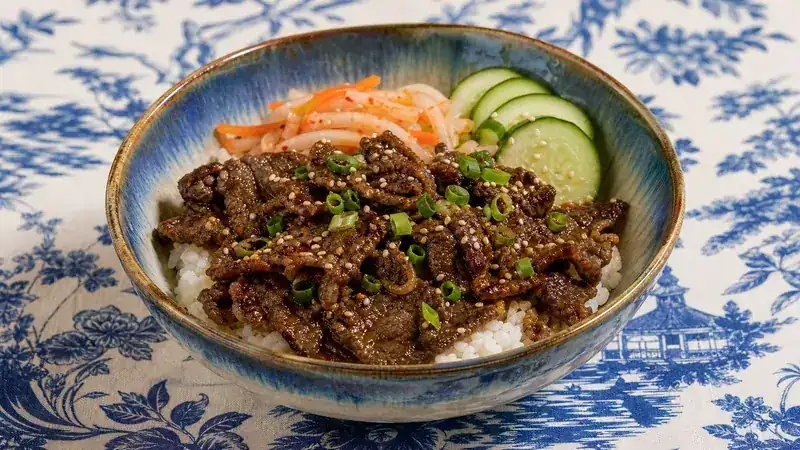
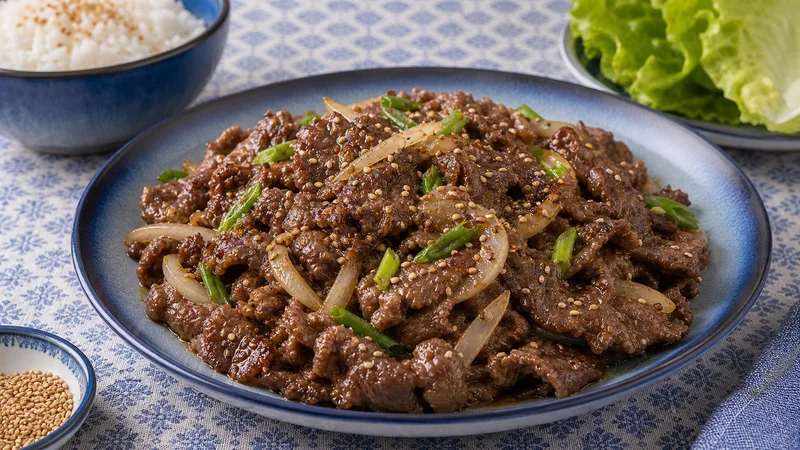
Korean beef bulgogi is thinly sliced beef marinated in a blend of soy sauce, sesame oil, Asian pear, garlic, ginger, and brown sugar, then cooked quickly over high heat. Marinate for at least 30 minutes, cook in a hot skillet or grill pan for 2–3 minutes per batch, and serve over steamed rice.
Bulgogi lives or dies on two things: thin beef and a pan hot enough to make that beef brown before it releases a lake of juice. Ribeye or sirloin works, but unless you own a meat slicer for reasons nobody has asked about, freeze the steak for 30 to 45 minutes first. Firm beef is much easier to shave into the thin slices that make bulgogi cook fast and stay tender.
The marinade brings soy sauce, sesame oil, brown sugar, garlic, ginger, mirin, and grated Asian pear together. The pear is doing more than adding sweetness; it tenderizes the meat, which is why the beef should not sit in that mixture longer than about eight hours. After that, the texture can start moving past tender and into something vaguely apologetic.
Cook the marinated beef in small batches over genuinely high heat. Crowding is the enemy because trapped moisture steams the meat gray instead of giving you those caramelized, slightly charred edges. Each batch only needs a few minutes. Pile the finished beef over steamed rice with green onion and sesame seeds, and you get that salty-sweet, garlicky, sesame-rich flavor with actual seared edges instead of a skillet full of simmered beef strips.
Ingredients
- 1 — lbs ribeye steak (or sirloin), sliced as thin as possible — about ? inch
- — cup soy sauce
- 2 tablespoons sesame oil
- 2 tablespoons brown sugar
- — medium Asian pear (or Bosc pear), grated — about — cup
- 4 cloves garlic, minced
- 1 teaspoon fresh ginger, grated
- 1 tablespoon mirin (rice wine) or dry sherry
- — teaspoon black pepper
- 3 green onions, sliced — white and green parts separated
- 1 tablespoon neutral oil (vegetable or avocado), for the pan
- 1 teaspoon toasted sesame seeds, for garnish
- Steamed white rice, for serving
Instructions
- 1Slice the beef as thin as possible — about ? inch thick. If you're doing this at home without a meat slicer, freeze the steak for 30–45 minutes first. It firms up just enough that your knife can actually do its job without the meat sliding around like it has somewhere else to be.
- 2In a large bowl, whisk together the soy sauce, sesame oil, brown sugar, grated pear, minced garlic, grated ginger, mirin, and black pepper until the sugar dissolves.
- 3Add the sliced beef and the white parts of the green onions to the marinade. Toss until every piece is coated. Cover and refrigerate for at least 30 minutes, or up to 8 hours. Do not go longer than 8 hours — the pear enzymes will start to break down the texture past the point of pleasant.
- 4When you're ready to cook, take the beef out of the fridge and let it sit at room temperature for 10 minutes while you heat your pan. Set a large cast iron skillet or heavy-bottomed pan over high heat. Let it get genuinely hot — 2 to 3 minutes. Add the neutral oil and let it heat until it just starts to shimmer.
- 5Cook the beef in small batches — no more than a single layer at a time. This step matters more than almost anything else in this recipe. Overcrowd the pan and you get steamed, gray beef. Work in batches and you get caramelized, slightly charred edges on beef that is still tender inside. Cook each batch 2–3 minutes total, stirring once halfway through.
- 6Transfer cooked batches to a plate and repeat with remaining beef, adding a small drizzle of oil between batches if the pan gets dry.
- 7Once all the beef is cooked, return everything to the pan for 30 seconds together just to marry it back up. Taste and adjust salt if needed.
- 8Serve immediately over steamed white rice, topped with the green parts of the green onions and a scatter of toasted sesame seeds.
Nutrition Information
Estimated per serving: 1 of 4 servings.
Estimated from the ingredients and quantities in this recipe using standard food-composition values. Brand choices, trimming, cooking loss, optional ingredients, and actual portion size can change the numbers. How we calculate nutrition estimates.
Pro Tips
- The freeze-before-slicing trick is not optional if you want thin slices without a professional meat slicer — 30 minutes in the freezer changes everything. I learned this the hard way after producing beef that looked like it was cut by someone wearing oven mitts.
- Cook in batches. I know it feels slower. It is faster than remaking the entire dish after the first sad steamed batch. The high heat and the small batches are the two non-negotiable things in this recipe.
- If you can't find Asian pear, a regular Bosc or even a small chunk of kiwi works as your tenderizing agent. The pear flavor is mild anyway — you won't notice the swap. You will notice if you skip the tenderizer entirely, because the beef will be noticeably less soft, and you will think about this while eating it.
Substitutions
Storage Instructions
Store leftover bulgogi in an airtight container in the refrigerator for up to 3 days. Reheat in a hot skillet for 1–2 minutes rather than microwaving — the microwave makes it rubbery and takes away all the caramelized edges you worked for. Leftover bulgogi also freezes well for up to 2 months; freeze in a single flat layer in a zip-lock bag and thaw overnight in the fridge before reheating.
Make Ahead
The marinade can be made up to 3 days ahead and stored covered in the fridge. You can also marinate the raw beef for up to 8 hours in advance — any longer and the pear enzymes over-tenderize the meat. The beef itself should be cooked fresh for best texture, though leftover cooked bulgogi is genuinely good the next day in rice bowls or lettuce wraps.
Frequently Asked Questions
Can I make Korean Beef Bulgogi ahead of time?
Yes. The recipe already uses a make-ahead marinade: refrigerate the thinly sliced beef in the pear-soy mixture for at least 30 minutes and no more than 8 hours as written. Cook the beef quickly over high heat close to serving.
How do I store leftover Korean Beef Bulgogi?
Store the leftovers in an airtight container in the refrigerator for up to 3 days. Reheat in a hot skillet for 1–2 minutes rather than microwaving — the microwave makes it rubbery and takes away all the caramelized edges you worked for. Leftover bulgogi also freezes well for up to 2 months; freeze in a single flat layer in a zip-lock bag and thaw overnight in the fridge before reheating.
Can I freeze Korean Beef Bulgogi after cooking?
Yes. See the storage section on this page for exact freezing and thawing directions — most versions of Korean Beef Bulgogi freeze well for up to 2–3 months when cooled fully first and portioned into airtight containers.
What substitutions work in Korean Beef Bulgogi?
Tested swaps for this recipe: ribeye steak: sirloin or beef tenderloin. Sirloin is leaner and a little less rich but works well. Pre-sliced bulgogi beef from a Korean grocery store is also a perfectly legitimate shortcut and I will defend it. Asian pear: Bosc pear or kiwi. Bosc pear gives a similar mild sweetness. Half a kiwi also tenderizes effectively — use it grated and don't marinate more than 2 hours or the texture gets mushy.
What's the most common mistake when making Korean Beef Bulgogi?
The freeze-before-slicing trick is not optional if you want thin slices without a professional meat slicer — 30 minutes in the freezer changes everything. I learned this the hard way after producing beef that looked like it was cut by someone wearing oven mitts.
Make It a Meal
Pair this recipe with a side, bread, and something sweet from the FAFO Kitchen.


More Like This
 Pan-Seared Ribeye SteakBoth feature Ribeye
 Beef Bulgogi Rice BowlsSame main ingredient: Beef
 Ground Beef Ramen Stir FrySame main ingredient: Beef
 Black Garlic Butter RibeyeBoth feature Ribeye