
Prime Rib
Season a bone-in prime rib roast generously with salt, herbs, and garlic, then roast low and slow at 250°F until the internal temperature reaches 120°F for medium-rare. Finish with a high-heat sear at 500°F for 10 minutes to build a dark, crackling crust.
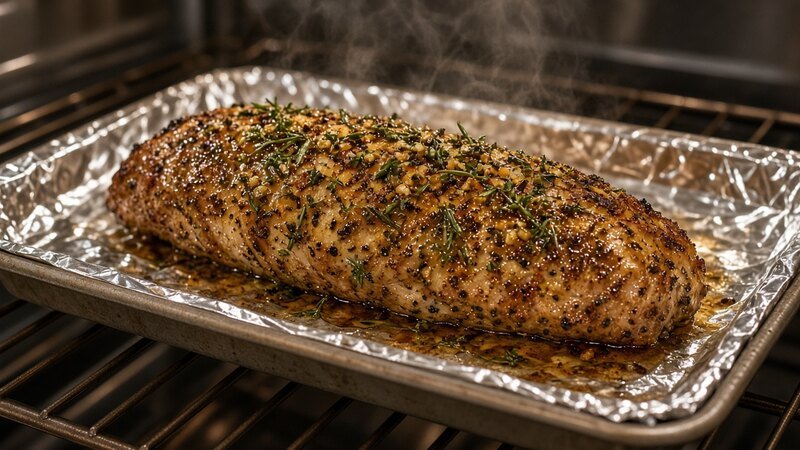
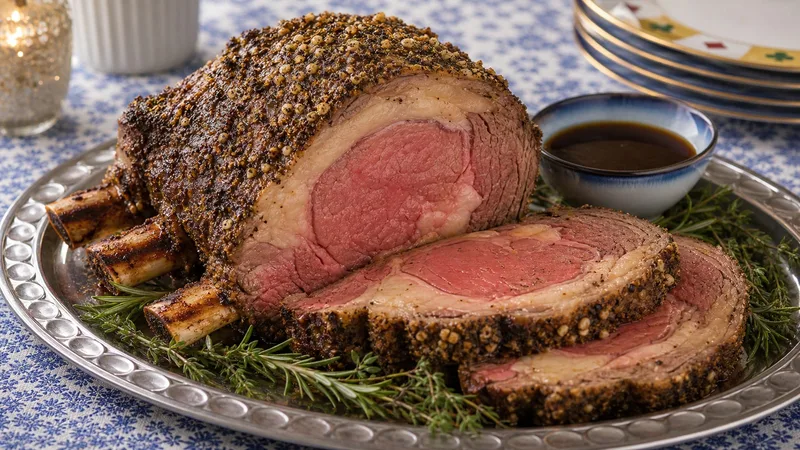
Prime rib has a reputation for being intimidating mostly because it is large, expensive, and shaped like something you would hate to explain to everyone if you overcooked it. The solution is not bravery. It is a thermometer. This bone-in roast gets salted the night before, left uncovered in the refrigerator to dry the surface, then coated with rosemary, thyme, garlic, Dijon, and black pepper before a slow roast at 250°F. That low heat gives the interior time to cook evenly instead of producing a gray outer ring around a narrow pink center.
The roast comes out at 120°F for medium-rare, rests while the oven climbs to 500°F, then goes back in for a short blast that builds the dark, crackling herb crust everybody wants. It sounds backward—cook gently first, attack it with heat later—but that is exactly why it works. The bones insulate the underside, the dry-brined exterior browns beautifully, and the final rest lets the temperature settle before carving.
If there is one place to abandon instinct and trust the equipment, this is it. Prime rib does not care how confident you feel. It cares what the probe says.
Ingredients
- 1 bone-in prime rib roast, 4 bones (approximately 8–9 lbs)
- 2 tablespoons kosher salt
- 2 teaspoons freshly ground black pepper
- 2 tablespoons fresh rosemary, finely chopped
- 2 tablespoons fresh thyme leaves
- 8 cloves garlic, minced
- 3 tablespoons extra-virgin olive oil
- 1 tablespoon Dijon mustard
- 1 teaspoon onion powder
Instructions
- 1The night before (or up to 48 hours ahead): Pat the prime rib completely dry with paper towels. Rub the entire surface — top, sides, and between the bones — with kosher salt. Place the roast bone-side down on a wire rack set inside a rimmed baking sheet. Leave uncovered in the refrigerator overnight. This is the step most people skip because they didn't plan ahead. Plan ahead.
- 2Two hours before cooking, remove the roast from the refrigerator and let it sit at room temperature. Cold meat cooks unevenly, and uneven is not the goal here.
- 3Preheat your oven to 250°F. In a small bowl, combine the black pepper, rosemary, thyme, minced garlic, olive oil, Dijon mustard, and onion powder into a paste. Rub this paste over the entire roast, pressing it into the surface.
- 4Set the roast bone-side down on the wire rack in the baking sheet. Insert a leave-in probe thermometer into the thickest part of the roast, away from any bone. The bone reads hotter than the meat and will lie to you.
- 5Roast at 250°F until the internal temperature reaches 120°F for medium-rare (about 3 to 3.5 hours for an 8–9 lb roast). This is your pull temperature — the roast will carry over during the sear. If you want medium, pull at 130°F.
- 6When the roast reaches temperature, remove it from the oven and tent loosely with foil. Increase oven temperature to 500°F and let the oven fully preheat — this takes 15–20 minutes. Do not rush this step. The oven needs to mean it.
- 7Once the oven hits 500°F, remove the foil and return the roast to the oven. Sear for exactly 8–10 minutes, until the exterior is deeply browned and the herb crust is crackling. Watch it. This is not the moment to check your phone.
- 8Remove from oven and rest uncovered for 20–30 minutes. The internal temperature will rise another 5–8 degrees during this rest. Carve between the bones for bone-in portions, or remove the bones as a slab first and slice the roast into ¾-inch to 1-inch steaks.
Nutrition Information
Estimated per serving: 1 serving (calculated using 9 servings, the midpoint of the stated 8–10 range).
Estimated from the ingredients and quantities in this recipe using standard food-composition values. The calculation uses the midpoint of the stated yield range. Brand choices, trimming, cooking loss, optional ingredients, and actual portion size can change the numbers. How we calculate nutrition estimates.
Pro Tips
- Salt the roast the night before, full stop. Dry brining overnight builds flavor in the crust and helps moisture stay inside the meat where it belongs — a lesson I learned too late and still think about.
- Use a reliable leave-in probe thermometer, not an instant-read you stab in repeatedly. Every time you open that oven to check, you are costing yourself time and heat. The thermometer is doing the worrying so you don't have to.
- If you do not have a wire rack, set the roast on top of the bones you trimmed off, or on a bed of sliced onions. You want airflow underneath. A roast sitting in its own juices is a braised thing, not a roasted thing — both are delicious, but only one of them is what we're doing.
Substitutions
Storage Instructions
Wrap leftover slices tightly in foil or store in an airtight container in the refrigerator for up to 4 days. To reheat without overcooking, warm slices in a 275°F oven until just heated through, about 15–20 minutes. Do not microwave. The microwave will do unspeakable things to it.
Make Ahead
Salt and dry-brine the roast up to 48 hours in advance, uncovered in the refrigerator. Apply the herb paste the morning of cooking or just before it goes in the oven. You cannot finish-cook this ahead and reheat it successfully at scale — this is a serve-it-fresh situation.
Freezing
Cooked prime rib can be frozen, but the crust will soften. Cool the meat, portion or slice it with a little jus if available, wrap it airtight, thaw it in the refrigerator, and reheat gently so the beef does not dry out.
Frequently Asked Questions
Can I make this ahead of time?
Yes — the recipe is designed for advance prep. Salt the roast and leave it uncovered on a rack in the refrigerator overnight or up to 48 hours as written, then bring it toward room temperature, apply the herb-Dijon paste, and roast when needed.
How do I store the leftovers?
Wrap leftover slices tightly in foil or store in an airtight container in the refrigerator for up to 4 days. To reheat without overcooking, warm slices in a 275°F oven until just heated through, about 15–20 minutes. Do not microwave. The microwave will do unspeakable things to it.
Can I freeze it?
Cooked prime rib can be frozen, but the crust will soften. Cool the meat, portion or slice it with a little jus if available, wrap it airtight, thaw it in the refrigerator, and reheat gently so the beef does not dry out.
Can I adjust it for what I have on hand?
Yes. Tested adjustments on this recipe include fresh rosemary and thyme → dried rosemary and thyme; Dijon mustard → whole grain mustard or prepared horseradish; and bone-in prime rib roast → boneless ribeye roast.
What's the most common mistake to avoid?
Salt the roast the night before, full stop. Dry brining overnight builds flavor in the crust and helps moisture stay inside the meat where it belongs — a lesson I learned too late and still think about.
Make It a Meal
Pair this recipe with a side, bread, and something sweet from the FAFO Kitchen.