
Oven-Baked Beef Brisket
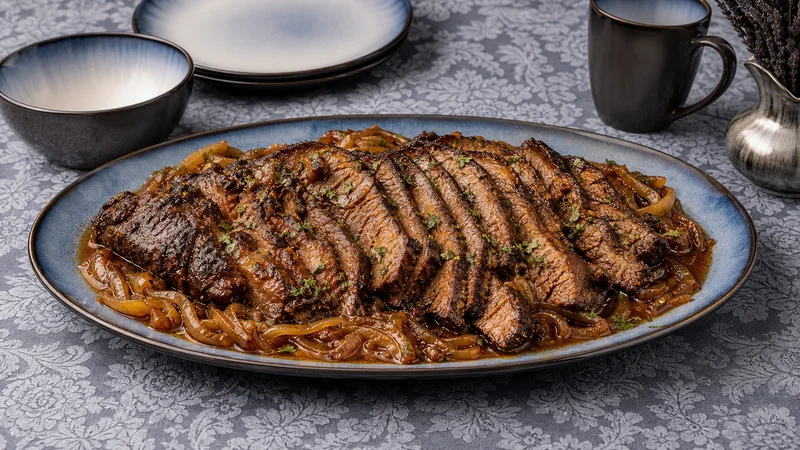
Oven-baked beef brisket is slow-roasted in a covered Dutch oven with onions, garlic, and beef broth at 300°F for 4–5 hours. No smoker required — just patience, a heavy pot, and low heat that does the work for you.
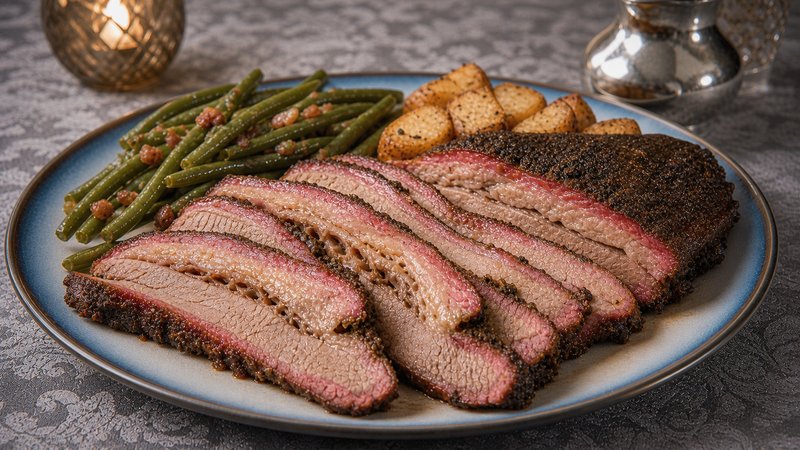
Brisket has a reputation for requiring smoke, specialized equipment, and at least one person nearby who says “the stall” with unusual seriousness. This oven-baked beef brisket skips the theater and keeps the part that matters: a large, tough cut of beef gets enough time, moisture, and gentle heat to become genuinely fork-tender. A 5- to 6-pound brisket is seasoned with salt, coarse pepper, garlic, onion, smoked paprika, thyme, and rosemary, then set fat-side up over sliced onions and smashed garlic in a covered Dutch oven or roasting pan.
The braising liquid does more than stop the bottom of the pan from turning into a crime scene. Beef broth, Worcestershire, tomato paste, and brown sugar build a savory base that catches the brisket drippings while it cooks at 300°F for roughly an hour per pound. Around 200–205°F internal temperature, the meat should finally give up the argument and feel tender when tested with a fork. Then leave it alone for 20–30 minutes before slicing across the grain. That rest is not decorative. It keeps more moisture in the meat, while the cooking liquid gets reduced into the kind of pan juice that makes mashed potatoes start lobbying for a seat at dinner.
Ingredients
- 5–6 pound beef brisket, flat cut or first cut
- 2 tablespoons olive oil
- 2 teaspoons kosher salt
- 2 teaspoons coarse black pepper
- 2 teaspoons garlic powder
- 2 teaspoons onion powder
- 2 teaspoons smoked paprika
- 1 teaspoon dried thyme
- 1 teaspoon dried rosemary
- 2 large yellow onions, sliced
- 6 cloves garlic, smashed
- 2 cups beef broth
- 2 tablespoons Worcestershire sauce
- 2 tablespoons tomato paste
- 2 tablespoons brown sugar
Instructions
- 1Preheat the oven to 300°F.
- 2Pat the brisket dry with paper towels. Rub with olive oil. Combine the salt, pepper, garlic powder, onion powder, paprika, thyme, and rosemary. Coat the brisket evenly on all sides with the seasoning blend.
- 3Spread the sliced onions and garlic across the bottom of a roasting pan or Dutch oven. Whisk together the beef broth, Worcestershire sauce, tomato paste, and brown sugar. Pour the mixture over the onions. Place the brisket on top, fat side up.
- 4Cover tightly with a lid or two layers of heavy-duty aluminum foil to trap steam and moisture. Bake for approximately 1 hour per pound — a 5–6 pound brisket takes 5–6 hours. Begin checking after about 4 hours. The internal temperature should reach approximately 200–205°F and the meat should be fork-tender.
- 5Transfer the brisket to a cutting board. Tent loosely with foil and let rest for 20–30 minutes so the fibers can relax and reabsorb moisture.
- 6Optional: make the pan sauce by skimming excess fat from the cooking liquid. Pour the remaining juices into a saucepan and simmer on the stovetop for 10–15 minutes until slightly reduced. Season to taste with salt and pepper.
- 7Slice the brisket thinly across the grain. Serve with the pan juices spooned over the top.
Nutrition Information
Estimated per serving: 1 serving (calculated using 9 servings, the midpoint of the stated 8–10 range).
Estimated from the ingredients and quantities in this recipe using standard food-composition values. The calculation uses the midpoint of the stated yield range. Brand choices, trimming, cooking loss, optional ingredients, and actual portion size can change the numbers. How we calculate nutrition estimates.
Pro Tips
- Low and slow is the key to tender brisket. Do not rush it by raising the temperature — you will dry it out.
- Always slice against the grain. This breaks up the long muscle fibers and makes every bite tender.
- Keep the pan tightly covered throughout cooking to retain moisture. Peek only when necessary.
- Allowing the brisket to rest before slicing helps preserve its juices. Those juices make the difference between moist and dry.
- Leftovers make excellent sandwiches, tacos, or hash the next day — this recipe actually improves with time as flavors deepen.
Substitutions
Storage Instructions
Store cooled brisket sliced in an airtight container in the refrigerator for up to 5 days. Reheat gently in a low oven (300°F) with a little beef broth added to restore moisture. Brisket also freezes beautifully for up to 3 months if wrapped tightly and placed in a freezer bag.
Make Ahead
You can prepare the seasoning blend and prep the vegetables the morning of cooking. The brisket cooks best fresh, but leftovers reheat beautifully and some say taste even better the next day as flavors deepen.
Frequently Asked Questions
Can I use a different cut of beef?
Brisket flat cut works best for this recipe. Point cut has more marbling and works but produces a different texture. Other tough cuts like chuck roast or beef short ribs can work, but adjust cooking time — smaller cuts need less time.
How do I know when it is done?
The brisket is done when it reaches 200–205°F internal temperature AND a fork or knife slides through the meat easily, meeting almost no resistance. It should be tender, not crunchy. Do not rely on time alone — brisket finishes based on its shape and size.
Can I make this in a slow cooker?
Yes. Brown the brisket first in a skillet for better flavor, then transfer to a slow cooker with the aromatics and liquid. Cook on low for 8–10 hours, until fork-tender. The oven method produces better browning and crust, but the slow cooker works.
Why is the meat tough?
The meat is tough if it has not cooked long enough or the oven temperature was too high. Make sure the oven is truly at 300°F and the pan is covered tightly. Low heat and time are non-negotiable for brisket.
What should I serve with brisket?
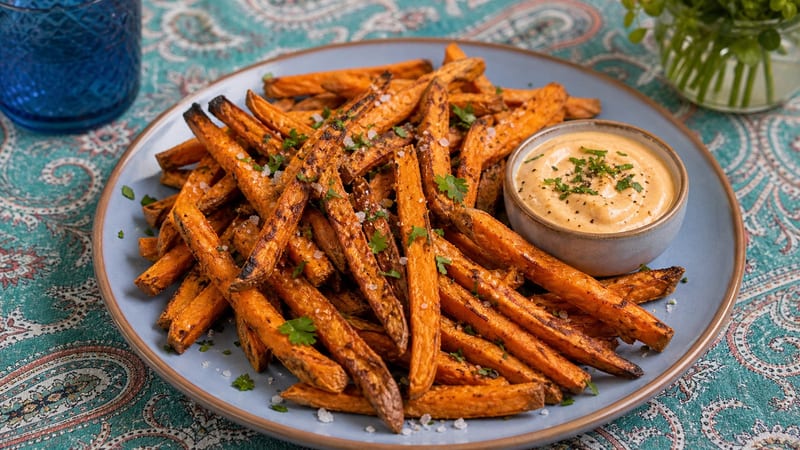
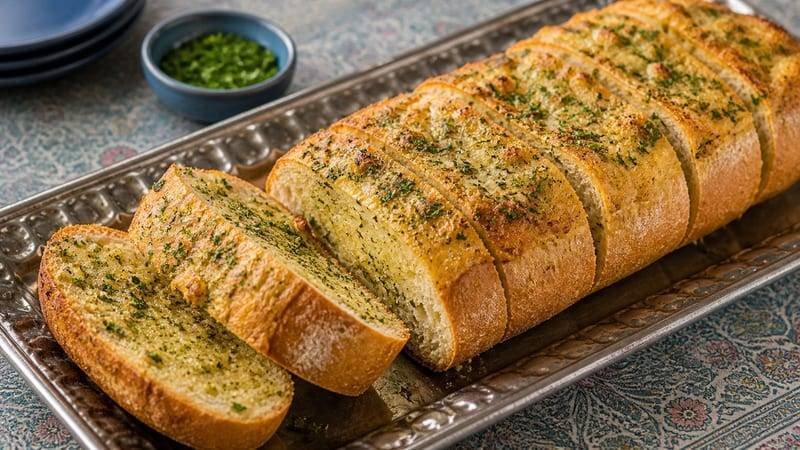
Mashed potatoes, roasted carrots, buttered green beans, dinner rolls, roasted Brussels sprouts, and creamy coleslaw are all classics. The brisket and its pan sauce are rich, so lighter sides balance well.
Make It a Meal
Pair this recipe with a side, bread, and something sweet from the FAFO Kitchen.