
Smoked Texas Brisket
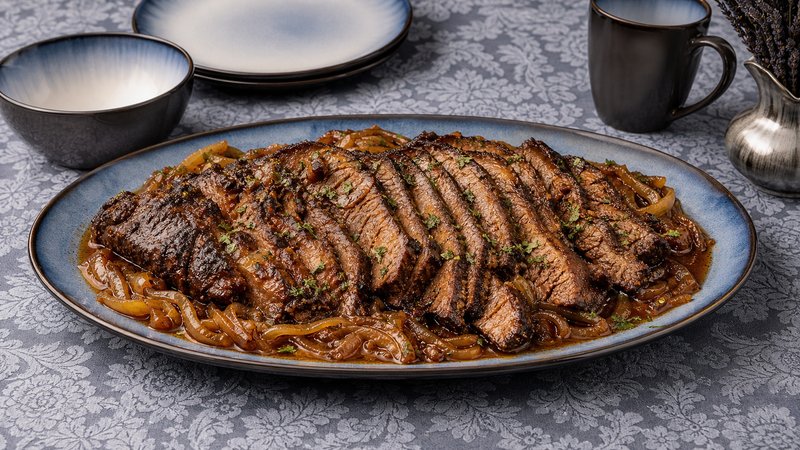
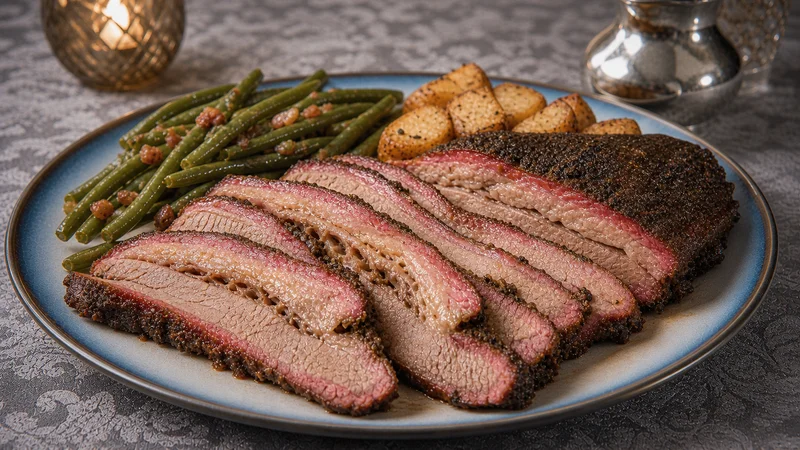
Smoked Texas brisket is a whole packer seasoned with salt, pepper, and garlic, then smoked low and slow at 250°F until a dark mahogany bark forms and the internal temperature reaches 200–205°F. Rested and sliced thin across the grain for tender results.
Texas brisket is a long conversation between beef, smoke, salt, pepper, heat, and your ability to leave things alone. A whole 12–15 pound packer brisket gets trimmed, seasoned with coarse kosher salt, black pepper, and garlic, then smoked at 250°F until the bark turns dark mahogany and the meat finally stops behaving like a stubborn piece of livestock.
The temperature numbers are useful landmarks, not the whole map. Around 165–175°F, once the bark is properly set, the brisket gets wrapped in butcher paper and returned to the smoker. The finish comes when the thickest part of the flat reaches roughly 200–205°F and a probe slides in with very little resistance. That second test matters. Brisket can hit a number and still feel like it has unresolved business.
Then comes the part impatient cooks routinely shortchange: the rest. Keep it wrapped for at least two hours, preferably longer, before separating point from flat and slicing across the grain. Post oak is the classic smoke here, with white oak, hickory, or pecan also fitting the job. This is not fast barbecue. That is precisely why it tastes like brisket instead of roast beef that wandered near a campfire.
Ingredients
Brisket
- 1 whole packer brisket, 12–15 pounds, trimmed
- 1/4 cup coarse kosher salt
- 1/4 cup coarse black pepper, 16-mesh preferred
- 2 tablespoons garlic powder
- Yellow mustard or beef tallow (binder, optional)
For Spritzing (Optional)
- 1 cup beef broth
- 1 cup apple cider vinegar
Instructions
- 1Trim the fat cap to about 1/4 inch thick. Remove any hard exterior fat and thin edges that may burn — a clean brisket smokes more evenly.
- 2If desired, lightly coat the brisket with yellow mustard or beef tallow as a binder. Combine the salt, pepper, and garlic powder. Apply an even coating over every surface of the brisket. Wrap loosely and refrigerate for at least 8 hours or overnight. This allows the salt to penetrate and the seasonings to bond with the surface.
- 3Preheat the smoker to 250°F. Use post oak if available. White oak, hickory, or pecan are also excellent choices. Let the smoker stabilize at temperature before placing the brisket.
- 4Place the brisket on the smoker with the fat cap facing the heat source. Smoke until the internal temperature reaches 165–175°F, about 6–8 hours. Spritz every 60–90 minutes after the first 3 hours if desired (beef broth mixed with apple cider vinegar helps maintain moisture).
- 5Once a dark mahogany bark has formed (usually around 6–8 hours), wrap tightly in unwaxed butcher paper. Aluminum foil may be used for a softer bark. Return the brisket to the smoker.
- 6Continue smoking until the thickest portion of the flat reaches 200–205°F and a probe slides into the meat with very little resistance, like pushing through warm butter. This can take 4–8 additional hours depending on brisket size and smoker consistency.
- 7Keep the brisket wrapped. Place it in a dry cooler or warm oven at 150–170°F for at least 2 hours, preferably 3–4 hours. This resting period is just as important as smoking — it allows the fibers to relax and retain moisture.
- 8Separate the point from the flat. Slice the flat across the grain into 1/4-inch slices. Slice or cube the point for serving or burnt ends.
Nutrition Information
Estimated per serving: 1 serving (calculated using 11 servings, the midpoint of the stated 10–12 range).
Estimated from the ingredients and quantities in this recipe using standard food-composition values. The calculation uses the midpoint of the stated yield range. Brand choices, trimming, cooking loss, optional ingredients, and actual portion size can change the numbers. How we calculate nutrition estimates.
Pro Tips
- Cook to tenderness, not time. Every brisket finishes differently based on shape, size, fat distribution, and smoker personality.
- The probe test is your truth — if it slides through like warm butter, it is done. If it meets resistance, keep smoking.
- Resting is just as important as smoking. It is not optional. A brisket pulled from the smoker and carved immediately bleeds out and turns dry.
- Avoid trimming away all the exterior fat. That fat protects the meat from the heat and flavors the bark as it renders.
- Texas brisket traditionally uses a simple salt-and-pepper rub, allowing the beef and smoke to shine. Trust the simplicity.
Substitutions
Storage Instructions
Store cooled brisket sliced in an airtight container in the refrigerator for up to 5 days. Reheat gently in a low oven (300°F) with a little beef broth added to restore moisture. Brisket also freezes beautifully for up to 3 months if wrapped tightly in butcher paper and then placed in a freezer bag.
Make Ahead
Season the brisket up to 24 hours ahead and refrigerate. Season overnight if possible — longer seasoning time improves penetration. You cannot prepare beyond that point and expect great results, so plan your smoke day around the cook time.
Frequently Asked Questions
How do I know when the brisket is done?
The brisket is done when the thickest part of the flat reaches 200–205°F internal temperature AND a probe slides through like pushing into warm butter. Do not rely on time or temperature alone — use both. If the probe meets resistance, keep smoking even if the temperature looks right.
What is the stall and how do I get through it?
The stall happens around 160–170°F when evaporative cooling slows the temperature rise. It is normal. Wrapping the brisket in butcher paper once the bark has formed helps push through the stall faster. Some people call this the "Texas crutch." Keep smoking — it will eventually break through.
Can I smoke a brisket overnight?
Yes, if your smoker holds temperature well. Many pitmasters smoke overnight. Make sure your smoker is reliable and stable at 250°F. Use good quality charcoal or wood. Babysit the temperature, especially in the first few hours.
Should I wrap the brisket?
Wrapping in butcher paper after the bark has formed helps push through the stall and shortens the total cook time. Aluminum foil produces a softer bark. Some purists skip wrapping to maximize bark development. Choose based on your goals.
How important is resting?
Resting is essential. Wrap it in butcher paper or foil and hold it insulated — a towel-lined cooler works well — so it stays out of the danger zone during the rest. At minimum, rest for 2 hours. Ideally 3–4 hours. The fibers relax and reabsorb moisture. A brisket carved immediately after smoking bleeds out and turns dry. The rest is not optional.
Make It a Meal
Pair this recipe with a side, bread, and something sweet from the FAFO Kitchen.