

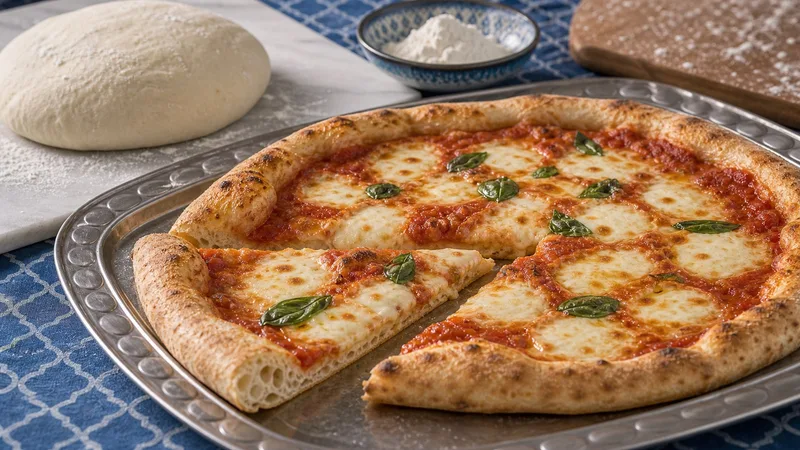
Pizza Dough
Combine flour, yeast, salt, olive oil, and warm water, knead for 8–10 minutes, then let the dough rise for at least one hour until doubled. Shape, top, and bake at 500°F on a preheated surface for 10–12 minutes.
Pizza dough is mostly flour, water, yeast, salt, and time, which is somehow enough ingredients for the internet to turn it into a personality test. This one stays practical. Bread flour gives the dough enough protein for a chewy crust, active dry yeast gets proofed in 105–110°F water with a little sugar, olive oil adds tenderness, and a full 8–10 minutes of kneading develops the gluten that lets the dough stretch without tearing every time you look at it wrong.
The yeast should foam before you commit the flour. If it sits in the bowl doing absolutely nothing after ten minutes, start over; dead yeast does not become more motivated because you believe in it. Once the dough is smooth and elastic, it rises in an oiled bowl for about an hour, or until doubled. That rise is doing structural work, not simply making you wait around hungry.
This batch makes two 12-inch crusts. Divide the risen dough gently, shape without crushing every bubble out of it, and let it relax if it keeps snapping back while you stretch. A tense dough is remarkably similar to a tense person: pulling harder rarely improves the situation. Once it cooperates, add your toppings and bake. The goal is a crust with chew, lift, and enough structure to hold a slice without requiring a fork and an apology.
Ingredients
- 3 cups (360g) bread flour, plus more for kneading
- 2¼ teaspoons (one standard packet) active dry yeast
- 1 teaspoon granulated sugar
- 1 teaspoon fine sea salt
- 2 tablespoons olive oil, plus more for the bowl
- 1 cup warm water (105–110°F)
Instructions
- 1Proof the yeast: Combine warm water, sugar, and yeast in a large bowl or the bowl of a stand mixer. Stir gently and let it sit for 5–10 minutes. The mixture should become foamy and smell faintly yeasty. If nothing happens after 10 minutes, your water was too hot or your yeast is expired — start over with fresh yeast.
- 2Make the dough: Add the olive oil and salt to the yeast mixture and stir to combine. Add the bread flour one cup at a time, mixing between additions. Once a shaggy dough forms, turn it out onto a lightly floured surface.
- 3Knead: Knead the dough by hand for 8–10 minutes, pushing down and away with the heel of your hand, folding it back, and turning. The dough is ready when it's smooth, elastic, and springs back slowly when you poke it. Alternatively, use a stand mixer with the dough hook on medium speed for 6–7 minutes.
- 4First rise: Lightly oil a large bowl, add the dough, and turn it to coat. Cover with plastic wrap or a clean kitchen towel. Place in a warm, draft-free spot and let it rise for at least 1 hour, or until doubled in size. The inside of an oven with just the light on works well.
- 5Divide and preshape: Punch the dough down gently and divide it into two equal portions. Shape each into a smooth ball by tucking the edges underneath and rolling against the counter. Let the dough balls rest, covered, for 10–15 minutes. This rest is not optional — it relaxes the gluten so the dough actually stretches instead of snapping back at you.
- 6Preheat: While the dough rests, place your pizza stone, cast iron skillet, or baking sheet in the oven and preheat to 500°F (260°C). Allow at least 30 minutes of preheating time for the surface to get genuinely hot.
- 7Shape: On a lightly floured surface, stretch one dough ball into a roughly 12-inch round by pressing outward from the center with your fingertips, then lifting and letting gravity help. Do not use a rolling pin — it deflates the air bubbles that give you good crust.
- 8Top and bake: Transfer the shaped dough to a floured pizza peel or parchment paper. Add your sauce and toppings, then slide directly onto the hot surface. Bake for 10–12 minutes, until the crust is golden and the cheese is bubbling and spotted brown. Let it rest for 2 minutes before slicing.
Nutrition Information
Estimated per serving: 1 slice (estimated 16 slices total from 2 crusts).
Estimated from the ingredients and quantities in this recipe using standard food-composition values. Brand choices, trimming, cooking loss, optional ingredients, and actual portion size can change the numbers. How we calculate nutrition estimates.
Pro Tips
- Bread flour is strongly preferred over all-purpose — the higher protein content is what gives pizza dough that chewy, blistered quality. All-purpose will work in a pinch but the texture will be noticeably softer.
- The single biggest failure point in pizza dough is water temperature. Too cold and the yeast won't activate. Too hot and you kill it outright. Use a thermometer if you don't trust yourself — and I say that as someone who did not trust herself and learned accordingly.
- If your dough keeps snapping back when you try to stretch it, stop. Cover it and let it rest for 5 more minutes. The gluten is tense, which I understand completely, and it needs a moment.
Substitutions
Storage Instructions
Uncooked dough balls can be wrapped tightly in plastic wrap and refrigerated for up to 3 days — a cold, slow rise improves the flavor. For longer storage, freeze individual dough balls in zip-top bags for up to 3 months; thaw overnight in the refrigerator. Baked crust without toppings can be wrapped and frozen for up to 2 months.
Make Ahead
For best flavor, make the dough the night before and let it rise slowly in the refrigerator overnight rather than at room temperature. Remove from the fridge 30–45 minutes before shaping to bring it back to room temperature so it stretches easily.
Frequently Asked Questions
Can I make this ahead of time?
Yes. For best flavor, make the dough the night before and let it rise slowly in the refrigerator overnight rather than at room temperature. Remove from the fridge 30–45 minutes before shaping to bring it back to room temperature so it stretches easily.
How do I store the leftovers?
Uncooked dough balls can be wrapped tightly in plastic wrap and refrigerated for up to 3 days — a cold, slow rise improves the flavor. For longer storage, freeze individual dough balls in zip-top bags for up to 3 months; thaw overnight in the refrigerator. Baked crust without toppings can be wrapped and frozen for up to 2 months.
Can I freeze it?
Yes. See the storage section on this page for exact freezing and thawing directions — most versions of Pizza Dough freeze well for up to 2–3 months when cooled fully first and portioned into airtight containers.
Can I adjust it for what I have on hand?
Yes. Tested adjustments on this recipe include bread flour → all-purpose flour; active dry yeast → instant yeast; and olive oil → neutral vegetable oil.
What's the most common mistake to avoid?
Bread flour is strongly preferred over all-purpose — the higher protein content is what gives pizza dough that chewy, blistered quality. All-purpose will work in a pinch but the texture will be noticeably softer.
More Like This
You Might Also Like



Finish With Dessert
Try this next
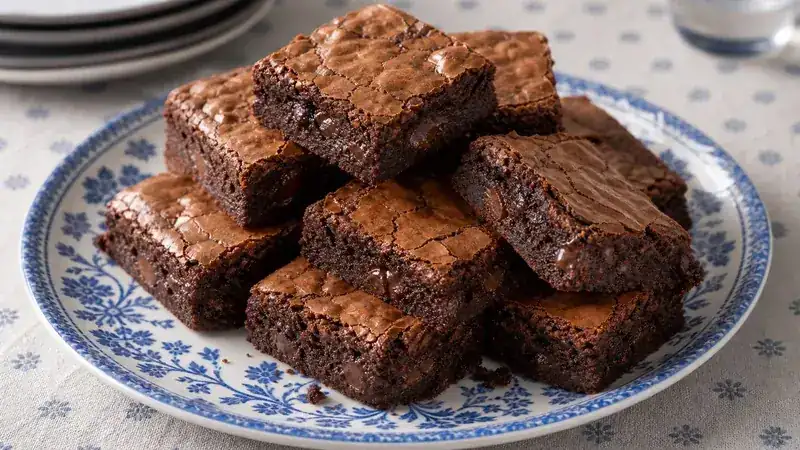
Fudgy Brownies
View recipe →