

Risotto
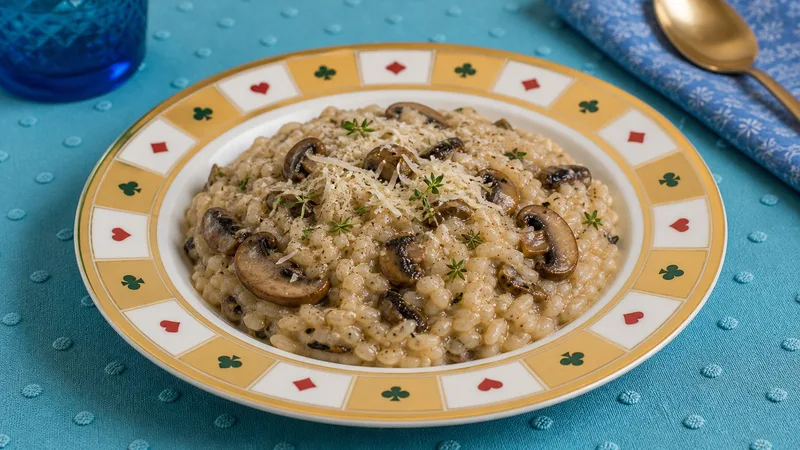
To make risotto, toast arborio rice in butter and shallots, then add warm stock one ladle at a time, stirring constantly until each addition is absorbed before adding the next. Finish off the heat with butter and parmesan for a silky, creamy texture.
Risotto is less about advanced technique than sustained attention. Think of a toddler asking “why?” for 25 straight minutes: the challenge is not complexity so much as staying present. Arborio rice gets toasted in olive oil and butter with softened shallots and garlic, deglazed with dry white wine, then fed warm chicken stock one ladle at a time while you stir. The starch released from the rice creates the creamy texture; there is no cream hiding backstage waiting to save you.
Warm stock matters because every cold addition would knock the pan temperature down and interrupt the steady simmer that cooks the grains evenly. Add more only after the previous ladle is nearly absorbed, and stop when the rice is tender with a slight bite and the mixture is still loose enough to flow. Risotto should settle on the plate; it should not stand there like mashed potatoes with a graduate degree.
Off the heat, cold butter and freshly grated Parmesan get stirred in vigorously for the mantecatura, the finishing step that makes the whole pan glossy and cohesive. Serve it immediately. Risotto is patient while you cook it and deeply uninterested in waiting for everyone afterward.
Ingredients
- 1 ½ cups (300g) arborio rice
- 5 cups (1.2 liters) low-sodium chicken stock
- 1 cup (240ml) dry white wine (such as Pinot Grigio or Sauvignon Blanc)
- 2 tablespoons olive oil
- 3 tablespoons unsalted butter, divided
- 2 medium shallots, finely diced (about ½ cup)
- 3 garlic cloves, minced
- ¾ cup (75g) freshly grated parmesan cheese, plus more for serving
- 1 teaspoon kosher salt, plus more to taste
- ½ teaspoon freshly ground black pepper
- 1 tablespoon fresh flat-leaf parsley, chopped (optional, for garnish)
Instructions
- 1Pour the chicken stock into a medium saucepan and warm it over low heat. Keep it at a low simmer throughout the cooking process. This is non-negotiable — cold stock going into hot rice drops the temperature and breaks the whole rhythm of the dish.
- 2In a large, wide, heavy-bottomed saucepan or Dutch oven, heat the olive oil and 1 tablespoon of the butter over medium heat until the butter is melted and the foam subsides.
- 3Add the shallots and cook, stirring frequently, for 3 to 4 minutes until softened and translucent. Add the garlic and cook for 1 more minute. Do not let either one brown.
- 4Add the arborio rice and stir to coat every grain in the fat. Toast the rice for 2 minutes, stirring constantly, until the edges of the grains look slightly translucent. You want to hear a faint papery sound when you stir it. That's right.
- 5Pour in the white wine and stir constantly until it is almost entirely absorbed, about 2 minutes. The wine will steam aggressively. This is normal and not your fault.
- 6Begin adding the warm stock one ladle at a time (about ¾ cup per addition). Stir constantly and wait until each ladle is almost fully absorbed before adding the next. Maintain medium heat throughout — the mixture should bubble gently, not violently.
- 7Continue adding stock and stirring for 20 to 22 minutes total, until the rice is al dente — tender with just a slight bite at the center — and the mixture looks loose and flowing, not stiff. You may not need all the stock, or you may need a splash of hot water at the end. Use your judgment.
- 8Remove the pan from the heat. Add the remaining 2 tablespoons of cold butter and the grated parmesan. Stir vigorously for 1 to 2 minutes until fully incorporated and the risotto looks glossy and creamy. This step is called mantecatura and it is the reason good risotto tastes the way it does.
- 9Season with kosher salt and black pepper to taste. Serve immediately in warm bowls. Garnish with extra parmesan and parsley if desired.
Nutrition Information
Estimated per serving: 1 of 4 servings.
Estimated from the ingredients and quantities in this recipe using standard food-composition values. Brand choices, trimming, cooking loss, optional ingredients, and actual portion size can change the numbers. How we calculate nutrition estimates.
Pro Tips
- Warm stock is mandatory, not optional. Cold stock seizes the starch and makes the risotto gluey instead of creamy. Set the pot on the back burner before you do anything else.
- The rice should be al dente when you pull it off the heat — it will continue to cook in the residual heat of the pan. If you cook it fully on the stovetop, it will be overdone by the time it hits the bowl.
- Do not use pre-grated parmesan from the green can. I have nothing personal against the green can, but it will not melt correctly and you will end up with a grainy finish, which is the risotto equivalent of a handshake that lasts too long.
Substitutions
Storage Instructions
Store leftover risotto in an airtight container in the refrigerator for up to 3 days. To reheat, add a splash of warm stock or water to the risotto in a saucepan over medium-low heat and stir until loosened and heated through. Risotto does not freeze well — the texture breaks down significantly.
Make Ahead
Risotto is best made fresh, but you can par-cook it: complete the process up to about 75% through adding stock, then spread the rice onto a sheet pan to stop the cooking, let it cool, and refrigerate for up to 24 hours. When ready to serve, warm the remaining stock and finish the risotto as directed from that point, about 8 to 10 minutes.
Frequently Asked Questions
Can I make this ahead of time?
Prep the measured ingredients and any chopping for Risotto ahead, then refrigerate the perishable components separately. Do the final cooking or crisping step close to serving so the finished texture does not suffer.
How do I store the leftovers?
Store the leftovers in an airtight container in the refrigerator for up to 3 days. To reheat, add a splash of warm stock or water to the risotto in a saucepan over medium-low heat and stir until loosened and heated through. Risotto does not freeze well — the texture breaks down significantly.
Can I freeze it?
Yes. See the storage section on this page for exact freezing and thawing directions — most versions of Risotto freeze well for up to 2–3 months when cooled fully first and portioned into airtight containers.
Can I adjust it for what I have on hand?
Yes. Tested adjustments on this recipe include chicken stock → vegetable stock; dry white wine → additional stock plus 1 tablespoon white wine vinegar; and shallots → half a small yellow onion, very finely diced.
What's the most common mistake to avoid?
Warm stock is mandatory, not optional. Cold stock seizes the starch and makes the risotto gluey instead of creamy. Set the pot on the back burner before you do anything else.
Make It a Meal
Pair this recipe with a side, bread, and something sweet from the FAFO Kitchen.



More Like This
 Garlic Herb Chicken and RiceSame equipment: Dutch Oven
 One-Pot Chicken and RiceSame equipment: Dutch Oven
 Instant Pot Mushroom RisottoShares Rice
 Chicken PiccataShares Chicken Broth