
Korean Kimchi Stew
To make Korean Kimchi Stew, build the base with olive oil or neutral oil and onion, add garlic, then let everything simmer until the flavors settle. Low and slow is what turns simple ingredients into something worth a second bowl.
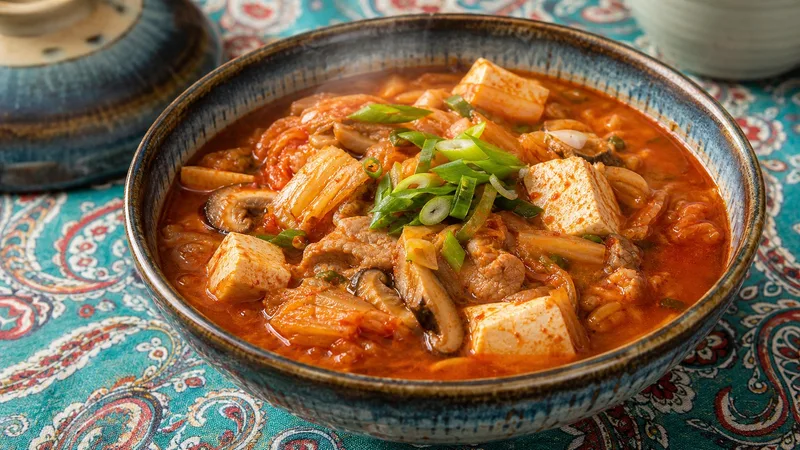
Kimchi jjigae is one of those dishes where older kimchi finally gets rewarded for hanging around. Well-fermented kimchi has more sourness, more funk, and more depth than a brand-new jar, which makes it exactly what you want simmering with pork, gochujang, garlic, onion, and kimchi juice. This is not the moment to use timid kimchi. You want the jar that smells like it has opinions.
Brown thin slices of pork shoulder or pork belly first, then cook the kimchi and onion in the rendered flavor before adding gochujang and optional gochugaru. Fifteen minutes of simmering in broth or water lets that spicy, sour base come together. A teaspoon of sugar is not there to make the stew sweet; it rounds the sharper edges of fermented kimchi so the broth tastes deep instead of aggressively sour.
Tofu goes in for only the final five minutes and should be stirred as little as possible so the cubes stay intact. Finish with toasted sesame oil and green onions, then serve the stew with white rice. The rice is not an accessory. It is where you send every spicy, porky, kimchi-soaked spoonful when the broth starts acting like it owns the place.